


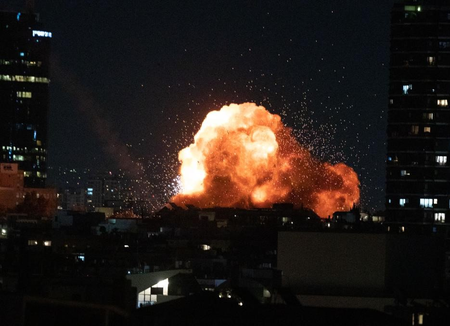
The United States and six Gulf nations have jointly condemned Iran for launching what they termed as “indiscriminate and reckless” missile and drone attacks across the region. The attacks were described as a significant threat to regional stability by the governments of the US, Bahrain, Jordan, Kuwait, Qatar, Saudi Arabia, and the UAE. These strikes targeted multiple sovereign territories, including Bahrain, Iraq, Jordan, Kuwait, Oman, Qatar, Saudi Arabia, and the UAE.
The countries expressed strong disapproval, stating that the attacks endangered civilian populations and damaged civilian infrastructure. They emphasized that Iran’s actions violated international norms and represented a dangerous escalation that undermined the sovereignty of multiple states. Moreover, the governments accused Iran of targeting countries not directly involved in hostilities, labeling such behavior as reckless and destabilizing.
In response to the attacks, the seven nations reaffirmed their commitment to security cooperation and a collective response framework. They reiterated their unity in defending their citizens, sovereignty, and territory, asserting their right to self-defense against such aggression. Additionally, the countries highlighted the importance of coordinated air defense efforts in the region, acknowledging the effectiveness of such cooperation in preventing greater loss of life and destruction.
The joint condemnation comes amid escalating tensions between Iran and regional actors, with missile and drone warfare playing a significant role in the ongoing confrontation. Iran’s advancements in missile and unmanned aerial vehicle capabilities have raised concerns among Western and Gulf officials, who view these developments as altering the security balance in the region. While Iran maintains that its missile program is defensive in nature, the US and its Gulf allies have bolstered regional defense partnerships and air defense integration to counter potential threats from Iran and allied groups.
