


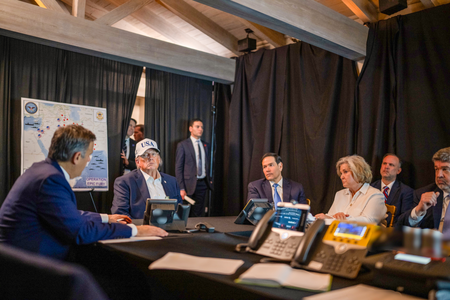
US lawmakers engaged in a heated debate over the State Department’s handling of the Middle East conflict. Democrats criticized the Department, accusing it of failing to adequately safeguard American citizens. Representative Gregory Meeks expressed concern over delays in issuing travel advisories and organizing evacuations, labeling it a failure in protecting citizens. He attributed these issues to staffing cuts, describing the current State Department as significantly diminished in capacity and credibility.
In response, Undersecretary of State for Management Jason Evans defended the Department, stating that it had swiftly responded to the crisis and was functioning effectively. Evans highlighted the continuous efforts of Department employees who were working tirelessly to aid American citizens globally. He emphasized ongoing security measures and evacuation initiatives aimed at safeguarding US missions and personnel worldwide.
Lawmakers also raised questions regarding the timeliness of travel advisories, noting that some countries facing attacks were still listed as “reconsider travel.” This discrepancy was seen as potentially confusing for American travelers. Evans clarified that the advisories were adjusted based on evolving conditions, cautioning against ongoing conflicts.
Concerns were also voiced about the Department’s preparedness before the conflict erupted. While Evans refrained from discussing internal decisions, he assured that emergency action plans were in place across all US Embassies. Some lawmakers criticized the delayed warnings, which coincided with limited commercial flights, hindering Americans’ departure from affected regions.
Evans defended the Department’s alert system, which was utilized to reach out to citizens, and highlighted efforts to facilitate evacuations through available routes. The debate underscored the impact of staffing reductions, with critics arguing that job cuts had weakened the Department’s crisis response capabilities. However, Evans defended these changes as necessary to enhance mission focus and operational efficiency.
The discussion also shed light on the issue of vacant Ambassador posts, with Evans asserting that senior diplomats were effectively managing these missions. The contrasting views within Congress revealed a sharp divide, with one side cautioning against the Department’s perceived weaknesses while the other advocated for necessary reforms. The State Department oversees nearly 280 missions globally.
