


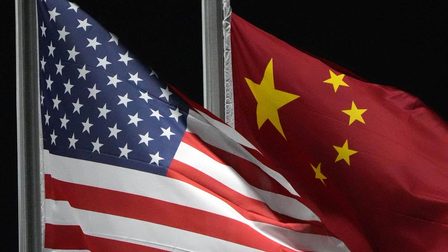
A bipartisan group of US lawmakers has introduced legislation to tighten restrictions on Chinese and other foreign adversary acquisitions of American farmland and property close to critical military and infrastructure locations. The move aims to address concerns regarding national security and food security in Washington. Select Committee on China Chairman John Moolenaar presented the “Protecting US Farmland and Sensitive Sites from Foreign Adversaries Act”, emphasizing the importance of safeguarding American farmland near vital military and infrastructure sites.
The proposed legislation seeks to prevent foreign adversaries, particularly China, from purchasing land near sensitive military and critical infrastructure sites. It aims to eliminate loopholes that pose risks to national security and implement policies such as the Trump administration’s “America First Investment Policy” and the US Department of Agriculture’s Farm Security Action Plan. The bill would empower the Committee on Foreign Investment in the United States (CFIUS) to scrutinize real estate transactions involving entities associated with China, Russia, Iran, and North Korea.
The bill expands the scope of “sensitive sites” to encompass military installations, NASA facilities, airports, maritime ports, data centers, fiber optic nodes, cloud computing facilities, and critical communications infrastructure. It introduces a new category of “elevated risk real estate transactions” covering farmland, ports, telecommunications infrastructure, and properties near military and intelligence facilities. The legislation stipulates that such transactions would be considered a significant risk to national security unless they pass a rigorous review process.
The bipartisan legislation has garnered support from both Republican and Democratic lawmakers, including Representatives Josh Gottheimer, Jimmy Panetta, and Mike Thompson. Additionally, lawmakers are planning to introduce separate bipartisan legislation to prohibit Chinese vehicles from operating on US roads. The lawmakers emphasized concerns about data privacy and security, highlighting the risks associated with Chinese vehicles collecting real-time information on American roads.
