


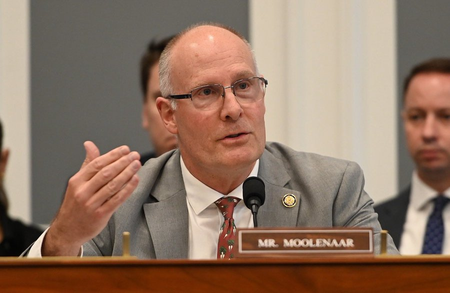
A group of bipartisan US lawmakers is urging for an official assessment to be made on whether China’s actions towards Tibetans amount to genocide or crimes against humanity. Representative John Moolenaar, part of the House Select Committee on the Chinese Communist Party, has endorsed the Tibet Atrocities Determination Act introduced by Representatives Chris Smith and Tom Suozzi. This bill mandates the US Secretary of State to evaluate if Chinese actions in Tibet constitute ongoing genocide or crimes against humanity.
The legislation stipulates that within a year of enactment, the Secretary of State must present a determination to Congress. The State Department is tasked with investigating allegations of systematic killings, severe physical or psychological harm, forced displacement, mass detentions, food and medical deprivation, measures to impede births, and the separation of Tibetan children from their families and communities. Additionally, the bill calls for a review of Chinese government policies affecting Tibetan Buddhism, language, and culture, along with suggestions for potential US responses like sanctions, visa restrictions, and diplomatic actions.
Advocates of the bill argue that Beijing has been actively suppressing Tibetan identity over an extended period. Lawmakers supporting the measure accuse the Chinese Communist Party of controlling monasteries, restructuring the Tibetan education system, and implementing assimilation policies to integrate Tibetans into mainstream Chinese society. They also contest Beijing’s assertion that Tibet has always been part of China.
In April, a similar bill was introduced in the Senate by Senators Rick Scott and Jeff Merkley, reflecting bipartisan worries regarding Tibet-related matters in Congress. This legislative move coincides with increased US scrutiny of China’s treatment of ethnic and religious minorities, with a particular focus on Tibet, Xinjiang, and Hong Kong. Despite political divides, human rights issues concerning these regions have garnered bipartisan support in the US Congress.
