


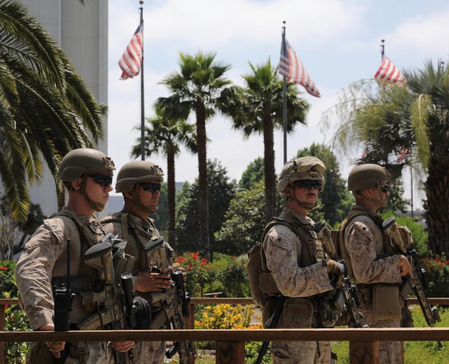
More than 108,000 US soldiers are currently deployed or forward positioned in 160 countries, as highlighted by senior American military leaders during a Senate hearing. This deployment underscores the extensive global reach of US military operations, including ongoing conflicts with Iran and increasing security challenges from China and Russia.
Testifying before the Senate Armed Services Subcommittee on Readiness, top Pentagon officials emphasized the ability of American forces to sustain global operations while actively engaging in combat missions in the Middle East. Vice Chief of the Army Gen. Christopher LaNeve informed senators that US troops are simultaneously operating in multiple regions, focusing on deterrence and addressing evolving threats.
Gen. LaNeve stated that the soldiers are strategically placed across various countries to safeguard US interests in the Western Hemisphere, deter aggression in the Indo-Pacific region, and respond to threats worldwide. He specifically mentioned the complex and hazardous environment in the Middle East, where US forces are defending against Iran and its proxies, intercepting missiles and drones, and protecting critical infrastructure.
Senior Navy leaders also reported that maritime forces are involved in operations across different regions while upholding strategic deterrence. Vice Chief of Naval Operations Adm. James Kilby informed lawmakers about the Navy’s combat operations and support for the Joint Force in various missions over the past year.
Adm. Kilby highlighted the Navy’s actions in the Middle East, conducting strikes against adversaries and defending allies, alongside ongoing naval operations in the Indo-Pacific region. He further mentioned efforts to enhance readiness by addressing maintenance delays, modernizing shipyards, and aiming for 80% combat surge-ready ships, aircraft, and submarines.
Marine Corps leaders assured senators of their preparedness for swift deployments globally, particularly in the Indo-Pacific region amidst escalating tensions with China. They emphasized the Marine Corps’ dual role as the nation’s global response force and a persistent integrated stand-in force in the Indo-Pacific.
Air Force Vice Chief of Staff Gen. James LaMontagne outlined the Air Force’s focus on maintaining readiness, fleet modernization, and pilot training. He stressed the importance of aircraft operations in meeting national defense needs, highlighting ongoing training programs and the development of new platforms like the B-21 bomber and collaborative combat aircraft.
Space Force Vice Chief of Space Operations Gen. Michael Guetlein emphasized the critical role of space capabilities in modern military operations. He pointed out recent satellite launches for missile warning, navigation, and space domain awareness, underscoring the increasing significance of the Space Force within the Joint Force.
Despite these efforts, the Government Accountability Office cautioned lawmakers about persistent structural challenges facing US military readiness. GAO official Diana Maurer highlighted issues such as ageing equipment, maintenance backlogs, and spare parts shortages that continue to impact readiness across multiple services.
