


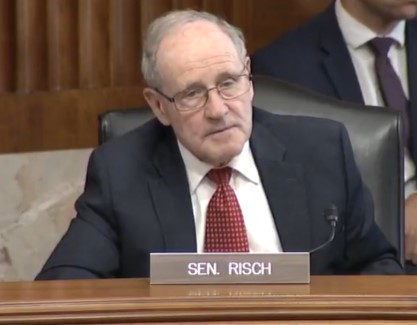
A bipartisan bill aimed at enhancing US transparency rules for foreign lobbying and influence operations has progressed in the Senate Foreign Relations Committee. Lawmakers highlighted that countries like China, Russia, and Iran have exploited existing loopholes to shape American policy. The legislation, named the Preventing Adversary Influence, Disinformation and Obscured Foreign Financing (PAID OFF) Act, seeks to amend provisions under the Foreign Agents Registration Act (FARA) for increased disclosure from individuals and entities representing foreign governments and commercial organizations.
Senate Foreign Relations Committee Chairman Jim Risch emphasized that foreign adversaries have long taken advantage of weaknesses in US lobbying laws. He mentioned instances such as Russia’s actions regarding the Nord Stream 2 pipeline and Chinese firm Hikvision’s efforts to evade sanctions. Senator John Cornyn, a lead sponsor of the bill, stressed the importance of safeguarding US policymaking from foreign manipulation, ensuring that American decisions are not influenced by adversaries seeking to undermine national interests.
The proposed legislation garnered bipartisan support within the committee. Senator Sheldon Whitehouse expressed concerns about foreign adversaries circumventing loopholes to lobby Congress, posing a direct threat to democracy. Senator Thom Tillis cautioned against allowing countries like China and Russia to covertly influence American policies or public opinion. Senator Chuck Grassley stressed the need for transparency regarding foreign governments’ attempts to shape US policy debates.
Senator Peter Welch highlighted the role of misinformation and disinformation in eroding public trust in institutions, exacerbated by foreign adversaries exploiting gaps in US lobbying laws. Senator John Kennedy emphasized the importance of preventing foreign agents from clandestinely influencing American policies to align with the interests of countries like China and Iran. The bill’s sponsors noted that FARA, last substantially updated in the 1990s, has not kept pace with modern influence campaigns, allowing some foreign-linked agents to avoid registration through exemptions.
The legislation proposes that agents working for designated governments like China, Russia, Iran, North Korea, or Cuba, along with associated commercial entities, must register under FARA. Advocates argue that this move would enhance transparency surrounding foreign influence campaigns operating in the US. Additionally, the bill includes a provision enabling the US Secretary of State to recommend additions or removals from the list of concerning countries, subject to congressional approval via a joint resolution. The measure is set to expire after five years unless renewed.
