


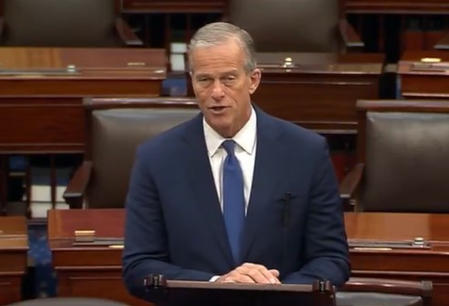
A political showdown has erupted in the US Senate over the SAVE Act, with Republicans advocating it as a means to protect elections, while Democrats condemning it as a voter suppression tactic that could disenfranchise millions of eligible voters. Senate Majority Leader John Thune emphasized the Act’s focus on proving citizenship and presenting identification to vote, arguing that these requirements align with common practices in American society, such as banking and travel.
Republicans view the bill as crucial for ensuring election integrity. Senator John Barrasso emphasized the importance of allowing only US citizens to vote in American elections and advocated for the necessity of presenting a photo ID to vote. He highlighted that Republicans support voter ID, contrasting it with the Democrats’ stance on open borders and illegal voters.
Senator Shelley Moore Capito supported the measure, citing her state’s existing voter ID law as a model of common sense. She stressed that proof of citizenship safeguards the fundamental right to vote that all citizens share. On the other hand, Democrats rejected the bill, expressing concerns that it could disrupt established voting procedures and potentially disenfranchise a significant number of Americans.
Senate Minority Leader Charles Schumer criticized the SAVE Act, labeling it as a voter suppression bill rather than a voter ID bill. He warned that the proposal could disenfranchise over 20 million Americans and impact online voter registration and voting by mail. Schumer also raised objections to the identification requirements during registration, deeming them radical and potentially exclusionary.
Senator Amy Klobuchar voiced apprehensions that the bill could create obstacles for voters while neglecting economic issues. She accused proponents of attempting to remove individuals from voter rolls and influencing election outcomes. Senator Alex Padilla echoed these sentiments, characterizing the proposal as a voter suppression and purging bill that could hinder eligible Americans from participating in the electoral process.
Despite uncertainties surrounding the bill’s passage, Senator Thune defended the decision to proceed, emphasizing the importance of debating the issue on the Senate floor.
