


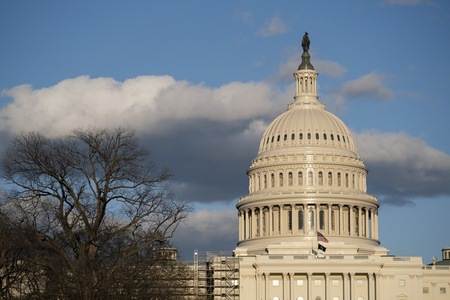
A funding dispute over the Department of Homeland Security has intensified in the US Senate. Republicans are pushing to pass a bipartisan six-bill spending package, but Democrats are objecting to the DHS funding bill, risking a government shutdown. Senate Majority Leader John Thune emphasized the need to fund the government promptly to avoid disruptions to key agencies.
Thune highlighted that the DHS bill allocates less to Immigration and Customs Enforcement compared to a continuing resolution. He also mentioned Democratic priorities included in the bill, such as funding for body cameras and de-escalation training. Despite the looming threat of a shutdown, Thune stressed the importance of reaching a resolution to prevent any adverse impacts on crucial agencies like FEMA and TSA.
Senator John Barrasso echoed concerns about a potential government shutdown, blaming Democrats for jeopardizing essential services like FEMA during severe weather events. Democrats, led by Senate Minority Leader Chuck Schumer, are calling for reforms following recent fatal incidents involving DHS agents. Schumer criticized ICE for alleged constitutional violations and lack of accountability, demanding immediate changes to agency practices.
Democrats are united in demanding reforms, including ending roving patrols and enhancing accountability measures for DHS agents. Senator Patty Murray emphasized the urgency of passing appropriations bills to avert a shutdown, with the DHS bill requiring separate consideration due to concerns about agency oversight. The ongoing deadlock poses a risk of disrupting critical government functions and services.
Senator Alex Padilla emphasized the need for oversight and accountability for ICE and Customs and Border Protection, stressing that federal agencies must adhere to the law. Democrats are pushing for negotiations but insist on addressing DHS funding separately to address concerns about agency conduct. With deadlines looming and both parties at an impasse, the potential for another government shutdown looms large, threatening essential services and the economy.
