


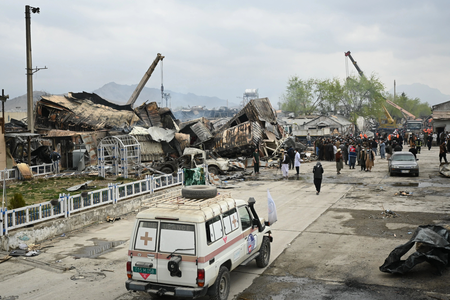
The US has been advised to leverage its influence with Pakistan to ensure accountability and uphold Afghanistan’s right to be free from cross-border military actions causing civilian casualties, particularly among children. Recent airstrikes by Pakistan in Afghanistan resulted in the deaths of at least 13 civilians and injuries to 10 others, as reported by the United Nations Assistance Mission in Afghanistan (UNAMA). Islamabad claimed the strikes targeted militant hideouts, killing 26 Tehrik-i-Taliban Pakistan (TTP) fighters, although these claims lack independent verification, according to a report by the US-based online magazine ‘Responsible Statecraft.’
Washington is urged to demand evidence from Islamabad supporting its assertions of strikes on militant hideouts, endorse an impartial inquiry into the reported civilian fatalities, and emphasize that counterterrorism collaboration cannot justify attacks leading to Afghan civilian deaths. The report highlighted previous instances where Pakistani airstrikes, purportedly aimed at the TTP, resulted in civilian casualties, such as the attack on the Omid drug rehabilitation center in Kabul that claimed the lives of at least 143 individuals.
Residents of Afghanistan, like Haji Hafizullah from Khost province, recounted the aftermath of the Pakistani airstrikes, describing the tragic loss of innocent lives, including children and non-combatant villagers. The report emphasized that Pakistan’s grievances with the Taliban or TTP do not justify targeting civilians in Afghan provinces like Khost, Kunar, or Paktika. It stressed that counterterrorism efforts should not serve as a pretext for harming vulnerable families.
The global community is urged to stop overlooking Afghan civilian deaths and to acknowledge the human cost of such military actions. Esmatullah, another resident from Khost, questioned Pakistan’s justification for the airstrikes, emphasizing that Afghan victims, including children and mothers, deserve recognition and protection under the banner of human rights. The report underscored the need for truth and accountability in addressing civilian casualties in conflict zones like Afghanistan.
