


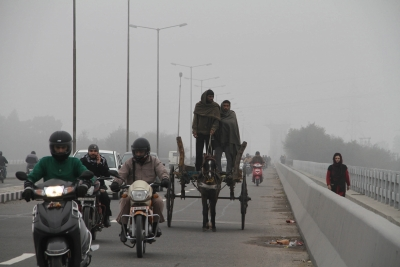
In the Valley, temperatures dropped below zero as Jammu and Kashmir experienced a 96% rain deficit in the first half of January, according to the Meteorological Department. This significant rain shortage raises concerns about early blooming in fruit trees, which may not bear fruit due to the cold temperatures expected in February and March.
The early blooming of fruit trees poses a serious threat to fruit growers in the Valley. Without timely rain or snow, the agriculture and horticulture sectors could face their worst crisis in recent years. It’s worth noting that horticulture, not tourism, is the primary economic driver in Kashmir.
The ‘Chillai Kalan,’ a 40-day period of harsh winter cold, will conclude on January 30. However, the lack of significant snowfall in Jammu and Kashmir could lead to water scarcity for drinking, agricultural, and horticultural purposes during the upcoming summer. The Meteorological Department has predicted snowfall in both the higher reaches and plains of the Valley from January 22 to 24.
A Western Disturbance is expected to be active over Jammu and Kashmir during January 22-24, bringing rain and snow to the region. This weather system is likely to result in the season’s first snowfall in the plains of the Valley. As of now, Srinagar and other areas are yet to witness substantial snowfall this season, with locals eagerly awaiting the forecasted snowfall.
Srinagar saw a minimum temperature of minus 4.7 degrees Celsius, while Gulmarg and Pahalgam recorded temperatures of minus 5.6 and minus 6 degrees Celsius, respectively. In Jammu city, the minimum temperature was 5.5 degrees Celsius, with Katra town at 6.6 degrees Celsius, Batote at 3.7 degrees Celsius, Banihal at minus 2.4 degrees Celsius, and Bhaderwah at minus one degree Celsius. On Saturday, Jammu recorded a maximum temperature of 20.1 degrees Celsius, while Srinagar reached 11.2 degrees Celsius.
