


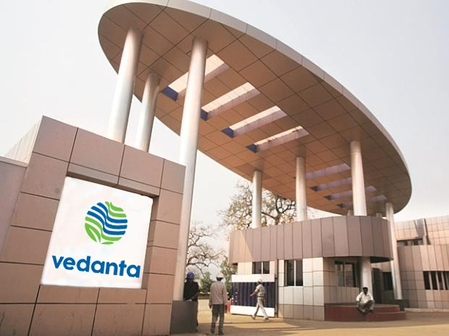
Vedanta Resources is facing a credibility challenge in the US listing of its copper business, as auditors have raised concerns about the financial viability of its main asset, which has been experiencing losses. The mining group has submitted an application for an initial public offering (IPO) of CopperTech Metals Inc, a US-based entity that operates Vedanta’s Zambian copper mines and is set to be listed on the New York Stock Exchange under the symbol CUX. Vedanta’s objective with the CopperTech IPO is to attract global investors to support a significant expansion of its copper operations.
The focal point of the listing is Konkola Copper Mines, one of Zambia’s major copper assets, owned and managed by CopperTech. However, auditors have cautioned that the financial status of Konkola raises doubts about its ability to sustain operations, presenting a significant risk for potential investors. Konkola recorded operating losses of $302.4 million in the year ending March 2025, followed by a $46.9 million loss in the year ending March 2026, with negative cash flows from operations during both periods, indicating financial strain.
Despite holding cash reserves of $154.1 million as of March 2026, the filing suggests limited visibility on liquidity without ongoing financial assistance. Vedanta has committed to offering a $1 billion capital expenditure support facility and has pledged to support the business for at least the next year. However, uncertainties persist beyond this timeframe, with funding assumptions hinging on execution and external financing conditions, as per the company’s disclosures.
The IPO is anticipated to play a crucial role in financing CopperTech’s $2.7 billion investment plan aimed at boosting copper production, including the Konkola deep mining project and infrastructure upgrades. While operations have shown signs of improvement after a significant production decline during a provisional liquidation period, achieving profitability and consistent positive cash flow remains a challenge. The filing also underscores potential risks, indicating the possibility of requiring additional debt or equity post-IPO, with associated implications such as restrictive covenants and dilution of existing shareholders.
