


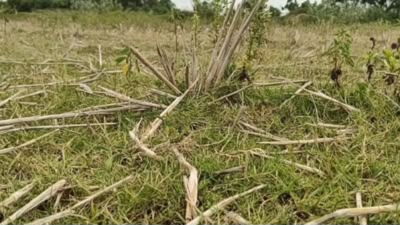
An acute water shortage has hit the Kumarapalayam region in Tamil Nadu’s Namakkal district, causing distress to farmers as delayed monsoon rains and the non-release of water from the Mettur dam have led to a severe agricultural crisis. More than 20 irrigation lakes in Kumarapalayam, Pallipalayam, and Veppadai have completely dried up, leaving thousands of acres of farmland without essential irrigation. The lack of significant rainfall and canal water reaching the area has halted cultivation activities, raising concerns of widespread crop failure and significant financial losses.
Agriculture serves as the backbone of the local economy, with major crops like paddy, turmeric, banana, and sugarcane grown across the region. Despite heavy investments by many farmers in field preparation, seeds, saplings, and fertilizers, primarily funded through loans, the ongoing water scarcity has resulted in uncultivated fields and withering crops. The prolonged dry period has also impacted groundwater availability, exacerbating the challenges faced by farming communities.
The drying up of irrigation tanks in various villages not only threatens agricultural activities but also raises worries about the availability of drinking water for residents and livestock. Farmers are concerned that without prompt water release or adequate rainfall in the near future, they could incur substantial crop losses, making it difficult to repay loans and recoup investments made for the current cultivation season.
The situation has sparked alarm among local residents and activists, prompting calls for immediate government intervention. Requests have been made for field assessments by agriculture and revenue officials to evaluate crop damage and the worsening water scenario. Additionally, demands for a comprehensive relief package, including financial aid for affected farmers, emergency irrigation measures, and initiatives to enhance water availability until normal rainfall resumes, have been voiced. Timely government action is deemed crucial to prevent further agricultural setbacks and safeguard the livelihoods of numerous farming families reliant on the region’s fragile irrigation network.
