


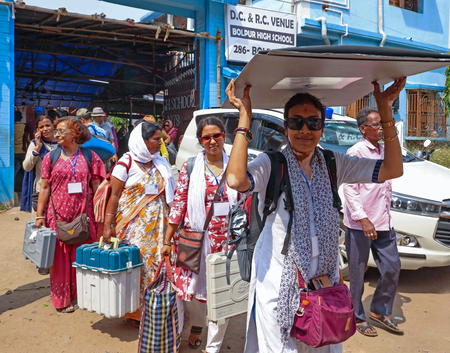
A total of 152 Assembly constituencies in West Bengal across 16 districts are set for polling on Thursday, marking the commencement of state elections. Approximately 3.6 crore voters will participate, determining the fate of 1,478 candidates in what is anticipated to be a closely watched electoral battle. The constituencies are evenly spread across north and south Bengal, reflecting the region’s geographical and political diversity.
The Election Commission of India has mobilized a record number of about 2,407 companies of the Central Armed Police Forces for this initial phase of voting. Despite a reduction in the number of phases compared to previous elections, the state is witnessing an unprecedented deployment of central security agencies, with new Election Commission measures aimed at ensuring strict adherence to rules.
Unlike previous elections with multiple phases, the current poll schedule has been condensed to just two phases, a significant change from the eight phases in 2021 and six in 2016. This phase is expected to witness intense competition in at least 80 seats between the ruling Trinamool Congress and the main challenger, Bharatiya Janata Party (BJP).
In some constituencies, a multi-cornered contest is likely, especially with the Left Front and Congress contesting separately and the involvement of religion-based organizations. The seats up for grabs in this phase are spread across various districts, including Darjeeling, Malda, Murshidabad, and Paschim Bardhaman, among others.
The voter turnout in minority-dominated areas, the management of sensitive polling booths, and the effectiveness of the election body’s complaint redressal mechanisms will serve as immediate indicators of the impact of the heightened security measures. The Trinamool faces the challenge of maintaining its dominance from 2021, especially in the rural and minority-dominated regions critical for its electoral success.
Meanwhile, the BJP sees this phase as an opportunity to strengthen its presence in North Bengal, border districts, and key urban centers, aiming to sustain its narrative of a competitive two-party system. The Election Commission has implemented extensive security measures, including the deployment of over 2,400 Central Armed Police Forces companies and the identification of over 7,300 “super-sensitive” or “critical” booths.
