


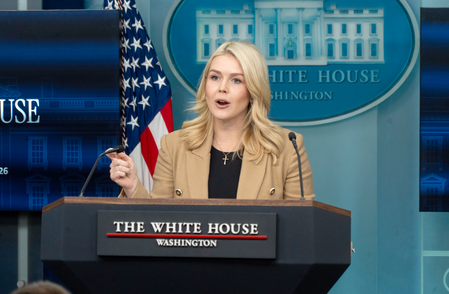
The White House has stood by its immigration enforcement efforts, dismissing claims that most arrests during President Donald Trump’s tenure involve nonviolent individuals. Press Secretary Karoline Leavitt emphasized the administration’s commitment to targeting criminals for deportation. Leavitt clarified that while all illegal aliens are subject to deportation, the primary focus remains on apprehending convicted felons, such as murderers, pedophiles, and rapists.
Responding to reports that a small percentage of arrests involve violent offenders, Leavitt asserted that the figures were being misrepresented. She highlighted that nearly 60% of ICE arrestees in the past year had criminal backgrounds. Additionally, she noted that around 70% of illegal aliens detained under President Trump had pending criminal charges or prior convictions.
Leavitt underscored the seriousness of crimes classified as nonviolent, citing examples like drug trafficking, child pornography distribution, burglary, fraud, DUI, embezzlement, solicitation of minors, and human smuggling. She emphasized that even nonviolent offenses can have significant victims. Leavitt challenged critics who questioned the statistics, stating that no one would want individuals convicted of such crimes residing in their communities.
The administration intends to maintain its deportation strategy, focusing on removing all illegal aliens from the country, particularly those with severe criminal records. Leavitt also referenced a federal appeals court decision supporting the administration’s policy of detaining illegal migrants. She highlighted the success of these measures in reducing illegal border crossings to historic lows, with zero such incidents reported for nine consecutive months.
Immigration enforcement has been a key component of Trump’s policy agenda since his initial presidential campaign. The administration argues that stringent detention and deportation policies act as deterrents to illegal crossings and enhance public safety. However, critics, including Democrats and immigrant advocacy groups, have raised concerns about enforcement priorities, due process, and the impact on families and communities.
