


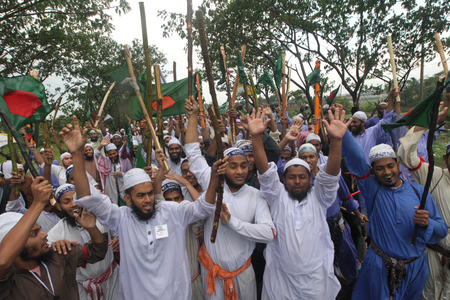
In Bangladesh, as the country gears up for elections, concerns have arisen regarding violence, human rights violations, and the marginalization of minority groups. Women in the nation are also expressing worries about their rights post-election. Specifically, they are apprehensive about the Jamaat-e-Islami party, fearing a potential loss of freedom if it assumes power.
These women, who played a pivotal role in past revolutions leading to regime changes, are now anxious about their future in the face of a resurgence of Islamist politics. The growing calls for the implementation of Sharia law are adding to their concerns. Despite the Jamaat’s assurances to govern in line with the Constitution and promote peace and prosperity, experts caution about the party’s ideological inclinations.
Experts highlight the need for caution when dealing with the Jamaat, noting a significant faction within the organization adheres to radical ideologies. Moreover, the party’s strong ties with Pakistan raise apprehensions. The collaboration between the Jamaat and Pakistan, especially after Sheikh Hasina’s departure, has raised concerns about the influence of radical elements advocating for Sharia law.
Concerns raised by women in Bangladesh are substantiated by recent data showing a rise in gender-based violence between January and June 2025 compared to the previous year. Religious groups’ escalating rhetoric is believed to be a contributing factor to this surge in violence. Additionally, there have been protests against government efforts to enhance gender equality, with hardline groups labeling such initiatives as anti-Islamic.
Despite having had female prime ministers in the past, the current political landscape in Bangladesh reflects a lack of female representation, with many parties, including the Jamaat, not fielding any female candidates. Reports indicate a concerning increase in cases of violence against women, underscoring issues related to justice delivery and societal attitudes towards women.
As the country anticipates the upcoming elections, the political scenario has been evolving rapidly, with the Jamaat gaining momentum. The prospect of the Jamaat’s rise has raised alarm among women, who fear the implications of a society influenced by the party’s ideologies. Security forces are bracing for potential violence during the elections, a situation that could favor the Jamaat and impact voter turnout for other parties.
