


When the moon is sighted for Eid and you know morning prayers will be followed by embraces and sweet wishes, there’s one dish that bridges the spiritual completion of Ramadan with the joy of celebration—Sheer Khurma. This isn’t just vermicelli cooked in milk.
Quick Summary:
Sheer Khurma is a traditional vermicelli pudding made by roasting thin vermicelli and nuts in ghee, then simmering them in milk with dates, sugar, and aromatic spices like cardamom and saffron. This rich, creamy dessert is essential for Eid celebrations and can be served warm or chilled.
Table of Contents
Why Sheer Khurma Belongs on Every Eid Table
There’s a reason Sheer Khurma appears across cultures that celebrate Eid—from South Asia to the Middle East to diaspora communities around the world. After a month of fasting, breaking dawn-to-dusk discipline, your body craves something genuinely nourishing and celebratory, not just sweet for sweetness’ sake. Sheer Khurma delivers exactly that—rich milk that’s been concentrated and slightly caramelized through patient simmering, vermicelli that’s been toasted in ghee until it carries that deep, nutty aroma, dates that bring natural sweetness and a connection to the fruit that traditionally breaks the fast, and nuts that add protein, healthy fats, and satisfying crunch.
The beauty of this pudding lies in its adaptability to the rhythm of Eid day itself. You can make it the night before and serve it chilled after morning prayers, offering coolness and refreshment when the day is already warming up. Or you can prepare it fresh in the early morning hours, serving it warm to guests who arrive throughout the day, the steam rising from bowls carrying the fragrance of cardamom and rose water. Either way works because Sheer Khurma genuinely tastes good both ways—not one of those dishes that’s only acceptable at one temperature.
| Attribute | Details |
|---|---|
| Prep Time | 15 minutes (plus 30-60 minutes for soaking dates) |
| Cook Time | 35-40 minutes |
| Total Time | 50-55 minutes (plus soaking time) |
| Servings | 6-8 servings |
| Cuisine | South Asian, Middle Eastern |
| Course | Dessert, Prasad |
| Difficulty | Easy to Medium |
| Calories | Approximately 280-320 calories per serving |
Ingredients For Sheer Khurma
The Vermicelli: Foundation of Texture
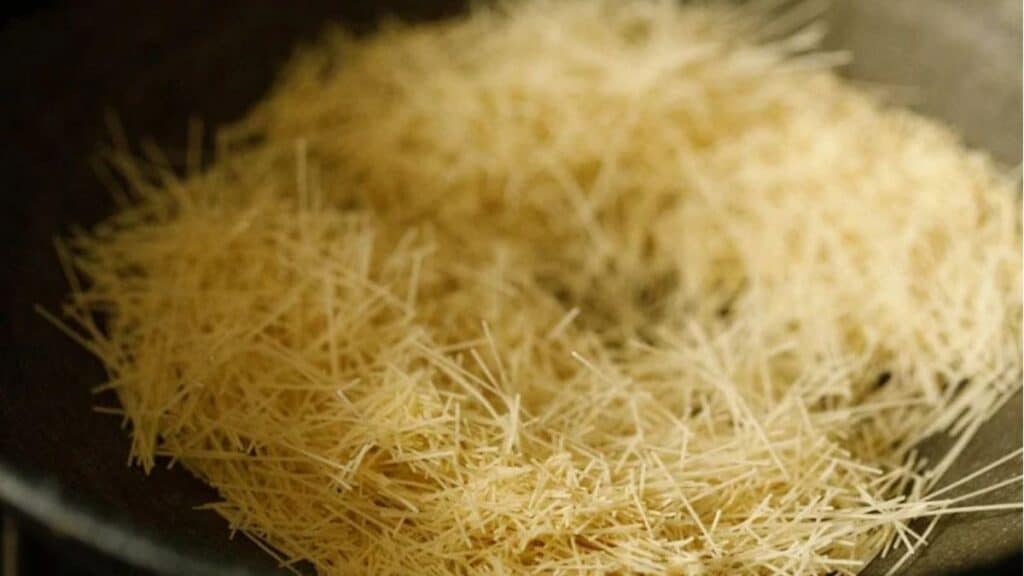
Thin vermicelli forms the textural heart of Sheer Khurma, and the variety you choose significantly affects the final dish. Traditional recipes call for seviyan—extremely thin wheat vermicelli that’s almost hair-like in diameter.
Full-Fat Milk: The Luxurious Base
Full-fat whole milk is non-negotiable for authentic Sheer Khurma. This isn’t the place for low-fat or skim milk, which simply won’t develop the creamy richness and slight caramelization that makes this dessert special. The milk fat carries flavors from the cardamom, saffron, and rose water throughout the pudding.
Dates: Natural Sweetness and Cultural Significance

Dates in Sheer Khurma serve multiple purposes beyond just sweetening. They carry symbolic weight, connecting the celebration to the tradition of breaking fast with dates throughout Ramadan. They provide complex sweetness—not just sugar-sweet but carrying caramel notes, slight earthiness, and genuine fruit flavor.
Nuts: Crunch, Protein, and Visual Appeal

The combination of cashews, almonds, pistachios, and chironji (charoli seeds) isn’t arbitrary—each nut contributes distinct flavor and texture. Cashews provide buttery richness and slight sweetness. Almonds offer more pronounced nuttiness and satisfying crunch.
Ghee: The Flavor Amplifier

Ghee does work in Sheer Khurma that ordinary butter or oil cannot replicate. Its high smoke point means you can roast vermicelli and nuts to deep golden brown without burning, developing those complex toasted flavors that form the backbone of the dish.
Aromatic Spices: The Finishing Touch
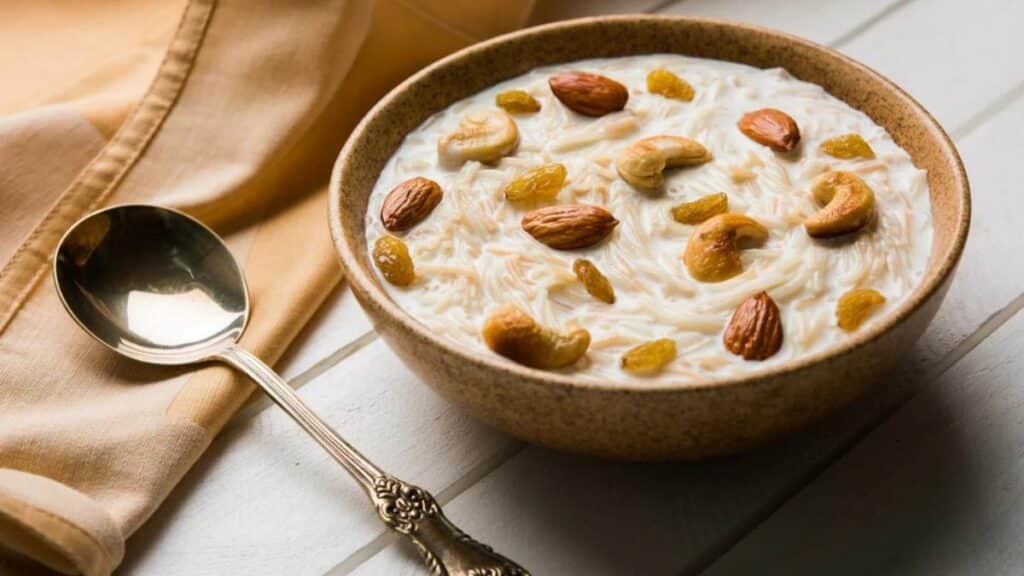
Cardamom, saffron, and rose water provide the aromatic signature that makes Sheer Khurma recognizable even before you taste it. Cardamom contributes warm, slightly citrusy, intensely aromatic flavor that’s essential to South Asian desserts. Green cardamom pods that you crush yourself provide more vibrant flavor than pre-ground powder, though both work.
CHECK MORE ON:Panakam : Traditional Jaggery Pepper Drink Recipe (Ready in 15 Minutes)
How to Make Sheer Khurma: Step-by-Step Method
Step 1: Prepare Your Dates
If using dried dates, soak them in warm water for about 30 minutes to an hour before you begin cooking. This softening process makes them easier to chew in the finished pudding and helps them integrate better with the other ingredients. After soaking, drain them thoroughly and chop into small pieces—roughly the size of a raisin or slightly larger. Remove any pits if your dates aren’t already pitted, and check for any bits of stem that sometimes cling to the top of the date.
Some cooks prefer to chop dates into very fine pieces so they almost dissolve into the milk, creating subtle date flavor throughout rather than distinct pieces. Others like larger chunks that provide textural interest and bursts of concentrated sweetness. Choose based on your preference and the preferences of those you’re serving.
Step 2: Roast the Nuts in Ghee
Heat a heavy-bottomed pan or kadhai over medium heat. Add two tablespoons of ghee and let it melt completely. Once the ghee is hot and shimmering but not smoking, add the cashews first since they take slightly longer to color. Stir continuously with a wooden spoon or heat-resistant spatula, keeping the nuts moving so they toast evenly without burning.
After about a minute when the cashews start showing the first hints of golden color, add the almonds and pistachios. Continue stirring constantly. The nuts will go from pale to perfect golden brown quickly, often in just two to three minutes total, so you cannot leave them unattended or they’ll burn. You’re looking for warm golden-brown color and the emergence of toasted, nutty aroma that signals the nuts’ oils have been activated through heat.
If using chironji seeds, add them in the last thirty seconds of roasting since they’re smaller and toast faster than the larger nuts. Once everything reaches proper golden-brown color, immediately remove the nuts from the pan to a separate bowl using a slotted spoon, leaving the ghee behind in the pan. Nuts will continue cooking from residual heat even after removal, so taking them out just before they reach your ideal color prevents over-toasting.
Step 3: Roast the Dates
In the same ghee remaining in your pan, add the chopped dates. Stir them continuously over medium heat for about one to two minutes until they become fragrant and slightly softer, and their natural sugars begin to caramelize. The dates will darken slightly and release a wonderful caramel-like aroma. This roasting step intensifies their sweetness and adds depth of flavor that raw dates wouldn’t provide.
Once the dates are roasted and fragrant, remove them to the same bowl as your nuts. If your pan looks dry, add another tablespoon of ghee to prepare for the vermicelli roasting in the next step.
Step 4: Roast the Vermicelli Until Golden
This step requires your full attention because vermicelli can go from perfectly toasted to burnt in seconds. If you’re using plain vermicelli, add the remaining tablespoon of ghee to your pan and let it heat. If you’re using pre-roasted vermicelli, you can skip adding more ghee or add just a small amount for extra richness and to prevent sticking.
Add the broken vermicelli to the pan and immediately begin stirring continuously. Use medium-low heat rather than medium or high—slower roasting gives you better control and more even color development. The vermicelli will gradually change from pale cream to light tan to golden brown, taking about four to six minutes depending on your heat level and how much vermicelli you’re roasting.
You’re aiming for consistent golden-brown color across all the strands, with toasted, nutty aroma that smells almost like toasted bread or popcorn. If some strands start browning much faster than others, reduce your heat immediately and stir more vigorously to redistribute. Once the vermicelli reaches proper color, immediately remove the pan from heat to stop the cooking process.
Step 5: Boil and Reduce the Milk
While your vermicelli is roasting, or immediately after if you’re working with a single pan, bring your milk to a boil in a separate thick-bottomed pot. Use the largest pot you have to prevent the milk from boiling over—milk has a tendency to foam dramatically once it reaches boiling point, and hot milk spilling onto your stovetop creates a mess and burning smell that’s hard to clean.
Once the milk comes to a full boil, reduce the heat to medium-low and let it simmer gently for ten to fifteen minutes. This reduction period serves multiple purposes. It concentrates the milk slightly, making it richer and creamier. It develops subtle caramelized flavors as lactose sugars begin to brown slightly at the edges of the pot. It also reduces the likelihood of the milk curdling later when you add other ingredients.
Stir occasionally during this simmering period, particularly scraping the bottom and sides of the pot to prevent milk solids from sticking and burning. If a skin forms on top of the milk, you can either stir it back in or remove it depending on your preference—some people love the texture it adds while others find it unpleasant.
Step 6: Add Vermicelli to the Simmering Milk
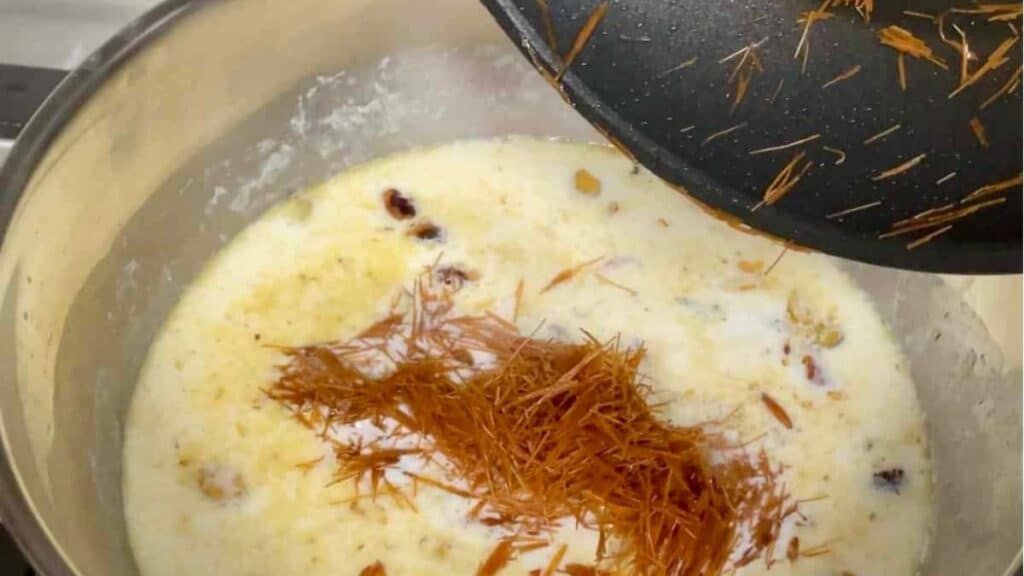
Once your milk has reduced slightly and is maintaining a gentle simmer, add all the roasted vermicelli directly to the pot. The milk will stop boiling momentarily as the cooler vermicelli cools the liquid, but it should return to a gentle simmer within a minute or so.
Stir gently but thoroughly to ensure all the vermicelli strands are submerged in the milk and not clumping together. The vermicelli will begin absorbing milk immediately and softening. Let it cook in the simmering milk for about five to seven minutes, stirring occasionally to prevent sticking to the bottom of the pot.
You’ll notice the milk thickening as the vermicelli releases starch and continues to absorb liquid. The vermicelli should become tender but still maintain slight bite—not mushy or completely soft, but pleasant to chew. If the mixture seems to be thickening too quickly and the vermicelli isn’t fully tender yet, add a splash more milk to thin it slightly and continue cooking.
Step 7: Add Nuts, Dates, and Sweetener
Once the vermicelli is properly cooked and tender, add the roasted nuts and dates back to the pot. Stir them in thoroughly so they distribute evenly throughout the pudding rather than sinking to the bottom or floating on top.
Add your sugar now, sprinkling it over the surface and then stirring it in completely. If using condensed milk instead of sugar, add it now and stir thoroughly until it’s completely incorporated and the pudding takes on a uniform color. The condensed milk will add both sweetness and additional creaminess, making the Sheer Khurma richer than sugar alone would.
Let everything simmer together for another five minutes, stirring occasionally. This allows the flavors to marry and the sweetness to permeate throughout. The pudding will continue thickening during this time, so adjust consistency if needed by adding more milk for thinner consistency or continuing to simmer for thicker pudding.
Step 8: Add Aromatic Spices and Final Touches
Remove the pot from heat before adding your aromatic finishing touches—saffron, cardamom, and rose water. These delicate flavors can become harsh or dissipate if added to boiling liquid, so letting the pudding cool for just a minute or two before adding them preserves their subtle complexity.
Add the cardamom powder first, stirring it in thoroughly. Then add the saffron along with the milk you soaked it in, which should now be bright yellow and fragrant. Stir gently to distribute the saffron’s color throughout the pudding, creating those characteristic golden-yellow streaks that make Sheer Khurma visually distinctive.
If using rose water, add it now with a light hand—start with half a teaspoon, stir, taste, and add more only if needed. Rose water’s intensity varies dramatically between brands, and too much will make your Sheer Khurma taste like perfume rather than dessert.
Tips for Sheer Khurma That Tastes Like Celebration
Watch your vermicelli roasting like a hawk. This is where most disasters happen—one moment you’re achieving perfect golden color, the next moment you’ve got burnt, bitter vermicelli that will ruin the entire batch. Stay present, keep stirring, and trust your nose as much as your eyes. The aroma tells you when roasting is nearly complete.
Use a thick-bottomed pot for the milk. Thin pots create hot spots that scorch milk and make it stick. Heavy-bottomed vessels distribute heat evenly, allowing you to simmer milk for the necessary time without burning. If you don’t have a heavy pot, use a heat diffuser under a lighter pot to prevent scorching.
Don’t skip the milk reduction step. Those ten to fifteen minutes of gentle simmering transform ordinary milk into something richer and more complex. The concentrated flavor and slightly thickened consistency make the difference between good Sheer Khurma and exceptional Sheer Khurma that people remember and ask for the recipe.
Adjust sweetness after everything’s combined. Different brands of condensed milk have different sweetness levels. Dates contribute varying amounts of sugar depending on their type and how many you use. Add your primary sweetener, let everything simmer briefly, then taste and adjust before removing from heat. You can always add more sugar; you can’t remove it if you’ve oversweetened.
Make it ahead for better flavor. While Sheer Khurma can absolutely be served fresh and warm, it genuinely improves overnight in the refrigerator as flavors meld and develop complexity. If you’re making it for Eid morning, prepare it the night before and serve it chilled or let it come to room temperature while you’re at morning prayers.
Store properly to maintain freshness. Sheer Khurma keeps refrigerated for about three to four days in an airtight container. The vermicelli will continue absorbing liquid during storage, so the pudding becomes thicker over time. If it becomes too thick, simply stir in a bit of milk to return it to proper consistency before serving.
