



Marathi cinema has quietly been producing some of the most honest, fearless storytelling in India — and Toh Ti Ani Fuji is its latest, most compelling proof. Set against the serene landscapes of Tokyo and the shadow of Mount Fuji, this is not a love story that sweeps you off your feet. It is one that sits with you, unsettles you, and reminds you of every love you have ever felt but could not hold on to. Bold, unhurried, and emotionally unsparing, Toh Ti Ani Fuji is the kind of film Indian cinema rarely makes — and almost never gets right.
Toh Ti Ani Fuji is a slow-burn, non-linear Marathi relationship drama set across Pune and Tokyo that revisits a passionate, complex love story through the lens of a chance reunion beneath Mount Fuji. Directed by Mohit Takalkar and anchored by career-defining performances from Lalit Prabhakar and Mrinmayee Godbole, this is emotionally honest, visually stunning cinema that rewards patient viewers with moments of piercing truth.
Language: Marathi
Age Rating: U/A 16+
Genre: Romantic Drama
Director: Mohit Takalkar
Streaming Platform: SonyLIV
Release Date: April 10, 2026
The Plot: Love, Memory, and What Seven Years Cannot Erase
At its heart, Toh Ti Ani Fuji — which translates roughly to Him, Her and Fuji — is a story about two people who loved each other deeply and still couldn’t make it work. Toh (Lalit Prabhakar) and Ti (Mrinmayee Godbole) are former lovers who meet again in Tokyo, seven years after their relationship fell apart under the weight of conflicting priorities, emotional imbalances, and unspoken wounds.
The film moves fluidly between timelines — revisiting the warmth, the arguments, the tenderness, and the fractures of their shared past while quietly examining who they have each become. The setting of Japan, with the distant, dormant presence of Mount Fuji, becomes both a backdrop and a metaphor — beautiful, still, and carrying the memory of something once volcanic. The film does not chase reconciliation or closure. It simply asks: can two people ever truly leave each other behind?
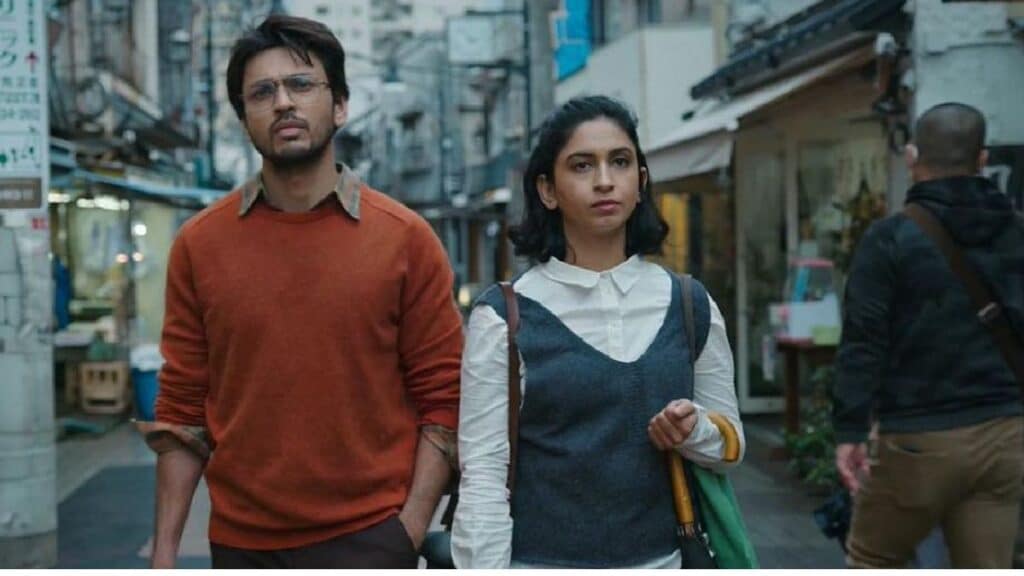
Performances: Two Actors at the Peak of Their Powers
Lalit Prabhakar
Lalit Prabhakar delivers what is easily among his finest performances to date. His Toh is charming and boyish on the surface, with a quiet, aching insecurity underneath — a man who loves fiercely but cannot quite grow into the person that love requires him to be. Prabhakar balances warmth and volatility with remarkable control, making Toh frustrating and deeply human in equal measure.
Mrinmayee Godbole
Mrinmayee Godbole is the soul of the film. Her Ti is fiercely independent, emotionally armoured, and quietly layered — and Godbole conveys entire storms through restraint, silence, and a single glance. Her performance is the kind that stays with you, not because of grand dramatic moments, but because of how completely real she feels in every quiet beat.
Together, the two share an electric, lived-in chemistry that makes every confrontation and every moment of stillness feel completely earned. The standout sequence — a nearly 13-minute emotional meltdown where love and resentment collide simultaneously — is raw, uncomfortable, and utterly unforgettable.
Direction and Vision: Mohit Takalkar at His Most Assured
Mohit Takalkar directs with patience and confidence, trusting his story and his actors to do the heavy lifting. The non-linear structure — where each character carries a different, subjective memory of the same relationship — mirrors the way we all reconstruct our past. It is occasionally uneven, but intentionally so. This is memory, not a clean narrative.
Irawati Karnik’s screenplay is the film’s other great strength. The writing handles grief, unplanned pregnancy, betrayal, and emotional volatility without over-explaining any of it. These themes emerge naturally from character rather than plot mechanics, giving the film a texture that feels lived-in and honest.
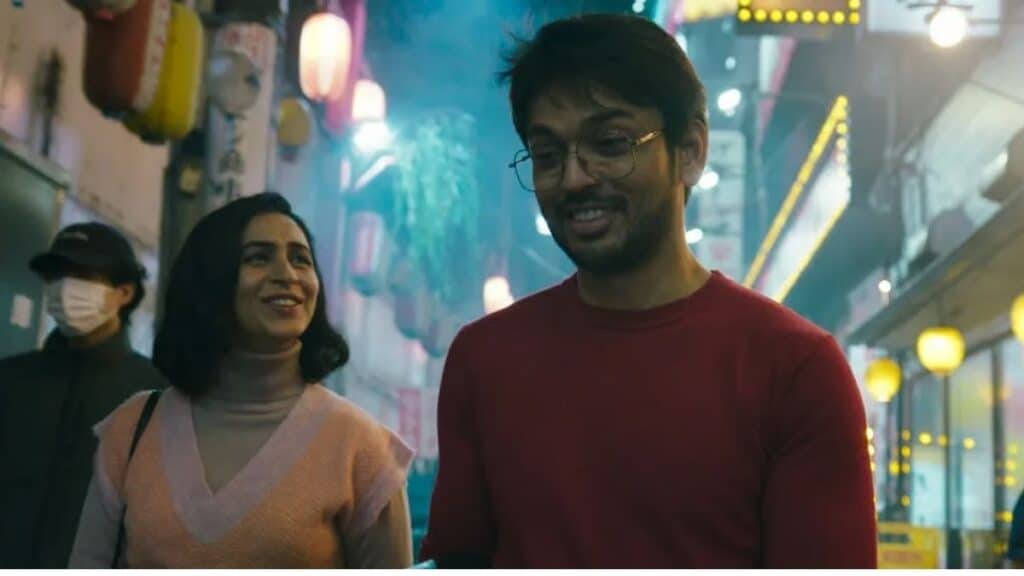
Technical Craft: Where Two Worlds Tell One Story
The cinematography is one of Toh Ti Ani Fuji’s most distinctive qualities. Rahul Chauhan’s India sequences crackle with the charged energy of two people in the middle of something consuming, while John Donica’s Japan sequences carry a quiet, stately grace that mirrors the emotional distance the characters are trying to bridge. The contrast between the two visual worlds is not just beautiful — it is meaningful.
Takalkar, who also edited the film, cuts between timelines with a deliberate rhythm that mirrors the subjective nature of recollection. The background score is understated and serves the mood beautifully. A few stretches in the middle act could have been trimmed, but the overall craft is confident and cohesive.
Strengths and Weaknesses
What Works Beautifully
- Career-best performances from both Lalit Prabhakar and Mrinmayee Godbole
- Irawati Karnik’s fearlessly honest, emotionally intelligent screenplay
- Dual cinematography — Japan and India as two distinct emotional registers
- A non-linear structure that trusts the audience completely
- The extended meltdown sequence — a masterclass in writing and performance
- Mature, frank, and unafraid depiction of love in all its complexity
Minor Areas to Note
- Pacing loses some momentum in the middle act
- A few supporting threads remain underdeveloped
- The non-linear structure may disorient viewers expecting a conventional narrative
Final Verdict: 5/5 Stars ⭐⭐⭐⭐⭐
Toh Ti Ani Fuji is the rare Indian romantic drama that treats love — and its audience — with complete honesty. It does not offer neat resolutions or reassuring endings. What it offers instead is recognition: the quiet, aching recognition of a love that was real, imperfect, and impossible all at once. Mohit Takalkar, Irawati Karnik, and their two extraordinary leads have made something that stands apart from anything else in contemporary Marathi cinema. It is demanding, deeply rewarding, and genuinely unforgettable.
What is the age rating of Toh Ti Ani Fuji?
Toh Ti Ani Fuji carries a U/A 16+ rating.
Can we watch Toh Ti Ani Fuji with kids?
No, Toh Ti Ani Fuji is not suitable for children. The film contains intense emotional scenes, adult relationship dynamics, and frank depictions of conflict that are not appropriate for young audiences.
Is Toh Ti Ani Fuji based on a true story?
No, Toh Ti Ani Fuji is not based on a true story.
