


In this Theertharoopa Thandeyavarige movie review, we explore a film that arrives like a gentle embrace in Kannada cinema’s landscape. When was the last time you walked into a theater and experienced a story so rooted in emotional truth that it reminded you why cinema exists—to make us feel, to help us heal, to celebrate the connections that truly matter? Theertharoopa Thandeyavarige (translating to “Sacred Form of the Father-Son Relationship”) doesn’t just entertain; it reaches into your chest and reminds you of every family wound you’ve carried, every relationship you’ve neglected, every bridge you thought was burned beyond repair.
Director Ramenahalli Jagannatha, following his critically acclaimed Hondisi Bareyiri, announces his mastery of emotional storytelling with a film that understands a profound truth: a thousand things can break a family, but one little string can pull it back together. This is Ravindra Vijay and Sithara’s finest work in years, supported by an ensemble that understands exactly what kind of heartfelt journey they’ve signed up for. With cinematography that transforms Karnataka’s landscapes into emotional poetry and a narrative structure that balances pain with hope, Theertharoopa Thandeyavarige is the cinematic equivalent of coming home after years away and realizing what you’ve been missing.
Quick Answer:
Theertharoopa Thandeyavarige is an emotionally intelligent, beautifully crafted family drama that succeeds brilliantly in exploring fractured relationships and the healing power of forgiveness. Though minor screenplay gaps exist, the film’s stunning performances from Ravindra Vijay and Sithara, breathtaking cinematography, and soul-stirring emotional core make it essential viewing for anyone seeking meaningful, heart-touching Kannada cinema.
Language: Kannada
Age Rating: U/A
Genre: Family Drama, Emotional, Romance
Director: Ramenahalli Jagannatha
The Plot: Healing Wrapped in Layers of Love and Discovery
At its core, Theertharoopa Thandeyavarige is a reconciliation story—but calling it just that would be like calling a symphony “some organized sounds.” The film’s genius lies in its delicate narrative structure: a travel vlogger running from his past, a mother who sacrificed everything, a journalist searching for closure, and a romance that becomes the thread pulling disparate wounds toward healing.
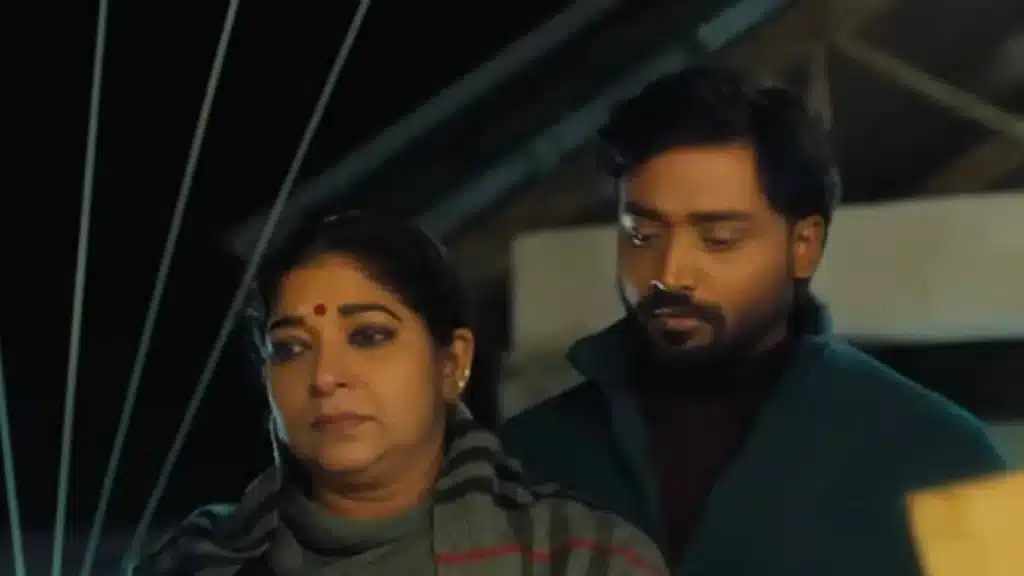
Pruthvi (Nihar Mukesh) is a travel vlogger whose wanderlust stems not from adventure but from avoidance. His camera captures distant villages and remote schools, but what it really frames is his desperate need to stay away from home—specifically, from his mother Janaki (Sithara). Raised by this single parent who worked as a tailor to fund his education, Pruthvi’s childhood should have been a testament to maternal devotion. Instead, it became the source of deep trauma when Janaki found companionship with Vishwanath (Rajesh Natranga), a relationship that made young Pruthvi the target of ridicule and cruelty.
Enter Akshara (Rachana Indar), an admirer of Pruthvi’s charitable work who reaches out after donating to one of his school initiatives. She’s charming, innocent, and refreshingly genuine. What begins as friendship—light banter, shared dreams, moments that make audiences smile—gradually deepens into something neither expected.
As Pruthvi and Akshara’s connection grows, revelations force the young vlogger to confront painful questions: Where did his father go? Who is Akshara’s father desperately seeking? Is the resentment toward his mother justified? How did well-meaning choices create such distance? The answers—emotional, heartfelt, and deeply satisfying—form the soul of this beautiful film.
Performances: Every Actor Delivers Career-Defining Work
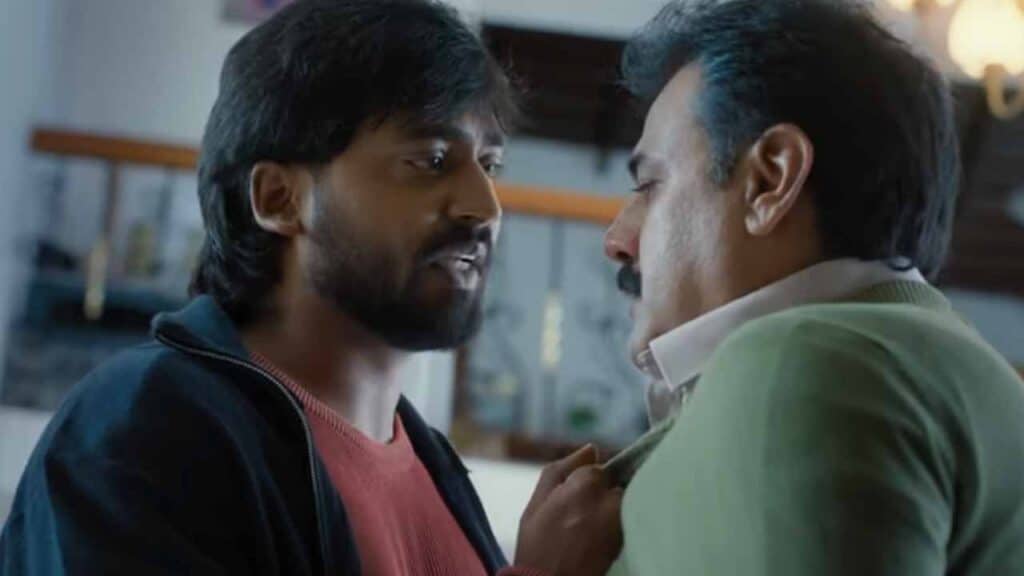
Ravindra Vijay: The Beating Heart of the Film
Ravindra Vijay delivers what may be the finest performance of his career. As Ravi Ramanathapura, he embodies a man suspended between past trauma and present hope with such nuanced depth that every frame he occupies becomes charged with unspoken history.
The restraint shows up in unexpected moments—a flicker of recognition, protective instinct toward Akshara that reveals layers of parental love complicated by loss. Vijay understands that the most powerful emotions are often the ones we struggle not to show, and his performance is a masterclass in controlled emotional revelation.
Sithara: Maternal Complexity Portrayed with Grace
Sithara matches this brilliance with an equally compelling performance as Janaki that showcases remarkable emotional intelligence. Her portrayal of a single mother who made impossible choices—loving her son while also seeking companionship, sacrificing everything while also claiming some happiness—could have easily become sentimental. Instead, Sithara finds truth in every contradictory emotion.
Her chemistry with Rajesh Natranga’s Vishwanath brings warmth to what could have been problematic. She makes you understand why Janaki chose this connection, how it sustained her, and why Pruthvi’s resentment represents only part of a much more complex story.
Rajesh Natranga: Impact Beyond Screen Time
Rajesh Natranga provides impactful work as Vishwanath. Though his screen time is limited, his performance leaves lasting impressions that ripple through the entire narrative.
Natranga brings dignity to a role that could easily have been reduced to “the man who came between mother and son.” Instead, his Vishwanath emerges as someone who genuinely cared for Janaki and tried, within his limitations, to be a positive presence. His scenes with Sithara carry the comfortable intimacy of long companionship, adding meaningful complexity to the film’s exploration of family dynamics.
Rachana Indar: The Light That Guides Home
Rachana Indar brings infectious charm and authentic grace to Akshara, creating a character who becomes the film’s emotional compass. Her performance exudes the kind of innocent wisdom that makes you believe she could be the catalyst for Pruthvi’s transformation—through genuine kindness and understanding.
What’s particularly impressive is how Indar navigates the revelation scenes, balancing her character’s emotional processing with concern for Pruthvi. Her on-screen presence reminds audiences why simple goodness, portrayed authentically, can be revolutionary in storytelling.
Nihar Mukesh: A Debut That Serves the Story
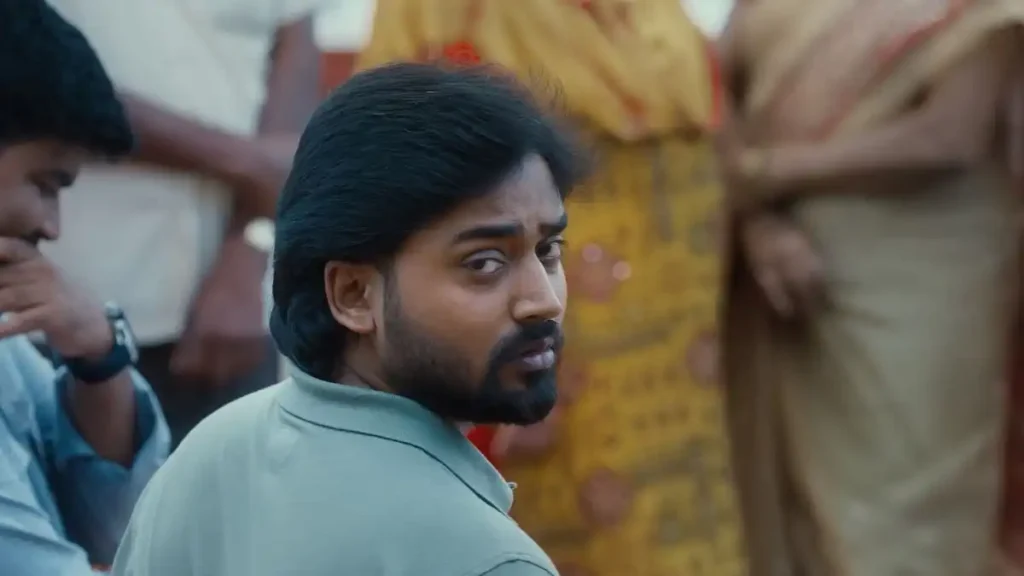
In his debut performance, Nihar Mukesh brings sincere commitment to Pruthvi’s character. His approach effectively captures the emotional guardedness of someone who’s spent years building walls—the detached attitude, the careful distance he maintains, the way hurt has hardened into resentment.
The chemistry with Rachana Indar works beautifully, particularly in lighter moments where Pruthvi’s defenses drop. Mukesh handles these tonal shifts with growing confidence, making his debut a solid foundation for what could become an interesting career in Kannada cinema.
Direction and Vision: A Master Storyteller at His Peak
Ramenahalli Jagannatha makes the kind of assured directorial statement that confirms his status as one of Kannada cinema’s most important contemporary voices. Following Hondisi Bareyiri, he could have played it safe. Instead, he’s chosen to deepen his exploration of what family means, how relationships fracture, and most importantly, how healing becomes possible.
There’s measured precision to his approach—every scene serves the emotional architecture, every character beat builds toward cathartic conclusion, every stylistic choice enhances rather than distracts. This is a director who understands that the most powerful cinema trusts audiences to feel deeply and think clearly.
The Romance: Delicately Handled, Beautifully Realized
The handling of Pruthvi and Akshara’s budding romance deserves special acknowledgment. It’s been too long since a Kannada film portrayed young love with this kind of delicacy—where every glance matters, where small gestures carry weight, where the journey from friendship to romance feels organic.
Jagannatha films these moments with tenderness. A shared laugh. The comfortable silence between people who genuinely enjoy each other. The moment when friendship tips into something deeper. These aren’t revolutionary beats, but they’re executed with such care that they feel fresh, even precious.
The comparison to Karna and Sanvi from Kirik Party isn’t accidental—both romances work because they’re rooted in actual connection. You believe these people would choose each other, that their relationship could weather the revelations that emerge.
Pacing: The Delicate Balance of Emotional Storytelling
The film maintains engagement despite lacking typical commercial elements. There are no fight sequences, no elaborate song picturizations, no comic relief tracks. Yet at no point does it feel boring. That’s confident storytelling—trusting that human emotions, properly explored, provide all the drama necessary.
The pre-interval sequence builds to a revelation that recontextualizes everything we’ve seen. The climax pays off multiple emotional threads simultaneously, weaving together the missing person search, Pruthvi’s family trauma, and the romance into a resolution that feels both surprising and inevitable.
Technical Brilliance: Craft in Service of Emotion
Cinematography: Karnataka as Emotional Landscape
The visual language is deliberately beautiful without being showy. The cinematography understands something crucial: landscape isn’t just setting—it’s emotional state made visible.
What’s particularly impressive is how purely emotional scenes are captured. A conversation between mother and son is framed with simple elegance—no flashy movements, just two people and the weight of years between them.
Handling Multiple Timelines: Technical Intelligence
The film moves fluidly between 2004 flashbacks and present-day 2025. Visual tints distinguish past from present—sepia warmth for memories, clearer light for current events. This approach, achieved on a minimal budget, establishes period authenticity without drawing excessive attention.
Admittedly, occasional drone shots reveal contemporary infrastructure that didn’t exist in 2004. But the team smartly uses timelapses and strategic framing to maintain emotional focus even when perfect period accuracy isn’t achievable.
Sound Design and Music: The Film’s Emotional Skeleton
The musical elements function as emotional infrastructure, with songs and background score working in perfect harmony to enhance key moments without overwhelming them. This is music that understands restraint—knowing when to swell, when to pull back, when to disappear and let silence do the heavy lifting.
The background score pulls at heartstrings with precise timing. A mother seeing her son after months of distance. A father figure realizing the damage his presence inadvertently caused. Two families discovering their lives are far more connected than anyone imagined. These moments could tip into melodrama with wrong musical choices. Instead, the score enhances without manipulating.
Editing: Controlled Emotional Flow
The editing keeps the emotionally loaded film from collapsing under its own weight. Scenes are cut at precisely the right moment—long enough to land emotionally, short enough to maintain momentum. The interweaving of different character perspectives maintains clarity despite narrative complexity.
However, there are moments where tighter cutting would have helped. A few scenes feel incompletely developed, creating occasional gaps requiring audiences to infer what transpired. The climax sequence demonstrates editing at its finest—multiple emotional threads converge with perfect clarity while building toward maximum impact.
Strengths and Minor Weaknesses
What Works Magnificently
- Powerhouse performances from Ravindra Vijay and Sithara – Career-defining work that elevates every scene
- Beautiful climax that delivers catharsis – Multiple emotional threads perfectly resolved
- Delicate romance handled with genuine tenderness – Organic chemistry that feels fresh
- Soul-stirring music and background score – Enhances without overwhelming
- Emotionally intelligent direction – Jagannatha at peak creative powers
- Rooted in universal family values – Substance that resonates beyond entertainment
Where It Could Improve
- Unresolved character comeback lacks explanation – Small but noticeable narrative gap
- Screenplay gaps require audience inference – Some scenes feel incompletely developed
- Victim blaming goes unchallenged – Regressive element in otherwise sensitive film
Final Verdict: 5/5 Stars ⭐⭐⭐⭐⭐
Theertharoopa Thandeyavarige stands as a beautiful affirmation that emotionally intelligent family dramas still have the power to transform hearts and inspire healing. Director Ramenahalli Jagannatha has crafted a film that understands audiences don’t need elaborate commercial elements when offered genuine emotional authenticity and beautifully told stories about universal human experiences.
This is cinema that reminds us why we cherish loved ones, why forgiveness matters more than being right, and how healing becomes possible when we choose understanding over resentment. The film takes viewers to beautiful places—visually through Karnataka’s stunning landscapes and emotionally through its exploration of fractured relationships discovering wholeness.
While the screenplay contains gaps and certain elements could have benefited from more sensitive handling, these imperfections fade against overwhelming strengths. The powerhouse performances from Ravindra Vijay and Sithara, supported by Rajesh Natranga and Rachana Indar, create an emotional experience that transcends minor technical flaws.
Why This Film Matters
The makers’ bold decision to release on January 1st reflects confidence that proves absolutely justified. This film offers exactly what viewers need at the year’s beginning: hope, warmth, and the reminder that broken bonds can be mended, that second chances are worth taking, and that family—however complicated—remains worth fighting for.
This is the kind of film you watch with family members you may have grown distant from, the kind that sparks conversations about relationships long after credits roll, the kind that stays with you during quiet moments when you’re considering reaching out to someone you’ve been avoiding.
