


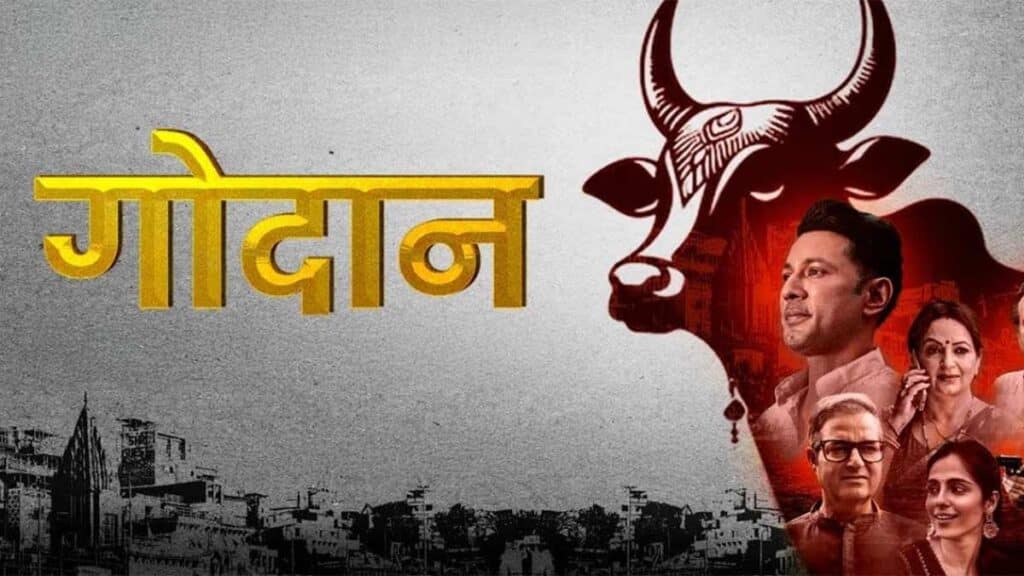
In an era when environmental documentaries and sustainability-focused content typically stay confined to streaming platforms and niche audiences, Godaan arrives in theaters with an ambitious mission—to transform hearts and minds about cattle conservation, traditional Indian knowledge systems, and the intersection of science and spirituality.
Quick Summary:
Godaan (2026) is a spiritually-focused film about cattle conservation and sustainable living, following a modern scientist who discovers Panchgavya-based medicine and traditional knowledge through his relationship with an Indian cow. Released February 6, 2026, the film has been declared tax-free in Chhattisgarh for its themes of environmental sustainability and cultural preservation.
Table of Contents
What Is Godaan 2026 About?
Godaan 2026 centers on the transformative journey of a contemporary scientist—presumably trained in Western scientific methods and materialist worldview—whose fundamental beliefs about knowledge, medicine, and the natural world shift dramatically through his relationship with Surbhi, an Indian cow. The narrative arc appears designed to bridge the perceived divide between modern science and traditional Indian wisdom, particularly regarding cattle and the products derived from them.
The film’s focus on Panchgavya—the five products from cows including milk, curd, ghee, urine, and dung—positions these substances not as mere agricultural byproducts but as foundations for medicine, spiritual practice, and sustainable living systems. This represents a bold thematic choice in contemporary cinema, addressing subjects that exist at the intersection of faith, tradition, science, and increasingly polarized cultural conversations about animal welfare and traditional practices.
| Category | Details |
|---|---|
| Movie Title | Godaan (2026) |
| Release Date | February 6, 2026 |
| Language | Hindi (presumed primary language) |
| Genre | Spiritual Drama, Environmental Documentary-Style, Family Film |
Cast and Crew Information
| Department | Name/Details |
|---|---|
| Lead Actor | Modern scientist Sahil Anand |
| Supporting Cast | Manoj Joshi: Mukesh Chacha Ji Upasana Singh: Geeta Chachi Ji Rajesh Jais: Ram Krishan Vishwakarma Sahil Anand: Vivek Vishwakarma Rose Sardana: Divya Praveen Tiwari (or Praveen Tyagi): Dr. Rudra Sahaarsh Shuklaa: Gaurav Utkarsh Singh Bhardwaj: Inspector Ravi Karnwal |
| Cow Character | Surbhi (Indian cow, central character) |
| Director | Trilok Jetley |
| Producer | Kamdhenu Film Productions |
Understanding the Cultural Context: Why “Gau Mata” Matters
The concept of “Gau Mata” or Mother Cow holds profound significance in Hindu cultural and religious tradition, representing far more than agricultural utility or economic value. To understand Godaan’s thematic foundation, one must recognize this deep-rooted reverence that extends back thousands of years through Indian civilization, where cattle have been protected, venerated, and integrated into spiritual practice.
In Vedic tradition, the cow symbolizes abundance, selfless giving, and sustenance. Every part of the cow provides something beneficial—milk for nutrition, dung for fuel and fertilizer, urine for medicinal and purification purposes, even the presence of cattle bringing auspiciousness to households. This comprehensive utility combined with the animal’s gentle nature created cultural frameworks where harming cows became unthinkable, where their protection became religious duty.
The economic significance of cattle in rural Indian life cannot be overstated. For farming families, cows provide not just dairy products for consumption and sale but also bullocks for plowing fields, dung for fertilizing crops and creating cooking fuel, and stable sources of income through dairy farming. The integration of cattle into agricultural systems created sustainable, circular economies where waste from one process became input for another.
The Story: A Scientist’s Spiritual Transformation
The narrative follows a scientist—likely someone with credentials and training in modern medicine, chemistry, or related fields—who encounters Surbhi, an Indian cow whose presence and the traditional practices surrounding her challenge his fundamental assumptions about knowledge, healing, and the natural world. This setup creates immediate dramatic tension between two epistemological frameworks: empirical scientific method versus traditional knowledge transmitted through generations.
The scientist’s initial skepticism would be familiar to many viewers who’ve been educated in systems that privilege peer-reviewed research, controlled studies, and mechanistic explanations of natural phenomena. When confronted with claims about Panchgavya’s medicinal properties or spiritual benefits of cow reverence, such a person would naturally demand evidence, controlled trials, reproducible results—the standard tools of scientific validation.
Surbhi becomes the catalyst for transformation, presumably through a combination of observed results (perhaps the scientist witnesses healing or agricultural benefits that defy his expectations), experiential understanding (direct participation in traditional practices reveals dimensions that cannot be captured in laboratory conditions), and possibly spiritual experiences that transcend purely material explanations.
Themes and Messages: What Godaan Wants Viewers to Understand
Environmental Sustainability and Organic Agriculture
Godaan positions traditional cattle-integrated farming as a model of environmental sustainability that industrial agriculture has abandoned to the detriment of soil health, water quality, and long-term food security. The film likely demonstrates how cow dung serves as superior organic fertilizer compared to chemical alternatives, how its use builds rather than depletes soil, and how this creates farming systems that can continue indefinitely rather than exhausting land within generations.
The contrast between chemical-intensive farming and organic methods using Panchgavya products highlights not just environmental but health consequences. Pesticide residues in food, chemical runoff polluting water sources, soil degradation requiring ever-increasing chemical inputs—these modern problems find solutions in traditional practices the film advocates reviving.
Cow Reverence as Cultural Preservation
Beyond environmental arguments, Godaan addresses cultural continuity and the preservation of knowledge systems facing extinction under modernization pressures. The reverence for cows isn’t presented merely as religious sentiment but as the cultural framework that sustained these sustainable practices across centuries, embedding environmental wisdom in spiritual devotion that ensured compliance across generations.
The film likely argues that when traditional practices are dismissed as superstition without investigating their practical foundations, communities lose access to accumulated wisdom that might address contemporary problems. The scientist’s journey models how modern education needn’t be abandoned but can be expanded to recognize value in traditional knowledge.
Bridging Ancient Wisdom and Modern Science
Perhaps the most intellectually ambitious theme involves demonstrating that traditional Panchgavya-based medicine and spiritual science aren’t opposed to empirical investigation but simply haven’t been studied with appropriate methods and open minds. The film potentially shows the scientist applying rigorous analysis to traditional claims, finding that when properly investigated, ancient wisdom reveals sophisticated understanding of chemistry, biology, and human health.
This bridging theme matters particularly for younger, educated audiences who respect scientific method but feel disconnected from cultural traditions. Godaan offers a framework for honoring both—using scientific tools to investigate traditional claims rather than dismissing them unexamined, remaining open to dimensions of reality that current scientific paradigms haven’t yet accommodated.
Production Background: Kamdhenu Film Productions and Tax-Free Status
Kamdhenu Film Productions, the production house behind Godaan, takes its name from the divine wish-fulfilling cow of Hindu mythology, signaling from the outset the company’s thematic focus and cultural positioning. While details about the production house’s history and previous work remain limited in available information, the choice to produce a film explicitly focused on cow conservation and Panchgavya-based living demonstrates clear mission-driven filmmaking beyond pure commercial considerations.
The decision by the Chhattisgarh state government to declare Godaan tax-free represents significant official endorsement of the film’s themes and messages. Tax-free status for films is typically granted when state governments determine that a film serves educational, cultural, or social purposes that merit support and wider distribution. By eliminating entertainment taxes, the government reduces ticket prices, theoretically increasing accessibility and audience reach.
How Godaan 2026 Differs From Previous Adaptations
It’s crucial to distinguish the 2026 Godaan from previous works sharing the same title, particularly the celebrated 1963 film adaptation of Munshi Premchand’s classic novel “Godaan” and the Doordarshan television series “Tehreer…Munshi Premchand Ki: Godaan.” These earlier works adapted Premchand’s social realist masterpiece about poverty, caste, and the struggles of rural peasants, where the desire to own a cow represented aspiration toward dignity and economic security rather than spiritual transformation or environmental advocacy.
Premchand’s “Godaan” (literally “The Gift of a Cow”) tells the story of Hori, a poor farmer whose greatest dream is to own a cow, seeing it as a path to respectability and financial stability. The novel serves as searing social critique of feudalism, exploitation, and the crushing weight of poverty in pre-independence rural India. When Hori finally obtains a cow through great sacrifice, the animal becomes a target for jealousy and conspiracy, ultimately dying and leaving Hori in greater debt and misery. The title’s religious dimension—giving a cow as a sacred gift—appears only in Hori’s dying moments when his widow must perform this ritual using borrowed money, deepening the tragedy.
CHECK MORE ON:Mellisai Movie Review: A Heartfelt Melody About Dreams, Family, and the Art of Living
Target Audience and Reception Expectations
Godaan 2026 appears designed for multiple overlapping audience segments, each bringing different interests and expectations to the viewing experience. Understanding these audience layers helps frame how the film might be received and what measures of success apply beyond simple box office numbers.
The core audience likely consists of viewers already sympathetic to cow reverence, traditional Indian knowledge systems, and concerns about modern agriculture’s environmental and health impacts. For this audience, Godaan functions as affirmation and celebration of their existing beliefs, providing cinematic validation for worldviews they already hold. They’ll appreciate seeing their values reflected on screen and may use the film as educational tool for family members less connected to these traditions.
The Panchgavya Element: Traditional Knowledge or Pseudoscience?
Godaan’s focus on Panchgavya-based medicine places it at the center of ongoing debates about traditional knowledge, scientific validation, and the boundaries between cultural practice and medical claims. Panchgavya—comprising cow milk, curd (yogurt), ghee (clarified butter), urine, and dung—has been used in Ayurvedic and folk medicine traditions for thousands of years, with specific preparations attributed to healing various ailments from digestive issues to skin conditions.
The film’s protagonist—a scientist—discovering value in Panchgavya medicine creates narrative space for this tension. His journey presumably involves applying scientific rigor to traditional claims, potentially finding that some applications have measurable beneficial effects while others function more through placebo effect or cultural meaning-making. A nuanced approach would acknowledge both the potential in traditional knowledge and the importance of proper safety testing and efficacy studies.
Viewing Godaan in 2026: Where and How to Watch
OTT platform availability will ultimately determine Godaan’s long-term reach and impact. While theatrical release provides immediacy and cultural conversation, streaming availability allows the film to function as educational resource, documentary-style content that viewers can return to, share with family, and use in teaching contexts. The platform that acquires streaming rights—whether mainstream services like Netflix or Amazon Prime, or specialized platforms focusing on spiritual, educational, or regional content—will significantly affect who encounters the film.
Final Verdict and Rating
Rating: (4/5) – Thematically Important But Execution Unknown
Anticipated Strengths:
- Thematically important subject matter addressing cattle conservation and traditional knowledge
- Potential to educate audiences about Panchgavya and indigenous agricultural practices
- Literary connection to Premchand’s classic creating cultural gravitas
- Opportunity to explore intersection of tradition, science, environment, and economics
- Addressing rural realities and agricultural challenges often ignored in commercial cinema
- Cultural significance of examining practices central to Indian agrarian heritage
What language is Godaan in?
The language has not been officially confirmed, though the Hindi title and thematic content suggest Hindi is most likely, possibly with regional language versions depending on production scope and target markets.
Where can I watch Godaan?
Distribution details have not been announced. Theatrical release, streaming platforms, and regional availability will be disclosed closer to the confirmed release date.
Is Godaan suitable for children?
Without knowing the content, certification, or treatment of potentially controversial elements like Panchgavya medicine, age-appropriateness cannot be assessed.
