


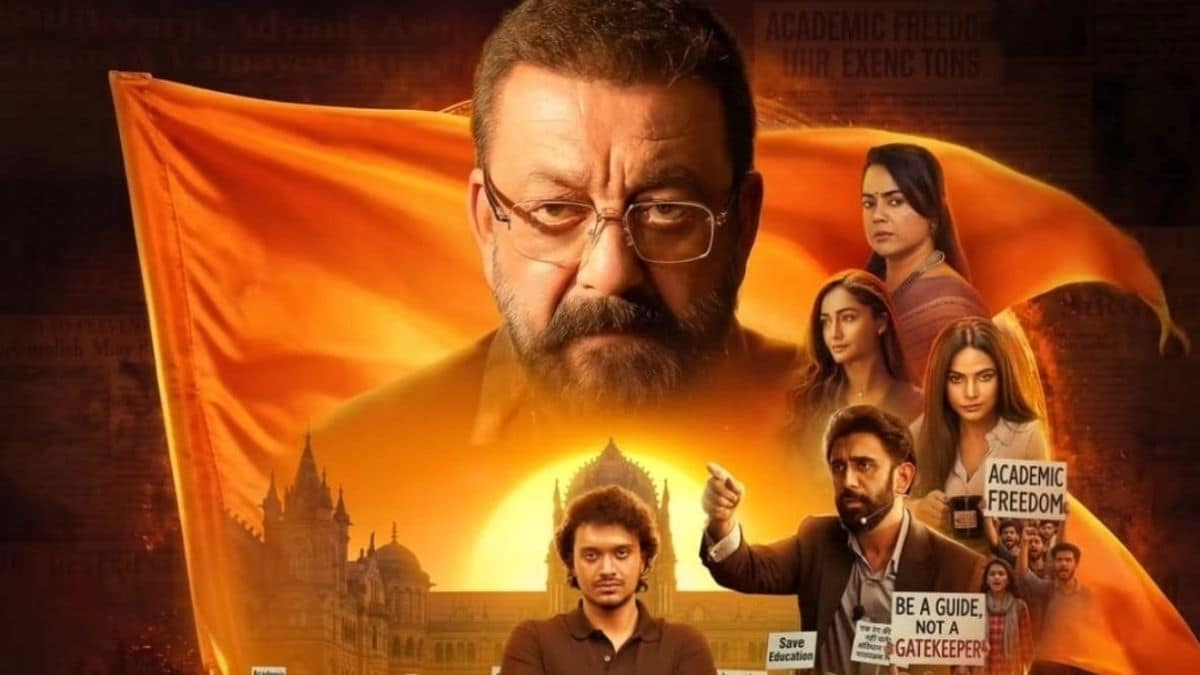
Aakhri Sawal is one of 2026’s most thought-provoking Hindi films — a fearless, intelligently crafted drama that dares to hold a mirror to India’s polarised discourse while celebrating the unsung legacy of the RSS. Led by a commanding Sanjay Dutt and a fiercely committed Namashi Chakraborty, this film is essential viewing for anyone who values meaningful cinema with a national conscience.
Aakhri Sawal is a bold Hindi drama releasing theatrically on 15 May 2026, directed by Abhijeet Mohan Warang and written by Utkarsh Naithani. The film stars Sanjay Dutt as a seasoned professor and Namashi Chakraborty as his firebrand former student, whose ideological clash over the RSS spirals into a gripping national televised debate. Rated U/A and running approximately 2 hours 20 minutes, this thought-provoking drama explores the difference between destructive debate and constructive dialogue — making it one of the most relevant and courageous Hindi films of 2026.
Cast & Crew
| Role | Name |
|---|---|
| Professor Gopal Nadkarni | Sanjay Dutt |
| Vicky Hegde | Namashi Chakraborty |
| Aditya Rao | Amit Sadh |
| Professor Pallavi Menon | Sameera Reddy |
| Saara | Tridha Choudhury |
| Prabha Nadkarni | Mrinal Kulkarni |
| Kavya Rawat | Richa Chadha |
| Director | Abhijeet Mohan Warang |
| Writer | Utkarsh Naithani |
| Production | Nikhil Nanda Motion Pictures |
Plot Summary
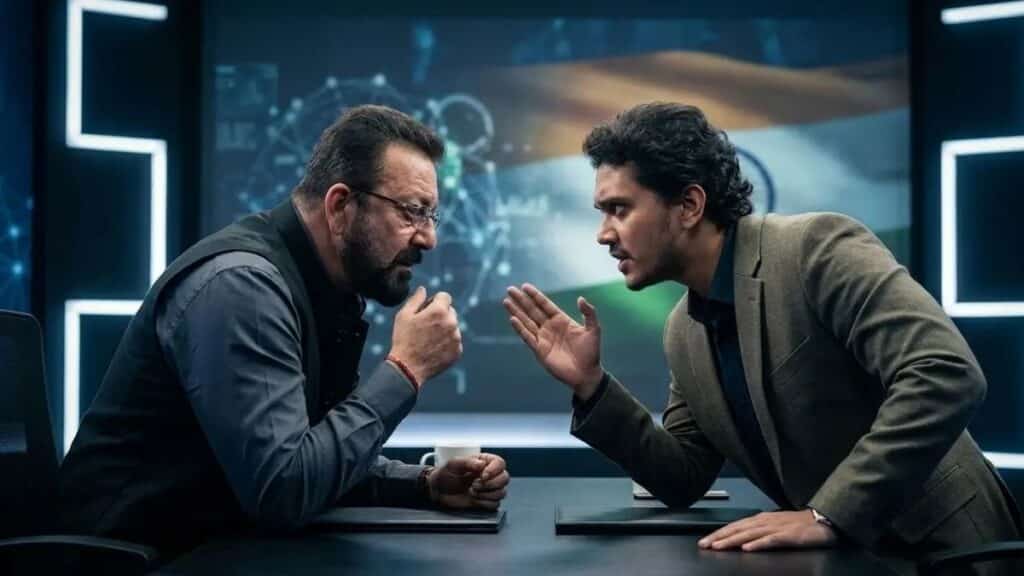
Aakhri Sawal centres on brilliant but volatile scholar Vicky Hegde, who publicly accuses his revered mentor Professor Gopal Nadkarni of institutional bias after his thesis on the RSS is rejected. What starts as an academic disagreement rapidly spirals into a national controversy, culminating in a riveting televised debate that pulls in politicians, journalists, and the roaring force of social media outrage.
At the heart of the film lies a profound philosophical distinction — the difference between Vivaad (adversarial debate) and Samvaad (constructive dialogue rooted in mutual respect). The screenplay ambitiously weaves together campus ideology, media spectacle, and the 100-year legacy of the RSS, touching on significant historical events including the RSS’s relief work during the tsunami, its role during the Emergency, and the tragic death of a Kerala RSS worker. It is a narrative that is simultaneously personal and national in its sweep.
Performances
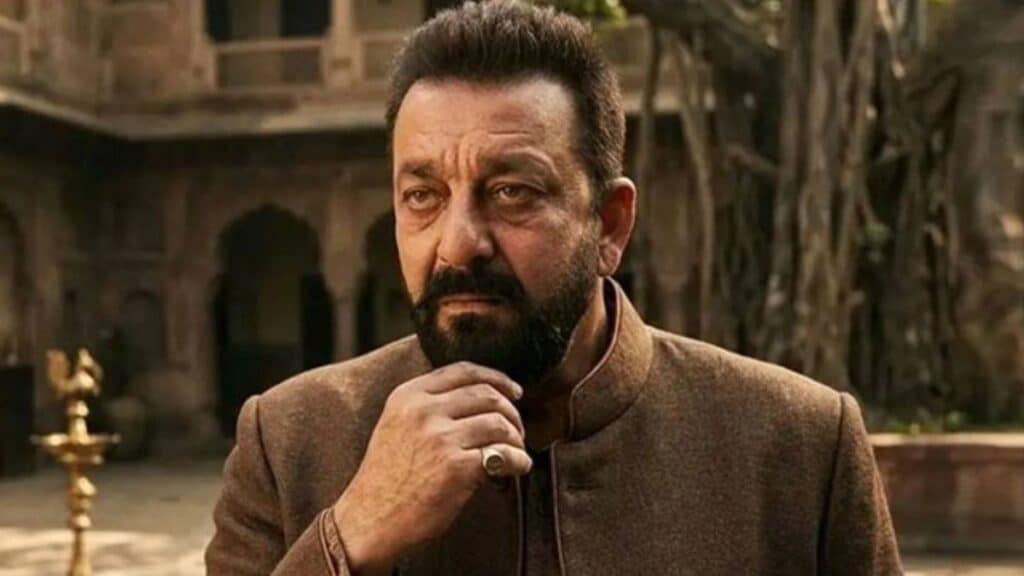
Sanjay Dutt as Professor Gopal Nadkarni
Sanjay Dutt delivers one of the finest performances of his recent career. As Professor Nadkarni, he is calm, commanding, and emotionally layered — a mentor who holds the moral high ground while never losing his deeply human vulnerabilities. His monologues, particularly those tracing the philosophy of nation-building and selfless service, carry genuine gravitas. Dutt owns every frame he inhabits, and his measured intensity makes the film’s intellectual ambitions feel grounded and real.
Namashi Chakraborty as Vicky Hegde
Namashi Chakraborty is a revelation. As the fiery, ideologically charged Vicky, he goes toe-to-toe with the formidable Sanjay Dutt with remarkable conviction. Building on his recent work, Chakraborty brings explosive energy and nuanced vulnerability to a complex character, ensuring that the ideological face-offs crackle with authentic tension. His is the breakout performance of the film.
Also Read: Athiradi Movie Review (2026) – Basil Joseph & Tovino Thomas Deliver a Blockbuster Comedy Entertainer
Amit Sadh as Aditya Rao
Amit Sadh is a scene-stealer in his role as news anchor Aditya Rao. Despite limited screen time, his emotionally charged reunion with his former mentor is one of the film’s most memorable sequences. Grounded and restrained, Sadh once again proves his ability to leave a lasting impression even within smaller arcs.
Sameera Reddy as Professor Pallavi Menon
Sameera Reddy makes a strong return to the big screen as the left-leaning Professor Pallavi Menon. Her exchanges in the ideological debate are sharp and credible, offering a well-articulated counterpoint that enriches the narrative’s balance. She brings intelligence and poise to a role that could easily have been reduced to a plot device.
Tridha Choudhury as Saara
Tridha Choudhury brings warmth, sincerity, and emotional steadiness to Saara, serving as a vital emotional anchor amidst the film’s high-voltage ideological battles. Her quiet, supportive presence adds a necessary human dimension to the story.
Mrinal Kulkarni as Prabha Nadkarni
Mrinal Kulkarni is quietly exceptional as Prabha Nadkarni. She imbues her role with subtle emotional depth that resonates long after the credits roll, lending the domestic scenes a poignant authenticity.
Also Read: IIZ: Indian Institute of Zombies Review – A Wild Zom-Com Campus Riot That’s Hard to Resist
Richa Chadha as Kavya Rawat
Even in a limited role, Richa Chadha impresses as journalist Kavya Rawat. Her measured, layered portrayal hints at a far richer character arc, and she makes every scene count with her characteristic screen presence and intelligence.
Technical Craft
Direction — Abhijeet Mohan Warang
Warang brings genuine intent and ideological seriousness to Aakhri Sawal. His direction is most assured during the extended televised debate sequences and in the quieter, reflective moments between mentor and student. His clear ambition to foster constructive reflection rather than division is commendable, and his ability to manage such a large canvas — campus life, political history, media dynamics — speaks to his confidence as a filmmaker.
Writing — Utkarsh Naithani
Naithani’s screenplay is intellectually ambitious and admirably balanced. The script’s decision to highlight the lesser-known humanitarian contributions of the RSS while also critiquing militant fringes reflects a mature, nuanced approach to politically sensitive material. The philosophical core — Samvaad vs Vivaad — is woven thoughtfully throughout the narrative.
Cinematography
The cinematography effectively contrasts the charged, claustrophobic atmosphere of the televised debate with the more expansive campus and flashback sequences. The visual grammar supports the film’s intellectual tone, keeping the narrative visually engaging even during its dialogue-heavy stretches.
Music & Background Score
The background score amplifies the film’s emotional beats and heightens the drama during key confrontational sequences. The music underlines the weight of historical flashbacks and adds a patriotic warmth to scenes exploring the RSS’s legacy and its figures like MS Golwalkar and Keshav Baliram Hedgewar.

Editing
The editing holds together an ambitious multi-layered narrative — balancing campus drama, historical flashbacks, media spectacle, and philosophical debate. The intercutting between different storylines keeps the film moving, ensuring that the ensemble cast gets adequate space to shine.
Strengths & Weaknesses
Strengths
- Sanjay Dutt’s towering, career-best recent performance anchors the entire film
- Namashi Chakraborty delivers a breakout, electrifying turn
- Brave, balanced, and genuinely thought-provoking subject matter
- Strong ensemble cast with every actor adding value to the narrative
- The Samvaad vs Vivaad philosophical framework is timely and relevant
- Shines a much-needed light on the RSS’s centenary and its unsung humanitarian legacy
- Emotionally compelling mentor-student dynamic at the film’s core
Weaknesses
- The extended debate sequence occasionally tests patience at nearly an hour in length
- Certain supporting characters veer towards caricature rather than complexity
- Background score sometimes heightens melodrama where restraint would serve better
Final Verdict: ⭐⭐⭐⭐½ — 4.5/5
Aakhri Sawal is a film of rare ambition and genuine national importance. In an era of toxic polarisation and social media noise, it arrives as a passionate, earnest call for Samvaad — for dialogue over debate, for understanding over outrage. Sanjay Dutt and Namashi Chakraborty deliver performances that are among the year’s finest, and director Abhijeet Mohan Warang deserves enormous credit for tackling such a politically charged subject with sincerity and balance.
While the film occasionally lets its dramatic instincts get the better of its philosophical promise, its soul remains firmly intact. This is bold, meaningful cinema that sparks conversation, challenges assumptions, and celebrates the idea of an India where disagreement need not mean enmity.
Do not miss Aakhri Sawal — it is the conversation India needs to have, told through some of the most compelling performances you will see on screen this year.
What is the age/content rating of Aakhri Sawal?
Aakhri Sawal carries a U/A certificate, making it suitable for audiences aged 13 and above.
Can we watch Aakhri Sawal with kids?
Aakhri Sawal is best suited for mature audiences and older teenagers given its focus on complex ideological debates, historical events, and political themes.
Is Aakhri Sawal based on a true story?
Aakhri Sawal is a fictional narrative, though it draws on real historical events, figures, and the documented legacy of the RSS over its 100-year journey.
