


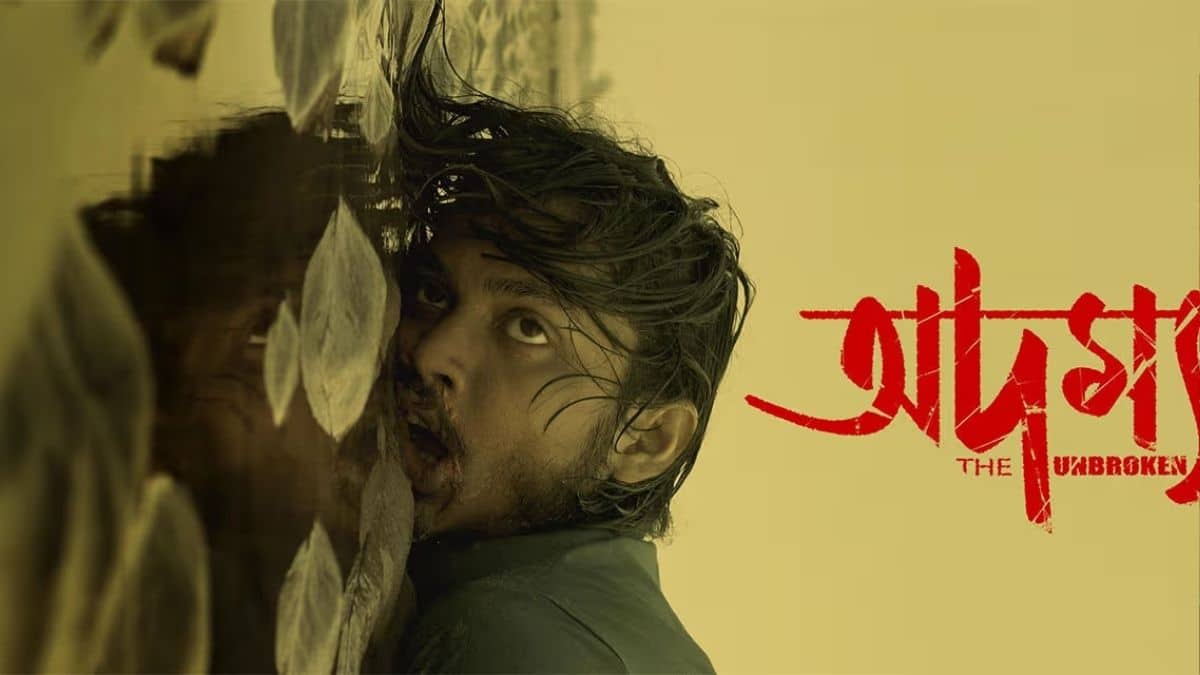
Bengali cinema has long distinguished itself within Indian film culture through its commitment to socially conscious, politically engaged, and artistically ambitious storytelling that prioritizes substance over spectacle. Adamya, releasing on February 13, 2026, continues that proud tradition with a drama thriller that unfolds in the haunting, mysterious landscape of the Sundarbans. Directed by Ranjan Ghosh and presented by legendary filmmaker Aparna Sen
Adamya (2026) is a Bengali drama thriller (A-rated, 1h 50m) set in Sundarbans, following 23-year-old Palash (Aryuun Ghosh) who becomes a fugitive after a failed political assassination. Presented by Aparna Sen, directed by Ranjan Ghosh. Budget: ₹3.5-8 crore. Opening: ₹0.6 crore.
Table of Contents
What Is Adamya About? Plot and Political Context
Adamya centers on Palash, a 23-year-old man from rural Bengal whose life irrevocably changes when a political assassination attempt he is involved in fails. The film does not provide easy answers about whether Palash was the would-be assassin, an accomplice, or someone caught in circumstances beyond his control. That ambiguity appears intentional, forcing audiences to engage with moral complexity rather than accepting simple hero-villain binaries.
Following the failed assassination, Palash becomes a fugitive, hunted by the system he once served. This phrase suggests Palash was previously part of the political machinery — perhaps a party worker, an idealistic youth recruited for political action, or someone whose loyalty was exploited by forces larger than himself. Now he is the target, pursued by police, political operatives, or both through the labyrinthine waterways and dense mangrove forests of the Sundarbans.
COMPLETE MOVIE OVERVIEW
| Movie Title | Adamya |
| Release Date | February 13, 2026 |
| Runtime | 1 hour 50 minutes (110 minutes) |
| Genre | Drama, Thriller, Political |
| Language | Bengali |
| Age Rating | A (Adults Only — 18+) |
| Format | Theatrical release |
| Country | India |
| Industry | Bengali Cinema (Tollywood) |
| Director | Ranjan Ghosh |
| Writer | Ranjan Ghosh |
| Producers | Bajrang Lal Agarwal, Anjan Bose |
| Presented By | Aparna Sen |
| Lead Cast | Aryuun Ghosh (as Palash), Senjuti Roy Mukherjee, Sourya Madrajee, Arjo Giri, Shubham Dutta, Relish Khan, Samrat Bose, Debasish Giri |
| Cinematography | Arkaprabho Das |
| Music | Avijit Kundu |
| Budget | ₹3.5 crore (some sources indicate ₹8 crore) |
| Opening Day Collection | ₹0.6 crore gross (early estimate) |
| Setting | Sundarbans, rural Bengal |
| Content Themes | Political assassination, resistance, identity, survival, love |
| Inspiration | Real socio-political undercurrents in rural Bengal |
| Best For | Bengali cinema enthusiasts, political thriller fans |
Genre Breakdown: Drama Thriller with Political and Poetic Dimensions
Adamya operates across several overlapping genres, each contributing distinct elements to the overall experience.
Drama: Emotional and Psychological Depth
Drama provides the foundation, positioning the film as character-driven exploration of internal conflict, moral ambiguity, and emotional turmoil. Palash’s journey is not just a physical escape from pursuers but a psychological reckoning with choices he has made, systems he has served, and the person he has become.
The dramatic elements focus on relationships — with the woman from his past who represents love and an alternative life, with former comrades who may have betrayed him or whom he betrayed, with the natural world of the Sundarbans that both shelters and threatens him. Good drama makes us care about characters and understand their choices even when we might disagree with them.
Thriller: Pursuit, Tension, and High Stakes
Thriller elements provide narrative momentum and visceral tension. Palash is being hunted, which creates the fundamental thriller dynamic: someone trying to escape while pursuers close in. The Sundarbans setting enhances the thriller aspects — the dense mangroves provide hiding places but also trap characters, the waterways create natural barriers and pathways, the presence of Bengal tigers adds an additional layer of danger beyond human threats.
Political Thriller: Systemic Critique and Ideological Conflict
The Political Thriller dimension elevates the film beyond simple chase narrative into examination of power structures, political violence, and the human cost of ideological conflict. The failed assassination attempt places the film within the tradition of political thrillers examining radicalization, state violence, resistance movements, and the moral compromises political action demands.
Bengali cinema has a distinguished history of political filmmaking, from Ritwik Ghatak’s examinations of Partition trauma to contemporary films addressing caste, communalism, and environmental destruction. Adamya appears to engage with “real socio-political undercurrents in rural Bengal” — likely referencing ongoing conflicts over land rights, political violence between rival factions, state repression of dissent, or environmental justice movements.
Poetic Cinema: Visual and Thematic Lyricism
Reviews describe Adamya as creating “a poetic canvas” through “evocative cinematography that harnesses the region’s natural mysticism.” This positions the film within the tradition of poetic cinema that prioritizes visual beauty, symbolic imagery, and thematic resonance alongside or even above conventional narrative clarity.
Poetic cinema trusts images to carry meaning, uses landscape as emotional and symbolic expression, and embraces ambiguity rather than explaining everything through dialogue. The comparison to Aparna Sen’s own works (she presents Adamya) suggests a film that blends social commentary with humanism, that finds beauty in struggle, and that treats characters with empathy even when examining their flaws and failures.
CHECK MORE ON:Tu Yaa Main Movie Review: Bejoy Nambiar Crafts a Bold Genre-Bending Romance That Keeps You On The Edge
The Cast: Aryuun Ghosh Delivers Raw, Authentic Performance
Aryuun Ghosh as Palash: Vulnerability in an Unforgiving World
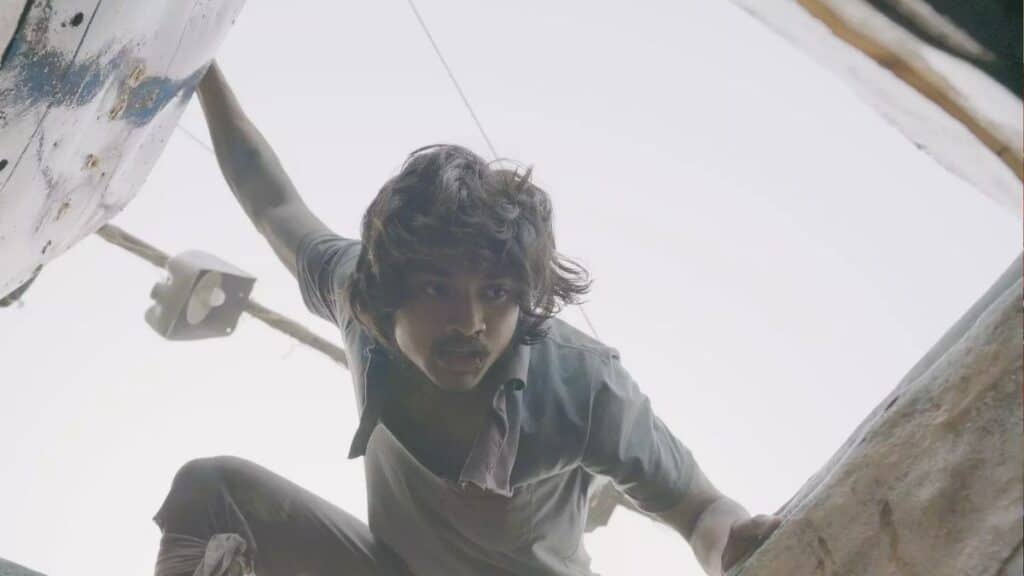
Aryuun Ghosh carries Adamya as Palash, the 23-year-old fugitive at the center of the moral and physical storm. Reviews specifically praise his “raw authenticity and quiet intensity,” noting that he captures “the character’s internal conflict” and evokes “vulnerability in a harsh, unforgiving world.”
This is a performance defined by internalization rather than external display. Palash cannot afford dramatic outbursts or obvious emotional expression when survival depends on remaining hidden and moving carefully. The performance must communicate fear, regret, determination, love, and moral struggle through subtle physical choices, facial expressions, and the quality of stillness.
Senjuti Roy Mukherjee: Love and Resistance
Senjuti Roy Mukherjee plays what is described as “a figure from his past” who “provides a strong emotional anchor” and adds “layers of unspoken affection and resistance.” This character likely represents the life Palash could have had if he had not been drawn into political violence, or the possibility of redemption and human connection even after terrible choices.
The “unspoken affection” suggests a relationship conveyed through glances, gestures, and silences rather than declarations. This fits the film’s poetic, introspective tone — emotions felt deeply but not necessarily articulated verbally.
Supporting Cast: Web of Alliances and Betrayals
Sourya Madrajee, Arjo Giri, Shubham Dutta, Relish Khan, Samrat Bose, and Debasish Giri populate the film with characters who create “a web of alliances and betrayals in the Sundarbans’ misty landscapes.”
In political thrillers, supporting characters often represent different positions within the ideological and power spectrum — loyalists, opportunists, true believers, cynics, innocents caught in crossfire. Each serves narrative function while also representing broader social forces. Strong ensemble work creates a world that feels populated and real rather than just a backdrop for the protagonist’s journey.
Director Ranjan Ghosh and Presenter Aparna Sen: Artistic Pedigree
Ranjan Ghosh: Writer-Director Vision
Ranjan Ghosh serves as both writer and director on Adamya, giving him complete creative control over the film’s vision from screenplay to final cut. This unified authorship often produces more cohesive, distinctive work because one sensibility shapes every creative decision.
Ghosh’s direction is praised for creating “a poetic canvas” through collaboration with cinematographer Arkaprabho Das. The visual approach “harnesses the region’s natural mysticism,” using the Sundarbans’ inherent atmosphere — mist rising from waterways, dappled light through dense canopy, the sense of being watched by unseen presences (tigers? pursuers? spirits?) — to create mood and meaning.
Aparna Sen: Legendary Filmmaker as Presenter
The fact that legendary filmmaker Aparna Sen presents Adamya carries significant weight in Bengali cinema circles and signals the film’s artistic ambitions and credentials.
Aparna Sen is one of India’s most respected auteurs, known for films like 36 Chowringhee Lane (1981), Mr. and Mrs. Iyer (2002), 15 Park Avenue (2005), and The Japanese Wife (2010). Her work consistently examines social issues — communalism, mental illness, displacement, gender — through deeply humanistic storytelling that finds universal emotional truths in culturally specific situations.
Cinematography and Music: Creating Atmosphere and Mysticism
Arkaprabho Das: Capturing the Sundarbans
Cinematographer Arkaprabho Das’s work is central to Adamya’s success in creating atmosphere. The Sundarbans offers extraordinary visual potential — the interplay of water and land, the otherworldly quality of mangrove roots emerging from tidal zones, the play of light through dense foliage, the vastness of sky meeting delta.
Das apparently harnesses these natural qualities while also creating visual tension appropriate to a thriller. The cinematography must make the Sundarbans feel both beautiful and threatening, both shelter and trap. It must support the poetic introspection (allowing moments of stillness and contemplation) while also maintaining thriller momentum (creating visual unease and suspense).
Avijit Kundu: Subtle Score Supporting Themes
Music composer Avijit Kundu creates what is described as a “subtle score,” which is appropriate for a film prioritizing atmosphere and introspection over melodrama. Subtle scoring means the music supports rather than overwhelms, enhances emotion without dictating it, and knows when silence is more powerful than sound.
In thriller sequences, music builds tension through dissonant tones, sustained notes, or rhythmic patterns that create unease. In dramatic moments, it provides emotional coloring without becoming maudlin. In poetic sequences, it may fade entirely, allowing natural sounds — water, wind, birds, footsteps — to create their own music.
Box Office Performance: Content-Driven Independent Film in Competitive Market
Opening Day Collection and Market Challenges
Adamya opened on February 13, 2026 with an estimated gross collection of ₹0.6 crore (approximately ₹0.5 crore net). This represents a modest opening reflective of the film’s positioning as content-driven, independent Bengali cinema rather than commercial mainstream fare.
The Valentine’s weekend release date placed Adamya in competition with romantic films and larger pan-India releases like O’ Romeo, which commanded more screens in multiplexes and greater promotional budgets. Advance bookings were subdued at around ₹0.3 crore gross, concentrated in urban centers like Kolkata, Siliguri, and Durgapur where audiences for art cinema and political dramas exist.
Weekend and Lifetime Projections
Industry analysts project Adamya could achieve ₹2-3 crore in its first three days if positive word-of-mouth develops through social media and critical reviews. A lifetime India net of ₹12-18 crore would represent strong performance for this type of film, potentially achieving average returns against the budget (reported as both ₹3.5 crore and ₹8 crore in different sources).
Success depends entirely on sustained performance through weekend and into the following week, which requires enthusiastic critical reception and audience recommendations emphasizing the film’s “emotional resonance” and artistic merit.
Comparison to Similar Bengali Films
Relative to comparable introspective Bengali dramas, Adamya faces similar challenges. Bohurupi (referenced as opening with ₹1.2 crore) achieved slightly better opening numbers with potentially broader commercial appeal. Films like Mithya serve as cautionary comparisons — critically respected work that struggled to find large audiences.
The association with Aparna Sen and “festival-like acclaim” from early reviewers could help Adamya expand gradually through critical endorsements, film society screenings, and eventual streaming release where it may find its most appreciative audience.
Themes: Resistance, Identity, and the Personal Cost of Politics
Adamya grapples with several interconnected themes that give its thriller framework deeper resonance.
Political Violence and Moral Complexity
The failed assassination attempt at the film’s center forces examination of political violence as tactic and tragedy. When does resistance justify violence? Who decides which targets are legitimate? What happens to the individuals who carry out political violence — are they heroes, criminals, tools, or victims
Betrayal by Systems You Serve
The phrase “hunted by the system he once served” captures a particular kind of political tragedy. Palash was apparently part of political machinery before becoming its target, suggesting he was used and discarded. This theme resonates in contexts worldwide where political movements or state powers recruit marginalized individuals for their purposes, then abandon or criminalize them when expedient.
The film likely examines how systems — political parties, state apparatus, resistance movements — prioritize institutional survival over individual lives, turning people into expendable resources.
Sundarbans as Political and Environmental Metaphor
The setting in Sundarbans carries political meaning beyond providing atmospheric backdrop. This is a region where environmental destruction, climate change, economic marginalization, and political neglect create conditions of extreme vulnerability. Communities there live at the literal and metaphorical edge — between land and sea, development and preservation, survival and catastrophe.
Using the Sundarbans to tell a story about political fugitives implicitly connects individual struggle to larger questions of environmental justice, state responsibility, and whose lives matter when resources are allocated and policies decided.
Love as Resistance and Refuge
The romantic subplot with Senjuti Roy Mukherjee’s character representing “unspoken affection and resistance” positions love as both personal refuge and political act. In contexts of violence and dehumanization, maintaining capacity for love, connection, and vulnerability is itself a form of resistance.
The film appears to ask: can love survive political violence? Can intimate connection coexist with being hunted? Does pursuing personal happiness in unjust systems represent betrayal or the ultimate act of reclaiming humanity?
Identity Under Pursuit
When you are hunted, your identity becomes both weapon (used against you through surveillance, informants, public targeting) and refuge (if you can hide or change it). Palash’s journey likely involves struggling to maintain sense of self when everyone defines him only as fugitive, failed assassin, or threat to be eliminated.
The film’s title, Adamya, translates from Sanskrit/Bengali as “unconquerable” or “indomitable,” suggesting despite pursuit and betrayal, some essential quality of self remains undefeated.
The A Rating: Adult Content and Political Maturity
Adamya carries an A rating (Adults Only, 18+), which significantly impacts both its thematic freedom and commercial potential.
Why the A Rating
The certification likely stems from:
Political violence depiction: The assassination attempt and subsequent pursuit probably involve graphic or intense violence that exceeds UA limits.
Mature political themes: Examination of radicalization, state violence, and moral complexity surrounding political assassination requires adult understanding.
Ambiguous morality: The film apparently does not provide clear moral guidance about whether Palash’s actions were justified, which censors may feel requires adult discernment.
Language or other content: Possible strong language or other elements deemed unsuitable for minors
Final Verdict: Accomplished Political Cinema for Discerning Audiences
(4/5 Stars)
Adamya represents exactly the kind of politically engaged, artistically ambitious cinema that Bengali film culture has consistently produced at its best — intelligent, atmospheric, morally complex storytelling that examines power, violence, and resistance while maintaining deep empathy for individuals caught in systemic forces.
What Works Well:
Aryuun Ghosh’s Raw, Authentic Performance: His portrayal of Palash captures internal conflict, vulnerability, and quiet intensity with the kind of naturalistic authenticity that makes political abstractions feel viscerally personal.
Atmospheric Use of Sundarbans Setting: The cinematography by Arkaprabho Das harnesses the region’s natural mysticism to create a poetic canvas where landscape becomes character, emotional expression, and political metaphor simultaneously.
Political Complexity Without Simplification: The film examines radicalization, state violence, and resistance without providing easy moral answers or reducing characters to ideological symbols.
Aparna Sen’s Artistic Pedigree: Her involvement as presenter signals the film’s ambitions and positions it within Bengali cinema’s tradition of blending social commentary with humanism.
What Limits Commercial Appeal:
Deliberate Pacing Requiring Patience: The film prioritizes “reflection over spectacle” and features “deliberate tempo” that will frustrate audiences seeking fast-paced action.
Narrative Ambiguities Challenging Casual Viewers: Occasional lack of clarity and refusal to explain everything demands active engagement that some viewers find frustrating.
A Rating Restricting Audience: Adults-only certification eliminates family viewing and reduces commercial potential.
When does Adamya release?
Adamya released on February 13, 2026 in theaters.
What language is Adamya in?
The film is in Bengali language.
Who stars in Adamya?
The lead cast includes Aryuun Ghosh (as Palash), Senjuti Roy Mukherjee, Sourya Madrajee, Arjo Giri, Shubham Dutta, Relish Khan, Samrat Bose, and Debasish Giri.
