


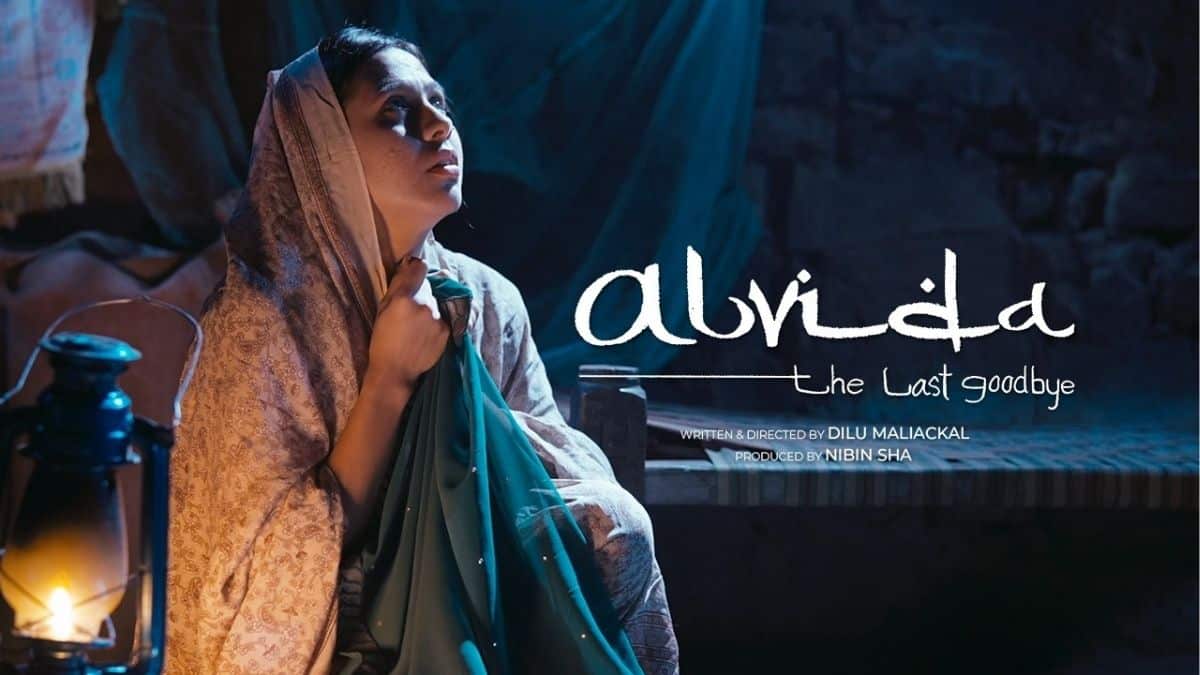
Alvida: The Last Goodbye is one of those rare short films that punches far above its weight — a quietly devastating Malayalam drama that uses the simplest of human emotions to say something profoundly universal. Directed by Dilu Maliackal and produced by Cue Studio, this 30-minute gem has already announced itself on the global stage by winning the prestigious Pateh Sabally Award at the Ca’ Foscari International Short Film Festival in Venice — and watching it, it’s easy to understand why.
Alvida: The Last Goodbye is a deeply affecting short film about a Muslim woman from Bhopal who travels to Kerala in search of her missing migrant-worker husband. Intimate, layered, and restrained in all the right ways — this is Malayalam short cinema at its most powerful.
| Detail | Info |
|---|---|
| Director | Dilu Maliackal |
| Writer | Nibin Sha |
| Lead Cast | Pushpa Panth, Falak Saifi, Sona Maria Abraham, Shubham Katiyar |
| Genre | Drama / Social Realism |
| Runtime | 30 Minutes |
| Release Year | 2023/2024 |
| Production | Cue Studio |
Plot Summary
The story centres on Miraal, a Muslim woman from Bhopal who has been silenced by sudden worry — her husband, a migrant worker in Kerala, has stopped communicating. Determined and desperate in equal measure, she convinces her hesitant neighbour Jyothi to accompany her and sets off on the long journey to Kerala with her young daughter in tow.
Also Read: Ginny Wedss Sunny 2 Review (2026): A Warm and Relatable Ride Through the Chaos of Arranged Marriage
What follows is not a thriller, not a procedural search — but an intimate, observational portrait of two women navigating an unfamiliar world. In Kerala, they encounter language barriers, cultural distances, and the quiet indignities that outsiders and migrant communities face daily. The film’s real power lies in what it doesn’t say — in glances exchanged, silences held, and the small dignities that people cling to in moments of great uncertainty.
Beneath the surface narrative of a woman searching for her missing husband is a deeper, more symbolic farewell — a goodbye to rigid social norms, to gender-defined boundaries, and to the unspoken rules that keep communities apart.
Performances
Pushpa Panth as Miraal
Pushpa Panth carries the film on her shoulders with remarkable grace. Her portrayal of Miraal is never melodramatic — instead, she communicates fear, determination, and quiet grief through restraint. Every hesitation, every step forward feels earned and real. It’s a performance that trusts the audience completely, and the audience trusts her right back.
Also Read: Madhuvidhu Movie Review (2026): Sharaf U Dheen’s Charm Lights Up This Warm Malayalam Rom-Com
Falak Saifi & Sona Maria Abraham
Falak Saifi, as Miraal’s daughter, brings an innocent but perceptive energy to the film — a child who understands more than the adults around her realise. Sona Maria Abraham as Jyothi, the reluctant neighbour, provides both emotional grounding and a believable arc of her own, shifting from hesitation to solidarity in a way that feels organic rather than scripted.
Supporting Ensemble
Shubham Katiyar, Shweta Ketkar, Hemant Deolekar, Anu Varghese, and Unnikrishnan PN round out the cast with performances that feel lived-in and authentic. No one here is simply set dressing — each character adds texture to the world the film is building.
Direction & Writing
Dilu Maliackal‘s direction is confident and deeply empathetic. He never sensationalises the hardships on screen, preferring instead to observe — much like a thoughtful documentarian who also happens to understand cinematic rhythm. His greatest strength is trust in his audience: the social commentary on migrant labour, gender-segregated rituals, and cultural alienation is woven into the fabric of the story rather than delivered through dialogue or forced exposition.
Nibin Sha‘s screenplay is equally measured. The writing understands that a 30-minute short cannot afford wasted moments, and yet it never feels rushed or thin. Every scene serves the emotional and thematic journey. The dual meaning of Alvida — both a literal goodbye to a missing person and a symbolic farewell to outdated norms — is handled with real subtlety and intelligence.
Also Read: Jerax Review (2026): Nagabhushan’s Supernatural Thriller Is a Wildly Entertaining Ride
Technical Craft
Cinematography
The visual language of the film does considerable heavy lifting. The contrast between the flat, familiar landscapes of Bhopal and the lush, overwhelming greenery of Kerala is used to quietly externalise Miraal’s sense of displacement. Framing choices consistently emphasise isolation and smallness — two women and a child in a world that wasn’t built for them.
Music & Sound Design
The film’s soundscape is understated but effective. Rather than using music to direct emotional responses, the sound design leans into ambient textures — the hum of travel, the murmur of an unfamiliar language, the silence of waiting. When music does appear, it earns its place.
Editing
The editing respects the film’s meditative pace. Cuts are deliberate and unhurried, allowing performances to breathe and scenes to settle before moving forward. For a 30-minute film, it demonstrates an impressive command of tempo.
Strengths & Weaknesses
Strengths
- Emotionally restrained yet deeply affecting performances, especially from Pushpa Panth
- Director Dilu Maliackal’s assured, observational style that trusts the audience
- Layered thematic depth — migration, identity, gender norms — handled without heavy-handedness
- Economical, intelligent screenplay by Nibin Sha
- International award recognition validating its quality on a global stage
Weaknesses
- At 30 minutes, some viewers may feel the resolution arrives slightly abruptly
Final Verdict: ⭐⭐⭐⭐½ — 4.5/5
Alvida: The Last Goodbye is a triumph of restraint, empathy, and purposeful filmmaking. In just 30 minutes, Dilu Maliackal and his team have crafted a short film that holds its emotional and social truths lightly — never lecturing, always observing, and trusting the viewer to feel the full weight of what is left unsaid. Its Venice festival win is not just well-deserved; it is a signal that Malayalam short cinema is producing work of genuine global significance.
Whether you come for the social commentary on migrant labour and cultural displacement, or simply for a beautifully told human story, Alvida delivers — and then some.
A quietly devastating farewell to old worlds and old silences — Alvida is Malayalam short cinema at its finest.
What is the age rating of Alvida: The Last Goodbye?
Alvida: The Last Goodbye does not carry a formal certification but is suitable for general audiences aged 13 and above.
Is Alvida: The Last Goodbye suitable for family viewing?
Yes, Alvida: The Last Goodbye is broadly suitable for family viewing, particularly for older children and teenagers.
Is Alvida: The Last Goodbye based on a true story?
Alvida: The Last Goodbye is not based on a specific true story. It is an original screenplay written by Nibin Sha.
