


In this Eko movie review, we explore a film that arrives as a breath of fresh air in Malayalam cinema’s thriller landscape. When was the last time you watched a mystery where animals weren’t just props but actual driving forces of the narrative? Dinjith Ayyathan’s Eko doesn’t just tell a story about a missing man; it crafts an intricate world where human intentions and animal instincts collide in the most fascinating ways possible.
Director Dhananjay Ayyathan, building on the success of Kishkindha Kaandam, delivers his most ambitious work yet with confidence and clarity. This is Bahul Ramesh’s finest screenplay—a shapeshifting narrative that reveals its cards at perfectly timed intervals, keeping you guessing while making every revelation feel earned. With cinematography that captures both the stark beauty of wilderness and the fearsomeness of rare dog breeds, Eko is the cinematic equivalent of that novel you can’t put down until you’ve solved the mystery.
Quick Takeaway:
Eko is a technically brilliant, intelligently crafted mystery thriller that succeeds as both atmospheric storytelling and genuine edge-of-seat entertainment. While some backstory elements remain deliberately ambiguous, the film’s layered screenplay, exceptional performances from the entire ensemble, and that stunning cinematography make it essential viewing for anyone craving sophisticated, boundary-pushing Malayalam cinema.
Language: Malayalam
Age Rating: UA
Genre: Mystery Thriller, Drama
Director: Dinjith Ayyathan
Streaming On: Netflix (January 2, 2026)
The Plot: A Search That Becomes a Journey
At its core, Eko is about the search for Kuriachan—a legendary dog breeder who’s been missing for five years—but calling it just that would be like calling a labyrinth “some hallways.” The film’s genius lies in how it constructs mystery: not through cheap twists or red herrings, but through carefully layered storytelling that spans time periods and geographies.
The narrative takes us from the World War 2 era through the period of Malayali migration to Malaysia and Singapore, culminating in the present-day search. Kuriachan exists through others’ accounts—conflicting, colorful, sometimes terrifying, always fascinating. Visitors arrive at his remote estate Kattukkunnu seeking revenge, answers, or closure. His Malaysian wife Mlatthi (Biana Momin) and trusted helper Peyoos (Sandeep Pradeep) hold the fort, surrounded by the exotic dog breeds that are Kuriachan’s legacy and, perhaps, his most dangerous weapon.
What makes Eko special is how it treats its animal characters. The rare breed dogs aren’t background elements or occasional plot devices—they’re integral to every twist, every revelation, every moment of tension. The film presents fascinating theories about power dynamics between breeders and their packs, requiring some suspension of disbelief that the writing and visual execution make completely convincing.
Performances: Everyone Brings Their Best Work

Sandeep Pradeep: The Heart of the Mystery
This Eko movie review must spotlight Sandeep Pradeep’s breakout performance as Peyoos. He carries much of the film’s emotional weight, navigating between loyalty, fear, and moral complexity with remarkable subtlety. Watch him in scenes where he interacts with the dogs—there’s genuine connection there, a understanding of these animals that goes beyond simple handler-pet dynamics.
Sandeep brings layers to what could have been a straightforward supporting role. His Peyoos is both protector and prisoner of Kattukkunnu, devoted to Mlatthi while haunted by Kuriachan’s shadow. The restraint in his performance—a glance here, a hesitation there—speaks volumes. This is an actor who understands that in mystery thrillers, what you don’t say matters as much as dialogue.
Biana Momin: Quiet Strength Personified
Biana Momin delivers a career-defining performance as Mlatthi, the Malaysian wife who has weathered storms most people can’t imagine. She brings dignity and resilience to a character who could easily have become a mere plot device. Her Mlatthi is a woman who has lost much—connection to her children, the security of normalcy—yet refuses to be broken.
The film smartly uses her perspective to ground the more fantastical elements. When the world around her deals in myths and legends about her husband, Mlatthi represents tangible human cost. Momin’s weathered expressions and deliberate movements convey years of accumulated pain and endurance. It’s a performance that lingers long after the credits roll.
Saurabh Sachdeva: The Enigmatic Presence
Saurabh Sachdeva faces the challenging task of playing a character who exists more through reputation than screen time, and he makes every moment count. His Kuriachan is magnetic—part villain, part tragic figure, wholly unforgettable. While his casting might seem unconventional for a central Kerala character, Sachdeva’s intensity and commitment sell the role completely.
The film uses his presence strategically, allowing the myth to build before revealing the man. When Kuriachan finally emerges fully into the narrative, Sachdeva delivers sequences that are by turns chilling and unexpectedly moving. He creates a character you can’t quite pin down—is he monster or misunderstood genius? The ambiguity is intentional and powerfully executed.
The Supporting Ensemble: Depth in Every Role
Vineeth and Narain bring gravitas to the investigation threads, their combined experience adding authenticity to every scene. They play characters seeking answers but finding only deeper questions, and both actors navigate that frustration with skill.
Binu Pappu adds his trademark reliability to sequences requiring both tension and occasional levity. Ashokan’s veteran presence connects Eko to Malayalam cinema’s rich thriller tradition, his knowing expressions conveying wisdom earned through decades.
The ensemble works because everyone commits to the film’s unique tone—grounded enough to feel real, heightened enough to accommodate the story’s more extraordinary elements. No one breaks the spell the film creates.
Direction and Vision: Ayyathan’s Confident Evolution
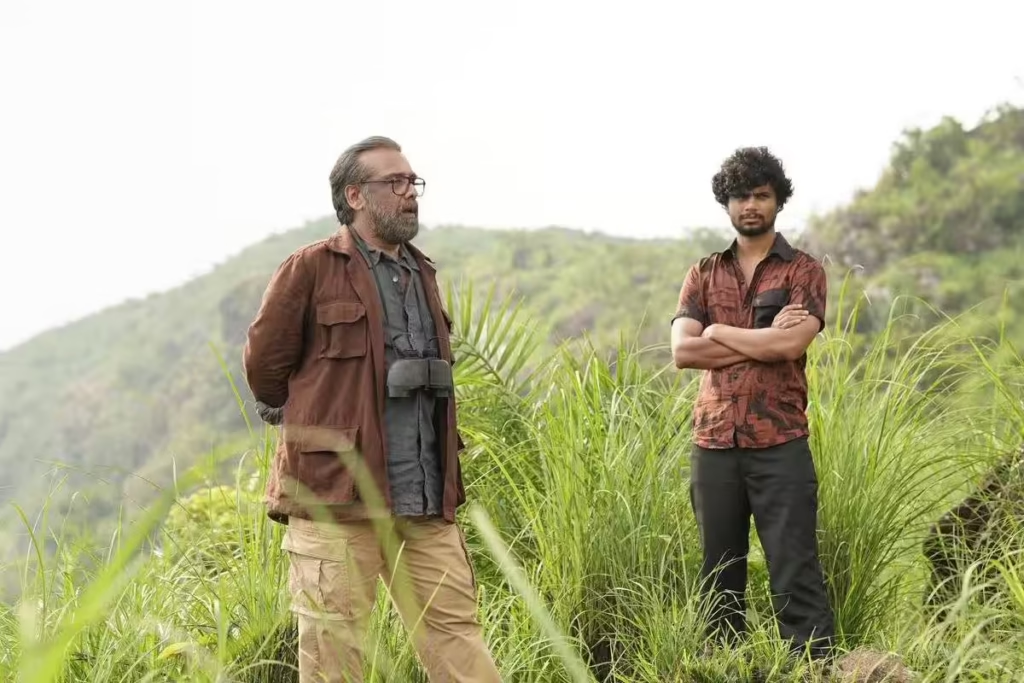
Dinjith Ayyathan makes a quantum leap from Kishkindha Kaandam to Eko, expanding his canvas while maintaining the tight narrative control that made his debut so effective. Where the first film in this animal trilogy kept its monkeys somewhat peripheral, Eko boldly makes its dogs central to the mystery’s mechanics.
Ayyathan demonstrates remarkable confidence in how he handles pacing. He knows when to linger on atmospheric shots of the estate, when to accelerate into revelatory sequences, and when to pause for character moments that give the thriller breathing room. The way he orchestrates multiple timelines—ensuring each era feels distinct yet connected—shows a director fully in command of his craft.
The jungle terrain and isolated houses of Kattukkunnu become characters themselves under Ayyathan’s direction. He uses geography to build tension, making the remote location feel simultaneously beautiful and threatening. Every shadow could hide secrets; every forest path could lead to revelation or danger.
What’s most impressive is Ayyathan’s restraint. A lesser director might have leaned too heavily into horror elements or action set pieces. Instead, he maintains mystery thriller purity, letting suspense build organically from character decisions and narrative revelations rather than manufactured scares.
Technical Brilliance: Craft at the Highest Level
Cinematography: Bahul Ramesh’s Double Duty Mastery
Bahul Ramesh proves himself a true renaissance talent, serving as both writer and cinematographer, and excelling spectacularly at both. His camera work transforms Kerala’s jungle landscapes into something primal and mysterious. The verdant greenery isn’t just beautiful—it’s oppressive, suggesting hidden depths and unseen watchers.
Lighting choices throughout Eko enhance the mystery. Interiors at Kattukkunnu feel lived-in but shadowy, every corner potentially hiding something significant. Exterior shots balance natural beauty with an undercurrent of danger. The visual grammar shifts subtly as the narrative moves through different time periods, helping orient viewers without obvious exposition.
Sound Design and Music: Mujeeb Majeed’s Stunning Score
Mujeeb Majeed’s background score plays as crucial a role as Ramesh’s screenplay in making Eko work. The music knows exactly when to swell—building tension during revelatory sequences—and when to disappear completely, letting silence create its own discomfort.
Majeed’s score incorporates interesting textures that suggest both the historical scope and the contemporary thriller elements. There are moments of almost folkloric instrumentation that ground us in Kerala’s cultural context, contrasted with more modern, suspenseful motifs during investigation sequences.
Editing: Sooraj E.S. Maintains the Mystery
Sooraj E.S. faces the considerable challenge of keeping a non-linear narrative coherent across multiple time periods and storylines, and he succeeds brilliantly. The editing ensures that revelations land with proper impact, that flashbacks don’t disrupt momentum, and that the various investigative threads weave together smoothly.
Pacing in mystery thrillers is everything—reveal too much too fast and you lose suspense; move too slowly and you lose audience investment. E.S. finds the sweet spot, cutting scenes at precisely the right moment to maintain engagement without frustrating viewers who want answers. The rhythm of Eko feels deliberate, each sequence given exactly the time it needs to breathe before moving forward.
Cultural Context: Stories Within Stories

Eko explores fascinating territory regarding how stories get told and retold across generations and cultures. Kuriachan’s legend has grown through countless retellings, each adding embellishments or removing inconvenient truths. The film subtly comments on how myths develop, how dangerous men become larger than life through narrative distance.
The dog breeding subculture depicted feels authentic and disturbing in equal measure. Eko doesn’t shy away from the obsessive, sometimes unethical lengths breeders go to develop exotic breeds. This world of international breeding networks, genetic manipulation, and animals as status symbols provides rich thematic material about control, legacy, and what humans are willing to sacrifice for perfection.
The Bigger Picture: Cinema That Respects Intelligence
What makes Eko genuinely special in today’s landscape is how it trusts audience intelligence. There’s no excessive exposition, no characters explaining obvious plot points, no dumbing down of complex ideas. Bahul Ramesh’s screenplay assumes viewers can connect dots, track multiple timelines, and appreciate ambiguity.
The integration of animals as full participants in the narrative—not symbols or metaphors, but actual agents with their own logic and motivations—feels revolutionary for Indian thriller cinema. Western films have explored human-animal dynamics (think The Grey or Megan Leavey), but Malayalam cinema has rarely centered animals this way in serious dramatic contexts.
Strengths and Minor Considerations
What Works Magnificently
- Bahul Ramesh’s layered, intelligent screenplay – Reveals its cards at perfect intervals
- Sandeep Pradeep and Biana Momin’s career-best work – Emotional anchors for the mystery
- Stunning cinematography that makes Kerala mystical – Every frame meticulously composed
- Dogs as genuine narrative drivers – Rare in Indian cinema, brilliantly executed
- Atmosphere that maintains tension throughout – Never lets you get comfortable
- Respect for audience intelligence – No hand-holding or over-explanation
Minor Considerations
- Deliberate ambiguity about Kuriachan’s crimes – Some viewers might want more specifics
- Saurabh Sachdeva’s casting – Slightly unconventional for the character’s background, though performance compensates
- Requires patience with mystery structure – Not for viewers wanting immediate answers
Final Verdict: 4.5/5 Stars ⭐⭐⭐⭐½
Eko is exactly what sophisticated thriller audiences have been craving—a film that remembers that mystery is about the journey as much as the destination, that animals can be as complex as human characters, and that Malayalam cinema can compete with the best international thrillers in ambition and execution.
This Eko movie review celebrates a film that succeeds magnificently in its ambitions. Yes, some backstory remains deliberately vague. Yes, the focus on mystery mechanics means slightly less emotional catharsis than Kishkindha Kaandam. But these are minor considerations about a film that builds atmosphere masterfully, reveals its story intelligently, and features some of the year’s most memorable performances.
Sandeep Pradeep announces himself as a talent to watch with work that balances restraint and intensity perfectly. Biana Momin brings dignity and depth to a character that anchors the film’s emotional reality. Saurabh Sachdeva creates a truly enigmatic presence that haunts the narrative even in his limited screen time. And the entire ensemble, from Vineeth to Narain to Ashokan, demonstrates Malayalam cinema’s continued strength in supporting performances.
For Dinjith Ayyathan, Eko confirms what Kishkindha Kaandam suggested—here is a filmmaker with vision, confidence, and the technical skill to realize ambitious ideas. His willingness to make animals central to his storytelling, to embrace non-linear narrative structures, to trust that atmosphere can be as compelling as action—these mark him as one of Malayalam cinema’s most exciting directors.
For Bahul Ramesh, this screenplay represents another triumph. After proving his writing abilities with the first film in this trilogy, he delivers something even more ambitious here, while simultaneously handling cinematography duties at the highest level. His double threat of storytelling and visual craft makes him an invaluable creative force.
The Return of Intelligent Mystery Cinema
There’s specific joy in watching a thriller that refuses to insult your intelligence. In an industry increasingly dominated by predictable genre exercises and formulaic storytelling, Eko feels like a masterclass—someone reminding us that mystery thrillers can be sophisticated, atmospheric, and genuinely surprising while still being thoroughly entertaining.
The mystery is intentional. The ambiguity is the point. And somewhere in all that controlled suspense is a genuine appreciation for cinema’s ability to transport us to worlds where the rules are different, where animals and humans share narrative space equally, and where the search for truth matters more than easy answers.
Eko now streaming on Netflix—essential viewing for thriller enthusiasts and anyone who believes Malayalam cinema’s future lies in bold storytelling that honors audience intelligence while delivering edge-of-seat entertainment.
