


In this My Lord movie review, we explore a film that arrives as a breath of fresh air in Tamil cinema’s social drama landscape. When was the last time you watched a film that made you genuinely angry at institutional apathy while keeping you thoroughly entertained? My Lord doesn’t just tell a story; it holds up an unflinching mirror to how easily the system can erase ordinary lives, all while maintaining the narrative grip of a tightly wound thriller.
Director Raju Murugan delivers a mature, intelligent piece of cinema that proves social commentary and compelling storytelling aren’t mutually exclusive. This is M. Sasikumar operating at peak sincerity, supported by debutant Chaithra Achar who announces her arrival with quiet power, and an ensemble that understands exactly what kind of important story they’re telling. With Sean Roldan’s understated brilliance elevating every frame and Nirav Shah’s lens capturing both intimacy and institutional coldness, My Lord is cinema that matters—entertaining, enraging, and ultimately empowering.
My Lord is a technically accomplished, emotionally resonant social thriller that succeeds brilliantly as both entertainment and commentary. While the plot occasionally prioritizes mechanics over character exploration, the film’s sharp observations, standout performances across the board, and that powerful courtroom climax make it essential viewing for anyone seeking purposeful, intelligent Tamil cinema.
Language: Tamil
Age Rating: U/A
Genre: Social Drama, Thriller, Courtroom Drama
Director: Raju Murugan
Runtime: 2 hours 28 minutes
The Plot: When Identity Becomes a Weapon Against the Powerless
At its heart, My Lord is about invisibility—how quickly the marginalized can be erased from official records, from systems, from existence itself. But calling it just a bureaucratic nightmare story would be like calling dignity “just a concept.” The film’s brilliance lies in how it personalizes institutional cruelty through one couple’s devastating journey.
Muthusirpi (Sasikumar) is a Kovilpatti matchbox factory worker living an honest, humble life until his wife Suseela’s (Chaithra Achar) medical emergency becomes the first domino in a catastrophic chain reaction. Forced into loan shark territory, they discover that desperation makes people vulnerable to predators operating within the system itself. Their identities are stolen. Their records erased. On paper, they’re declared dead. In reality, they’re fighting for survival.

The genius narrative twist? When a powerful central minister (Asha Sarath) urgently needs a rare kidney transplant, Muthu emerges as the only compatible match in the entire country. Suddenly, a man who doesn’t exist on paper becomes invaluable to someone who wields immense power. A journalist (Guru Somasundaram) recognizes the story within the story—not just about organ transplants, but about how easily the system discards people until it needs something from them.
What makes My Lord special is Raju Murugan’s refusal to simplify. This isn’t about villains twirling mustaches; it’s about systemic indifference, about how bureaucratic machinery treats human beings as paperwork, about the casual cruelty of power that doesn’t even recognize itself as cruel.
Check Out: ‘My Lord’ Starring Sasikumar and Chaithra J Achar to Release Worldwide on February 13
Performances: Every Actor Elevates the Material
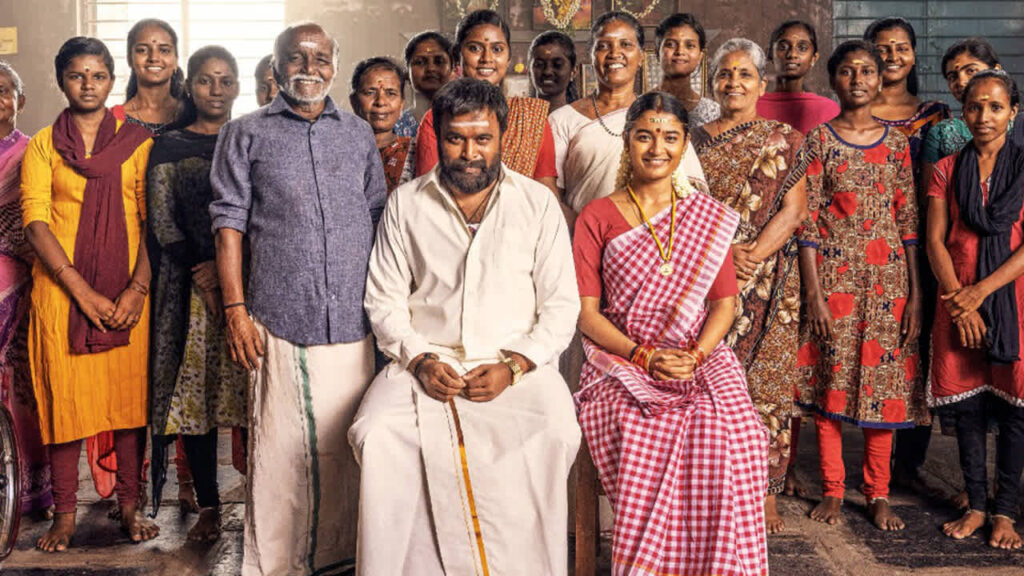
M. Sasikumar: Understated Brilliance
This My Lord movie review must celebrate what Sasikumar does best—inhabiting ordinary dignity with extraordinary authenticity. His Muthusirpi never grandstands, never delivers speeches designed for applause. Instead, Sasikumar finds power in restraint, in the way a working man’s exhaustion shows in his shoulders, in how hope fights with resignation in his eyes.
Watch him navigate bureaucratic humiliations with the weary patience of someone who’s faced indifference before. See how he holds onto dignity when everything else has been stripped away. This isn’t acting that announces itself; it’s acting that disappears into truth. Sasikumar reminds us why he’s one of Tamil cinema’s most reliable actors—he never lies to us, never oversells, never asks for sympathy he hasn’t earned through authentic portrayal.
Chaithra Achar: A Debut That Announces Arrival
Making your Tamil debut in a film this demanding takes courage. Delivering a performance this assured takes talent. Chaithra Achar brings both. Her Suseela isn’t just “the wife”—she’s a fully realized woman facing her own nightmare while supporting her husband through his.
The quiet strength she brings to every scene grounds the film’s emotional reality. When she sits in a hospital bed, when she confronts the possibility of losing everything, when she finds reserves of hope nobody knew she possessed—Chaithra makes us believe every moment. This is the kind of debut that makes you excited to see what she does next.
Guru Somasundaram: The Conscience of the Story
As the journalist who takes up their case, Guru Somasundaram provides the film’s moral clarity without becoming preachy. His character represents what media should be—a voice for the voiceless, a spotlight on injustice. Guru plays him with exactly the right balance of professional determination and personal investment, making us believe in the power of truth-telling.
Asha Sarath: Complexity in Power
Playing a minister who’s both powerful and desperate, Asha Sarath adds layers to what could have been a one-dimensional antagonist. Her performance reminds us that people in power are still people—flawed, frightened, capable of justifying almost anything when their survival depends on it.
The Ensemble: Everyone Shines
From supporting players to smaller roles, everyone in My Lord understands the assignment. This is a film where every performance matters, where even brief appearances carry weight because the actors treat their characters as real people caught in impossible situations.
Direction and Vision: Raju Murugan’s Mature Voice
Raju Murugan directs My Lord with the confidence of a filmmaker who trusts his audience’s intelligence. There’s no hand-holding, no underlining of themes, no emotional manipulation. Instead, he presents situations with clarity and allows the inherent injustice to speak for itself.
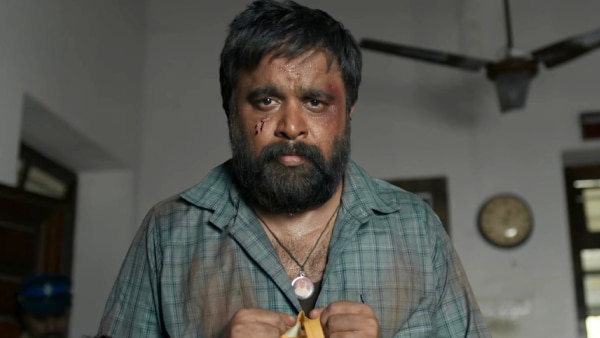
The way he structures the narrative—revealing information strategically, building tension through bureaucratic obstacles, finding drama in courtroom procedures—shows a director in complete command of his craft. Murugan knows when to let scenes breathe and when to tighten the screws. He understands that the most powerful moments often come from restraint rather than excess.
What’s particularly impressive is how he makes systemic critique genuinely engaging. Films about institutional failures often feel like homework. My Lord feels like a thriller where the stakes are devastatingly real. Murugan achieves that rare balance between message and entertainment, never sacrificing one for the other.
Technical Brilliance: Craft That Serves Story
Cinematography: Nirav Shah’s Discerning Eye
Nirav Shah’s camera captures contrasts beautifully—the warmth of working-class homes against the cold sterility of government offices, the intimacy of human connection versus the impersonal vastness of institutional spaces. His visual language supports Murugan’s thematic concerns without being obvious about it.
The framing choices tell their own story: how small people look in big bureaucratic buildings, how isolating the experience of fighting the system becomes, how hope persists even in the darkest corners. Shah’s cinematography is polished without being showy, professional without being cold.
Sound Design and Music: Sean Roldan’s Subtle Mastery
Sean Roldan delivers one of the film’s greatest assets with a score that understands the power of understatement. Rather than overwhelming emotional moments, his music enhances them through restraint. The background score knows when to pulse with tension and when to step back and let silence carry weight.
The sound design creates a realistic sonic landscape—the ambient noise of hospitals, the institutional echoes of government buildings, the intimate quiet of home. Everything works in service of immersion, pulling us deeper into Muthu and Suseela’s world.
Editing: Maintaining Momentum
At 2 hours and 28 minutes, My Lord maintains engagement through smart pacing choices. The editing keeps plot developments clear while allowing character moments room to land. There’s a rhythm to how information is revealed, how tension builds, how occasional lighter moments provide breathing room before the next crisis.
Cultural Context: A Story That Resonates Beyond Cinema
This My Lord movie review must acknowledge how deeply the film taps into real anxieties. Anyone who’s navigated government bureaucracy, anyone who’s felt powerless against institutional indifference, anyone who’s wondered if their life would matter if they weren’t useful to someone powerful—this film speaks directly to those experiences.
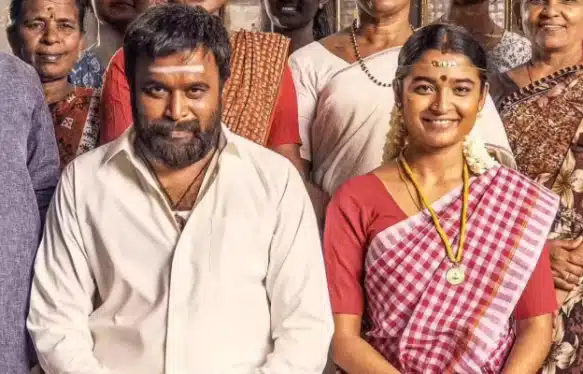
The identity theft angle isn’t just plot mechanics; it’s metaphor. How many people effectively don’t exist to systems that don’t see them as valuable? How quickly can ordinary lives be erased when no one with power is paying attention? These questions give My Lord resonance beyond its specific narrative.
The courtroom sequences tap into our hunger for justice, our need to believe that truth can triumph over power. Raju Murugan doesn’t offer easy answers, but he does offer hope—the possibility that visibility, voice, and determination can crack even the most indifferent systems.
Strengths: What Makes My Lord Essential
What Works Magnificently:
- Sasikumar’s grounded, authentic performance – Sincerity that never wavers
- Chaithra Achar’s impressive Tamil debut – Quiet strength that commands attention
- Raju Murugan’s intelligent direction – Mature filmmaking that respects audiences
- Sean Roldan’s understated score – Music that enhances without overwhelming
- Sharp, relevant social commentary – Observations that sting because they’re true
- Entire ensemble delivering quality work – No weak links in the casting
- Nirav Shah’s polished cinematography – Visual professionalism throughout
- Engaging premise executed well – Keeps you invested despite knowing it’ll be tough
Where Minor Polish Could Help:
- Supporting characters could use more depth – Some feel like plot functions rather than people
- Occasional repetitive emotional beats – A few sequences could be tighter
- Familiar thematic territory – The organ harvesting angle has been explored before
- Protagonist’s stubbornness occasionally feels rigid – More internal conflict would add dimension
Final Verdict: 4.5/5 Stars ⭐⭐⭐⭐
My Lord is exactly what socially conscious Tamil cinema should aspire to be—a film that engages the mind without boring it, that tugs at the heart without manipulating it, and that leaves you thinking long after the credits roll.
This My Lord movie review celebrates a film that succeeds where it matters most. Yes, some supporting characters could be more dimensional. Yes, certain themes have been explored before. Yes, the runtime asks for patience. But these are minor observations about a film that does vital work—making audiences see, feel, and perhaps even act.
Sasikumar delivers one of his finest performances, all understated power and authentic emotion. Chaithra Achar marks herself as a talent to watch. Guru Somasundaram and Asha Sarath bring depth to crucial roles. And the entire ensemble demonstrates that Tamil cinema’s strength lies in its ability to tell important stories without sacrificing entertainment value.
For Raju Murugan, My Lord confirms his place among filmmakers who matter—directors who use cinema not just to entertain but to illuminate, to question, to disturb our comfortable assumptions about how the world works.
The Power of Stories That Matter
There’s specific importance in films that refuse to look away from uncomfortable truths. In an industry sometimes criticized for escapism, My Lord engages directly with issues that affect real lives—bureaucratic indifference, identity theft, class disparity, the casual cruelty of systems designed to serve but often failing those who need them most.
After waiting for Tamil cinema to deliver more films that balance social relevance with compelling storytelling, My Lord succeeds admirably—not just for Sasikumar fans, but for anyone who believes cinema can be both entertaining and enlightening. This is what happens when talented actors, committed directors, and skilled technical crews decide that meaningful stories deserve exceptional execution.
The critique is sharp but never preachy. The emotion is genuine but never manipulative. And somewhere in that perfect balance is a film that will make you angry, make you think, and ultimately make you believe in the power of fighting back against systems that would rather you disappear.
What is the age rating for My Lord?
My Lord has a U/A certificate, meaning it’s suitable for viewers of all ages but with parental guidance suggested for children under 12.
Can we watch My Lord with kids?
Yes, but with context. While there’s no graphic violence or inappropriate content, the film deals with mature themes like identity theft, medical emergencies, loan sharks, and bureaucratic corruption.
Is My Lord based on a true story?
While My Lord isn’t based on a specific true story, it draws inspiration from real-world issues of identity theft, bureaucratic apathy, and how vulnerable citizens can be exploited by systemic failures.
Is My Lord available with subtitles?
Yes, the film is being released with English subtitles in most theaters to reach wider audiences beyond Tamil-speaking regions.
