


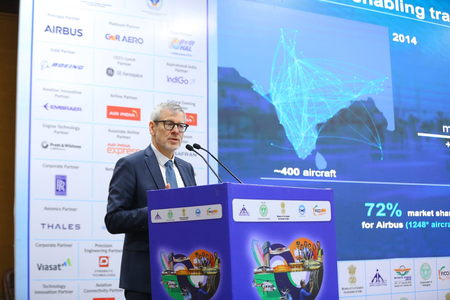
Global aerospace company Airbus predicts that India’s commercial aircraft fleet will expand threefold to 2,250 aircraft in the next ten years. This growth is attributed to India’s emergence as the world’s third-largest civil aviation market by 2035, driven by the country’s economic development and airlines’ international route expansions.
According to Airbus India and South Asia President Jurgen Westermeier, the significant increase in aircraft with over 100 seats from the 2025 levels represents a remarkable expansion in global aviation history. The surge in demand for aircraft is fueled by India’s rapid economic growth, increased government infrastructure investments, and a shift in consumer behavior towards air travel.
India is expected to experience an annual passenger traffic growth rate of 8.9% by 2035, surpassing other major economies and exceeding the global average. To support the expanded fleet, the need for pilots is projected to rise to 35,000 by 2035 from the current 12,000, while the technical workforce is set to triple to 34,000 from 11,000.
Airbus emphasizes the importance of evolving operating models in line with the fleet and network expansion to capitalize on India’s position as a key hub for international transit. The company plans to facilitate this growth through its aircraft models, such as the A320 Family for domestic operations and the A321XLR and A350 for medium-to-long-haul international flights.
India is poised to become a hub for Maintenance, Repair, and Overhaul (MRO) services as the fleet expands. The MRO market for airframes, engines, and components is projected to reach $9.5 billion by 2035. Indian airlines are also expected to invest up to $1 billion in digitalization of flight, ground, and technical operations, cybersecurity, and aircraft connectivity by 2035.
To support the fleet growth, the Indian government plans to increase the number of operational airports by 50, reaching a total of around 200 by 2035. This infrastructure expansion aims to sustain high-frequency flight operations and accommodate the growing aviation sector.
