


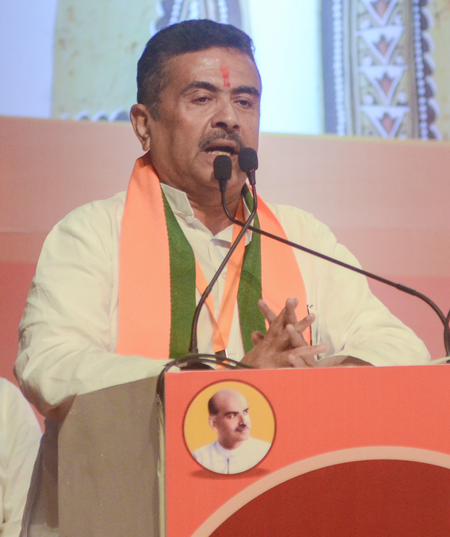
Two key anti-land acquisition movements, the Singur movement against Tata Motors’ project and the Nandigram movement opposing a chemical hub by Salim Group, played pivotal roles in toppling West Bengal’s Left Front regime in 2011. While Singur, led by Mamata Banerjee, gained international attention, Nandigram’s impact was more profound due to the police firing in 2007 that resulted in 14 deaths. Suvendu Adhikari, entrusted with leading the Nandigram movement, played a crucial role in uniting villagers and thwarting police and CPI(M) forces.
Adhikari faced challenges from CPI(M) cadre forces and administrative pressures but managed to sustain the movement by blocking access points and garnering support from various groups. The police firing incident on March 14, 2007, marked the beginning of the Left Front regime’s downfall in West Bengal, sparking widespread protests across the state. Adhikari’s subsequent political journey saw him emerge as a prominent figure, eventually leading to his defection to the BJP before the 2021 Assembly elections.
Adhikari’s transition to the BJP was fueled by growing differences with the Trinamool Congress leadership, particularly over organizational decisions and electoral strategies. His victory over Mamata Banerjee in Nandigram solidified his position within the BJP, leading to his appointment as the Leader of the Opposition in the state Assembly. Adhikari’s aggressive stance against the ruling party, coupled with his organizational efforts, contributed to the BJP’s electoral gains in East Midnapore district.
In the 2024 Lok Sabha polls, the BJP made significant inroads in the region, winning key constituencies that were previously dominated by the Trinamool Congress. Adhikari’s family members also secured victories, further consolidating the BJP’s presence in East Midnapore. His strategic political maneuvers and organizational acumen played a crucial role in the BJP’s electoral successes, positioning him as a prominent leader within the party.
