


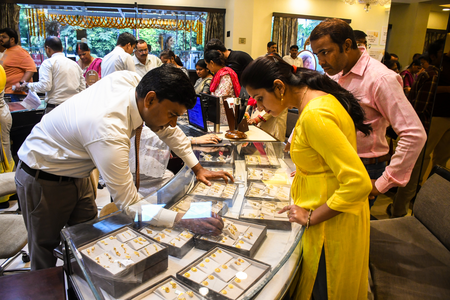
Akshaya Tritiya, a significant day for gold purchases in India, is anticipated to drive business exceeding Rs 20,000 crore in gold and silver, a notable increase from last year’s Rs 16,000 crore. The Confederation of All India Traders (CAIT) highlighted that despite surging prices, the demand for precious metals remains strong.
The price of gold has risen from about Rs 1,00,000 per 10 grams last year to nearly Rs 1.58 lakh this year, while silver has spiked from Rs 85,000 per kg to an unprecedented Rs 2.55 lakh per kg. This price surge has led to a shift in consumer behavior towards more calculated and value-driven purchases, according to CAIT.
Notably, the jewelry industry has adapted to these changes by focusing on lightweight and wearable jewelry, as well as silver and diamond products. Jewellers are offering incentives like reduced making charges and complimentary gold coins to maintain consumer interest.
While the value of the trade is expected to increase, the quantity of precious metals sold tells a different story. Data from the All India Jewellers and Goldsmith Federation (AIJGF) indicates that the Rs 16,000 crore gold trade equates to around 10,000 kilograms of gold, resulting in an average sale of 25 to 50 grams per jeweler.
Similarly, the Rs 4,000 crore silver trade is estimated to translate into approximately 1,56,800 kilograms of silver, with an average sale of 400 to 800 grams per jeweler. This shift towards lightweight jewelry and small denomination coins reflects a trend towards more affordable options in the market.
There is also a growing interest in alternative investment avenues such as digital gold, Sovereign Gold Bonds, and Exchange Traded Funds (ETFs) due to their liquidity, safety, and flexibility amid price fluctuations.
