


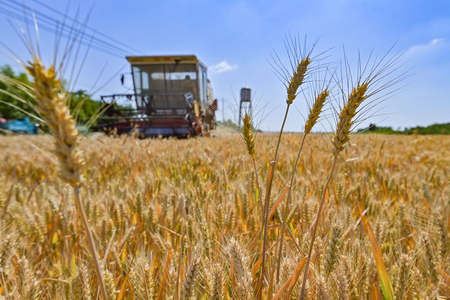
Australia anticipates a 26% drop in its annual wheat harvest, influenced by soaring fertilizer costs linked to Middle East tensions. The Australian Bureau of Agricultural and Resource Economics and Sciences (ABARES) reported a forecast of 26.7 million tonnes for the 2026-27 wheat production, marking a significant decrease from the previous year and below the 10-year average.
Additionally, ABARES revealed that the total area allocated for wheat cultivation is projected to decrease by 12% to 10.9 million hectares in 2026-27, the lowest since 2019-20. The overall winter crop production in Australia is expected to decline by 21% to 54.5 million tonnes, as per the ABARES report cited by Xinhua news agency.
The impact of escalating fuel and fertilizer prices, coupled with dry weather conditions and a subpar national winter rainfall outlook, is likely to lead many farmers to leave land unplanted. The commodities report highlighted the significance of the Middle East conflict on Australian agriculture, emphasizing the sector’s reliance on imports for essential inputs like fuel, fertilizers, and chemicals.
According to ABARES, Australian grain and oilseed export prices have surged by approximately 20% since the Middle East conflict erupted, while domestic urea prices have spiked by over 80% during the same period. Consequently, a 5% decrease in the total value of Australia’s agricultural output to 98.3 billion Australian dollars (70.5 billion U.S. dollars) is predicted for 2026-27, with agricultural export value expected to fall by 9% to 74.8 billion Australian dollars (53.6 billion U.S. dollars).
