


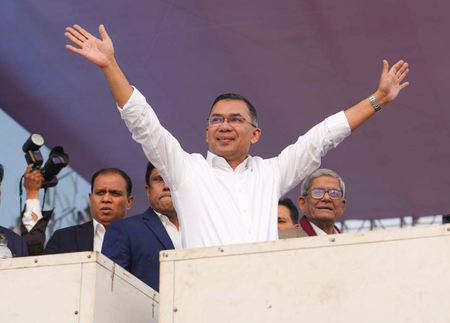
The upcoming Bangladesh elections are expected to see the Bangladesh Nationalist Party (BNP), led by Tarique Rahman, secure a clear victory according to current opinion polls. Despite this, both China and Pakistan, who have invested significantly in the country, are actively engaging with the Jamaat-e-Islami, expected to be the second-largest party. Both nations consider the Jamaat a crucial player, serving as a counterbalance to India’s influence in Bangladesh.
Chinese officials have been in contact with the Jamaat, while Indian agencies are closely monitoring the situation following a meeting between the Chinese Ambassador to Bangladesh and Jamaat-e-Islami Ameer Shafiqur Rahman. Observers note that China recognizes the Jamaat’s enduring strength and influence in Bangladesh, even if it does not win the elections, potentially posing challenges to India’s interests in the region.
The Jamaat’s ability to incite unrest in Bangladesh, particularly to undermine Indian interests, is a cause for concern. Recent interactions between India and the BNP leadership, including External Affairs Minister Dr. S Jaishankar’s attendance at BNP founder Khaleda Zia’s funeral, have raised eyebrows in Pakistan and China. Both countries may seek to leverage the Jamaat’s influence post-elections to create political instability in Bangladesh.
With the Jamaat wielding significant influence over various sectors in Bangladesh, including student unions, the army, and the police, anti-India sentiments could be further fueled. China and Pakistan, invested in the Belt and Road Initiative, are keen on ensuring that any violence does not jeopardize their economic interests in the region. The Jamaat’s assurances to safeguard these investments have implications for post-election stability and regional dynamics.
China and Pakistan’s engagement with the Jamaat serves as a strategic message to the BNP, emphasizing the consequences of deviating from their interests. Both nations aim to prevent any policy shifts by the BNP that could improve relations with India. Amid strained India-Bangladesh ties, China and Pakistan seek to maintain this status quo post-elections, aligning with the Jamaat to safeguard their regional objectives.
