

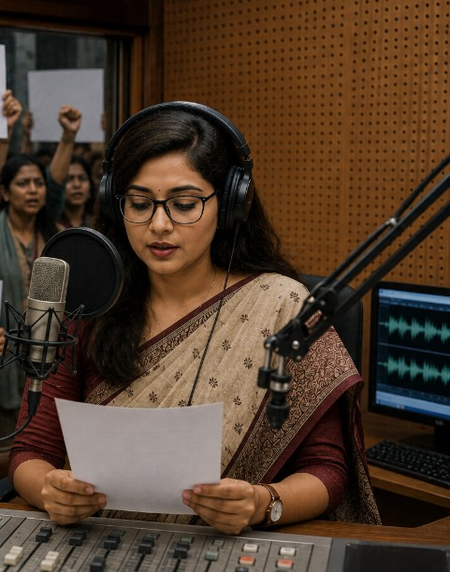
Several women’s rights activists, academics, artists, and civil society members in Bangladesh have raised concerns over a recent directive by state-owned radio broadcaster Bangladesh Betar. The directive mandates female news presenters to wear sarees or salwar-kameez with dupattas, while discouraging “large bindis” and advising against draping the dupatta on one side.
In an open letter to Bangladesh’s Information and Broadcasting Minister Zahir Uddin Swapan, the signatories expressed dissatisfaction with the directive’s withdrawal, emphasizing the need for a critical evaluation of the regressive mindset it reflects. They criticized the directive as culturally insensitive, stating that it undermines women’s dignity and contradicts constitutional values of equality, individual freedom, and cultural diversity.
The signatories highlighted that such restrictions reinforce harmful social norms, discriminatory behavior, and controlling attitudes towards women in professional environments. They called for accountability for those responsible for the directive and urged the adoption of inclusive, respectful, and non-discriminatory workplace policies in the future.
A recent international study revealed that female journalists in Bangladesh are nearly six times more likely than male journalists to face sexual harassment. The survey, covering 339 media professionals in Bangladesh, found that 60% of female respondents experienced verbal sexual harassment, compared to only 9% of male respondents.
According to the study, most female survivors of harassment in Bangladesh did not report incidents due to concerns about career repercussions. Among female media professionals who faced verbal harassment, 52% did not report the abuse, and employers took no action in 43% of reported cases.
Lindsey Blumell of City, St George’s, University of London, emphasized the detrimental impact of sexual harassment on individuals and newsroom environments. Research indicates that experiencing harassment reduces job satisfaction and increases the likelihood of leaving the industry.
Bangladesh Women’s Rights Activists Criticize Dress Code Directive for News Presenters


Indian Community Editorial Team
The Indian Community Editorial Team curates, verifies, and publishes stories that matter to Indians worldwide. From culture and community to business and innovation, our mission is to spotlight voices, ideas, and events that bring our global community closer together. Have news or a story to share? Submit it to us at [email protected].
Add A Comment