


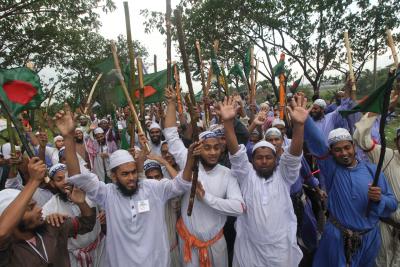
Bangladesh is gearing up for its 13th general election on February 12, which is seen as a pivotal moment following the ouster of the Sheikh Hasina government in 2024. The Bangladesh Nationalist Party (BNP) and Jamaat-e-Islami are key players in this election, with Hindu voters expressing concerns about intimidation from both parties. The Awami League (AL) supporters are expected to influence the election outcome significantly, despite the party not directly participating.
Religious minorities, constituting 8-10% of Bangladesh’s population, have historically supported the Awami League. The BNP is accused of fear-mongering by warning minorities of potential violence if the Jamaat comes to power, while the Jamaat threatens AL supporters with reprisals if they do not vote for them. Both parties are striving to appeal to AL supporters, with a history of being political allies in the past.
The BNP currently holds an advantage according to opinion polls, ranging from a landslide victory to a closely contested outcome. The return of Tarique Rahman, son of late Prime Minister Khaleda Zia and Acting Chairperson of BNP, from the UK has boosted party morale. Analysts are closely monitoring the behavior of AL supporters, speculating on whether they will abstain, split their votes, or unite behind the BNP to counter other political forces.
Despite favorable survey results, the BNP faces uncertainties related to voter turnout, the influence of regional and Islamist parties, and the potential for last-minute alliances or defections.
