


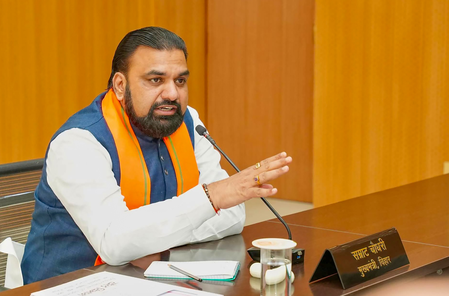
Under the leadership of Bihar Chief Minister Samrat Choudhary, the Cabinet recently convened and greenlit 25 agenda items, with a focus on various crucial matters. Notably, the Cabinet endorsed adjustments to survey and measurement charges for raiyati land in different areas, setting specific fee ranges based on plot size.
In urban regions like Municipal Corporation, Municipal Council, and Nagar Panchayat areas, the survey fee for each plot now ranges from a minimum of Rs 2,000 to a maximum of Rs 8,000. Conversely, in rural zones, the fee varies from a minimum of Rs 1,000 to a maximum of Rs 4,000 per plot. Additionally, the Cabinet sanctioned charges for expedited land measurement services, pegged at Rs 4,000 per plot in urban areas and Rs 2,000 per plot in rural regions.
Moreover, significant fund allocations for the 2026-27 fiscal year were approved, earmarking Rs 400.66 crore for flood management, Rs 250 crore for land acquisition, and Rs 120 crore for river management activities in border regions. The Cabinet also greenlit a substantial irrigation project in Munger district, increasing the project cost to Rs 196.89 crore for constructing a gated weir and restoring a high-level main canal stretch.
In a move towards social welfare, the Cabinet granted advance approval of Rs 3,662.97 crore for six social security pension schemes, ensuring pension disbursements for the upcoming months through the Direct Benefit Transfer system. Noteworthy schemes covered include those for old age, widows, disabilities, and other vulnerable groups. Additionally, the Viksit Bharat G-Ram G Scheme is set to be implemented from July 1.
Further decisions included financial support for reviving the Sasamusa Sugar Mill in Gopalganj, aiming to settle dues owed to sugarcane farmers and boost local employment opportunities. The urban infrastructure sector also saw progress, with approvals granted for drinking water supply projects in Hajipur, sewerage network construction in Begusarai, and a water supply scheme in Saharsa.
Lastly, the Cabinet decided to discontinue concessions or incentives for purchasing new motor vehicles after deregistering or scrapping government vehicles older than 15 years. However, existing benefits for replacing old non-government vehicles will remain intact.
