


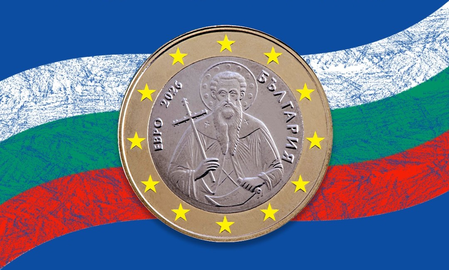
Bulgaria has officially become the 21st member of the Euro area by adopting the Euro as its official currency on New Year’s Day. To facilitate a smooth transition, the Bulgarian lev will coexist with the Euro throughout January, with the Euro becoming the sole legal tender starting February 1.
During the initial transition period from January 1 to June 30, currency exchange from Lev to Euros will be free of charge at banks and post offices. However, after this period, a fee will be applicable for currency exchanges. The Bulgarian National Bank has committed to indefinitely exchanging Levs for Euros, with the mandatory dual pricing in Euro and Lev ending on August 8, 2026.
Officials and experts have shown confidence in the transition process, with Vladimir Ivanov, Chairman of Bulgaria’s State Commission on Commodity Exchanges and Markets, highlighting expectations for a smooth market stabilization in 2026 following the introduction of the Euro. Nikolay Valkanov, Executive Director of the Association for Modern Trade, noted the significant efforts made by retailers to ensure a seamless transition to the new currency.
The Bulgarian government has long prioritized Eurozone accession since joining the EU in 2007. After meeting all convergence criteria on June 4, 2025, Bulgaria received formal approval from the Council of the European Union on July 8, 2025, for adopting the Euro effective January 1, 2026. The Eurozone was established on January 1, 1999, with the launch of the Euro in 11 countries, including France, Germany, and Austria.
Currently, out of the 27 EU countries, six members, namely Sweden, Poland, the Czech Republic, Hungary, Romania, and Denmark, have yet to adopt the Euro.
