


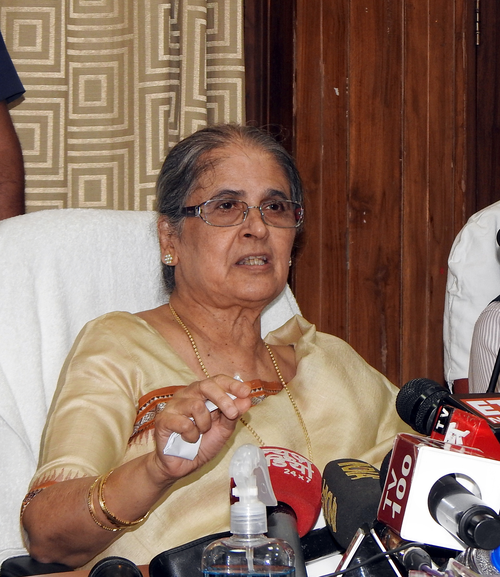
A high-level committee, led by former Supreme Court judge Justice Ranjana Prakash Desai, is engaging in extensive consultations in Madhya Pradesh to advance the implementation of the Uniform Civil Code (UCC). The committee’s meetings, taking place at the Naronha Administration Academy in Bhopal, involve various stakeholders and are crucial in shaping the final UCC Bill draft. Representatives from different commissions, political parties, religious leaders, and senior administrative officials are actively participating to offer insights and address concerns.
The committee has reached out to members from the Women’s Commission, Children’s Commission, SC Commission, Backward Classes Commission, and Minorities Commission to gather their recommendations. The consultation process includes sessions with recognized political parties in the afternoon and discussions with religious leaders in the evening. Additionally, senior officials from various departments, including Additional Chief Secretaries, Principal Secretaries, and Secretaries, are attending the meetings to contribute to the discussions.
In the upcoming sessions, the Home Department will provide detailed presentations on law-and-order and administrative aspects, while other departments will brief the committee on topics within their expertise. The committee has received a significant number of suggestions through online platforms, public hearings, and other channels, which are being carefully reviewed to ensure inclusivity and address societal concerns in the UCC draft.
Upon finalizing the report after the day’s deliberations, the committee will submit it to the state government for review. A senior secretaries’ committee, under Chief Secretary Anurag Jain’s leadership, will then examine the recommendations before presenting the proposal to the Cabinet chaired by Chief Minister Mohan Yadav for approval. If approved, the UCC Bill is expected to be introduced during the upcoming Monsoon Session of the Madhya Pradesh Assembly starting on July 20.
This development signifies a significant step by the state government towards establishing a Uniform Civil Code to promote equality and consistency in personal laws across communities. The committee’s inclusive approach demonstrates a sincere effort to seek consensus on this delicate matter. Stakeholders are optimistic that the final draft will strike a balance between progressive reforms and the preservation of diverse cultural and religious traditions in the state.
