


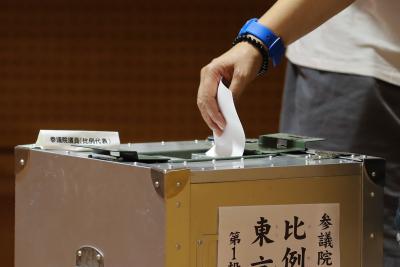
Early voting for Japan’s House of Representatives election, set for February 8, has commenced at Japanese diplomatic missions globally and designated locations in Japan. Polling stations are available at 233 sites in other countries, including embassies and consulates, for approximately 103,000 registered overseas voters. In Japan, individuals can also cast their votes in advance at specified places if unable to do so on the election day.
At the Japanese Embassy in Seoul, a graduate student named Naoya Maeda expressed his desire for politicians to heed the concerns of ordinary citizens. Maeda highlighted the rising costs in Japan during his visits and emphasized his increased interest in related policies as a foreigner in South Korea. Another voter, Seiji Funamoto, residing in Sydney, emphasized the significance of policies concerning foreigners, particularly regulations on land acquisition, during his voting at the consulate.
During the previous lower house election in 2024, around 20.95 million people participated in early voting. However, there are apprehensions of a potential decline in voter turnout for this election due to the shortest interval between the lower chamber’s dissolution and voting in the post-war era, along with heavy snowfall affecting certain regions, leading to delays in delivering polling station tickets.
Japanese Prime Minister Sanae Takaichi dissolved the House of Representatives on January 23 for a snap election scheduled for February 8. Takaichi’s cabinet approved the dissolution plan for the 465-member chamber. This dissolution marks the first instance in six decades where a lower house has been dissolved at the beginning of a regular session. Takaichi cited the lack of public support for her premiership, which began in October last year, as the reason for calling the elections.
