


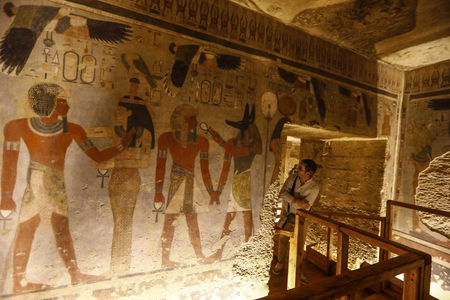
The Egyptian Ministry of Tourism and Antiquities revealed the unearthing of a Pharaonic tomb on Luxor’s West Bank during ongoing archaeological digs. The tomb, identified as belonging to “Paser” from the New Kingdom era, was found by a Dutch archaeological team within the Theban Necropolis. Inscriptions on the walls suggest a timeframe between 1550 BC and 1069 BC for the structure.
The Supreme Council of Antiquities in Egypt, represented by Hisham Elleithy, plans to delve into the tomb’s history and occupants for a comprehensive understanding. The tomb’s design includes a courtyard, a rock-cut chapel, and underground burial chambers, typical of New Kingdom private tombs. The courtyard, still intact, features intricate wall paintings depicting religious scenes and offerings.
The tomb’s layout, with a mud-brick mastaba and elaborate decorations, reflects the customary style of that period. The Spanish archaeological mission’s recent discovery in Minya province, dating back to 30 BC to 395 AD, also sheds light on Roman and Greek funerary practices. The findings include mummies, wooden coffins, and artifacts like golden tongues, providing valuable insights into ancient burial customs.
