


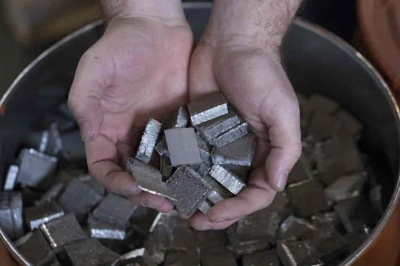
Finance Minister Nirmala Sitharaman announced a new initiative to enhance India’s involvement in critical minerals by supporting mineral-rich states like Odisha, Kerala, Andhra Pradesh, and Tamil Nadu in establishing specialized rare earth corridors. These corridors will cover the entire rare earth value chain, including mining, processing, research, and advanced manufacturing. The move follows the introduction of a rare earth permanent magnet scheme in November 2025, aiming to strengthen India’s domestic capabilities in a sector traditionally reliant on imports.
The Cabinet sanctioned the scheme to promote the manufacturing of Sintered Rare Earth Permanent Magnets in India with an investment of Rs 7,280 crore. This initiative targets establishing an annual manufacturing capacity of 6,000 metric tons of integrated rare earth permanent magnets in India, aiming to boost self-reliance and position India as a significant player in the global market. Currently, India heavily depends on rare earth supplies from China, raising strategic concerns due to the crucial role of rare earths in various sectors like electronics, renewable energy, and defense technologies.
The government’s focus on indigenous capacity aims to secure vital supply chains crucial for national growth and security. The selected states, Odisha, Kerala, Andhra Pradesh, and Tamil Nadu, are strategically chosen for their abundant deposits of monazite and other beach sand minerals, rich in rare earth elements. The rare earth corridors will not only emphasize extraction but also high-value processing and rare earth magnet production to maximize economic and technological benefits from India’s reserves.
This initiative is seen as a strategic response to global worries about China’s dominance in rare earth production and exports. Aligned with the National Critical Minerals Mission and recent mining sector reforms, it underscores India’s commitment to achieving self-reliance in critical minerals, essential for its industrial and energy transition goals.
