


Five semiconductor plants are set to be operational in India by the end of 2026, as per Union Minister Ashwini Vaishnaw. Out of the 12 semiconductor projects approved by the government, three are already in commercial production, and two more are scheduled to be inaugurated soon.
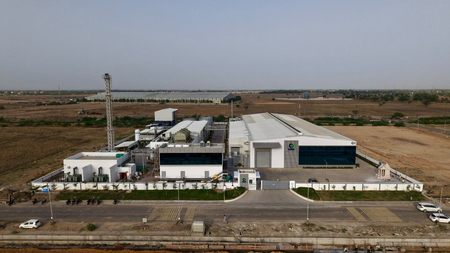
Prime Minister Narendra Modi had launched the country’s first and second semiconductor plants on February 28 and March 31, 2026, respectively. The third CG SEMI (OSAT) facility in Sanand is now in commercial production, enhancing global confidence in India’s semiconductor capabilities.
Under the Prime Minister’s leadership, a strong semiconductor manufacturing ecosystem is evolving, which is envisioned to lay the groundwork for a developed India, noted Vaishnaw. The minister attributed the success of the CG SEMI plant in Sanand to the active cooperation and efficient execution by the Gujarat government.
The CG SEMI plant is not only a technical achievement but also a symbol of social progress. Young women from various states are being employed as operators at the facility after receiving specialized training in Malaysia. As India’s semiconductor ecosystem advances, the goal is to provide similar high-quality training within the country.
Products manufactured at the CG SEMI facility will cater to domestic needs for automobiles, scooters, and industrial equipment, as well as be exported to Japan, the United States, and Europe. This positions India as a significant contributor to the global semiconductor supply chain.
The groundbreaking ceremony for the CG SEMI facility took place on March 13, 2024, with an investment exceeding Rs 7,600 crore. The plant, established in collaboration with Renesas Electronics, Japan, provides India access to global semiconductor technologies, manufacturing practices, and quality systems.
India’s electronics manufacturing sector has expanded into a nearly Rs 13 lakh crore industry, supporting over 25 lakh jobs.
