


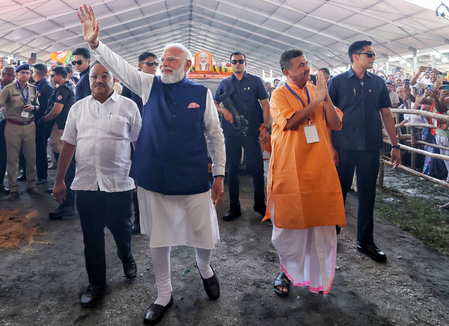
There was a unique global interest in the recent West Bengal Assembly election results, surpassing the usual reactions seen in Indian state polls. The outcome in West Bengal resonated internationally, with reactions from Dhaka to Washington, indicating a broader strategic and ideological shift in a sensitive border state. US President Donald Trump praised Prime Minister Narendra Modi for the historic victory in West Bengal, highlighting the significance of the mandate.
The attention on West Bengal’s election results raised questions about why this state garnered exceptional global focus compared to other state victories in India. West Bengal’s geographical and demographic sensitivity, given its border with Bangladesh, has long fueled debates on issues like illegal infiltration and border security. The BJP’s allegations of unchecked infiltration from Bangladesh under the previous government added complexity to the political landscape.
Over the years, West Bengal’s political dynamics have evolved, with leaders like Mamata Banerjee shifting positions on issues like illegal immigration. The BJP’s campaign in Bengal often revolved around accusing the ruling party of enabling illegal immigration, linking it to national security concerns. The reactions from neighboring countries like Bangladesh and Pakistan underscore the broader implications of West Bengal’s election outcome beyond India’s borders.
The intense reactions to Mamata Banerjee’s defeat highlight her national significance as a leader capable of challenging PM Modi. The election result, where the BJP secured a strong mandate, sets high expectations for the party’s governance in Bengal, focusing on issues like border security and development. The voters’ choice in Bengal reflects a desire for stability, development, and improved quality of life, signaling a shift in priorities and aspirations.
