
Close Menu
  • Indian Festivals 2026
  • Movie & OTT Releases This Week
  • News
  • Entertainment
  • NRI Life
  • Research
  • Advertise with us
Facebook X (Twitter) Instagram YouTube
  • Download Indian Community App
  • Advertise Here
Facebook X (Twitter) Instagram
Indian CommunityIndian Community
Trending
  • Terror (2026) Kannada Movie Review: Dushyanth Adithya Delivers a Gripping Patriotic Action Thriller
  • Toh Ti Ani Fuji Review: A Quietly Devastating Love Story That Lingers Long After It Ends
  • The Trap (2026) Review: A Gripping Marathi Psychological Thriller That Pulls You Into Its Dark Web
  • TN 2026 Movie Review: A Politically Charged Tamil Satire That Demands Attention
  • Manithan Deivamagalam Movie Review: A Heartfelt Rural Drama Rooted in Courage and Community
  • Mohiniyattam (2026) Review: A Superior Sequel That Nails the Dark Comedy Transition
  • LIK: Love Insurance Kompany Review — When the Heart Knows Better Than the Algorithm
  • Kaakee Circus Review: A Charming Cop Comedy Bursting with Heart and Humour
  • Indian Festivals 2026
  • News
    • National
    • International
    • Entertainment
    • Achievements
    • Scam Alerts
    • Business
    • Health & Medicine
    • Science & Technology
    • Sports
  • Entertainment
  • Latest Movie Releases
    • Latest OTT Releases
  • NRI Life
  • India & Culture
  • Health & Wellness
  • Research
Indian CommunityIndian Community
Home » News » International
International

Global Financial Markets Resilient Amid Middle East Conflict Concerns, IMF Warns

Indian Community Editorial TeamBy Indian Community Editorial TeamApril 14, 20262 Mins ReadNo Comments Add us to Google Preferred Sources
Global Financial Markets Resilient Amid Middle East Conflict Concerns, IMF Warns
Share
Facebook Twitter LinkedIn Pinterest Email

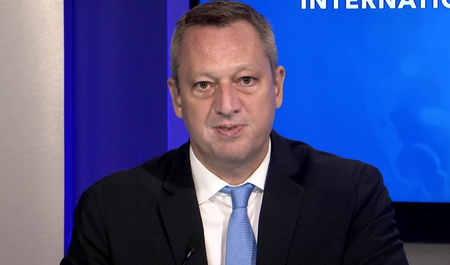
Global financial markets have shown resilience despite recent volatility stemming from the Middle East conflict, according to the International Monetary Fund (IMF). The IMF’s latest Global Financial Stability Report highlighted that while there have been bouts of volatility, the financial system has remained robust without significant disruption. IMF Financial Counsellor Tobias Adrian emphasized that markets have functioned smoothly despite the geopolitical tensions.

Tobias Adrian pointed out that the ongoing conflict has led to occasional volatility but has not resulted in sustained stress similar to past liquidity crises. He reassured that there have been no widespread margin calls or forced deleveraging, with banks maintaining strong capitalization and liquidity levels. However, he cautioned that risks remain due to elevated debt levels, rollover risks, and the increasing influence of non-bank financial institutions.

The IMF expressed concerns about the limited policy flexibility governments have due to prolonged crisis support measures. Adrian highlighted that many countries have depleted their policy space, urging policymakers to monitor risks closely and be prepared to provide liquidity support if necessary. The conflict has also driven up oil prices, impacting global inflation expectations, although markets currently view this inflation surge as temporary.

Central banks are advised to adopt a cautious approach due to uncertainties surrounding the duration of the energy price surge. The IMF suggested that policymakers may opt for a “wait and see” strategy, considering the high value of waiting in the current scenario. Emerging markets face additional challenges from volatile capital flows and higher energy expenses, with non-bank financing flows being particularly susceptible to global risk appetite shifts.

Despite these challenges, emerging markets have demonstrated relative resilience supported by credible monetary policies. The IMF underscored the importance of decisive action by central banks if inflationary pressures escalate. The report also highlighted risks associated with artificial intelligence, emphasizing the need for enhanced regulatory frameworks and operational readiness to mitigate cybersecurity threats to financial stability.

Regarding private credit markets, the IMF noted that risks seem contained presently, even under stress scenarios. While default rates could increase, they are deemed manageable, and mechanisms like redemption gates in funds help mitigate systemic risks. Overall, the IMF cautioned that despite weathering recent shocks, the global financial system remains vulnerable due to geopolitical tensions, high debt levels, and limited policy flexibility.

Artificial Intelligence Central Banks Cybersecurity Emerging Markets Financial Stability Global Financial Stability Report International Monetary Fund Middle East conflict Private Credit Markets Tobias Adrian
Add us to Google Preferred Sources
Indian Community Editorial Team

The Indian Community Editorial Team curates, verifies, and publishes stories that matter to Indians worldwide. From culture and community to business and innovation, our mission is to spotlight voices, ideas, and events that bring our global community closer together. Have news or a story to share? Submit it to us at [email protected].

Related Posts

How Can Businesses Evaluate AI ROI Beyond Traditional Metrics? Strategies Most Companies Still Overlook

Add A Comment
find baby names

Actor Mihir Ahuja Praises Mona Singh’s Acting Skills, Draws Comparison with Irrfan Khan

April 14, 2026

Global Financial Markets Resilient Amid Middle East Conflict Concerns, IMF Warns

April 14, 2026

IMF Warns Middle East Conflict Threatens Global Growth and Prices

April 14, 2026

Austria’s Federal Chancellor Christian Stocker Visits India to Boost Bilateral Ties

April 14, 2026
  • Facebook
  • Twitter
  • Pinterest
  • Instagram
About Us
  • About Us
  • Contact Us
  • Terms of Service
Corporate
  • Download Indian Community App
  • Advertise Here
Facebook X (Twitter) Instagram
  • About Us
  • Contact Us
  • Terms of Service
© 2026 Designed by CreativeMerchants.

Type above and press Enter to search. Press Esc to cancel.