


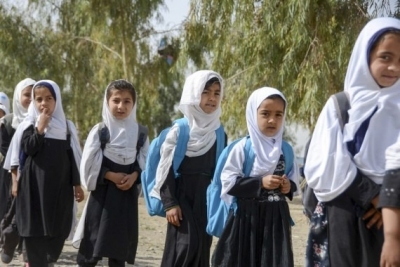
Former Afghanistan President, Hamid Karzai, expressed serious concerns over a recent UNICEF analysis warning that Afghanistan could lose up to 20,000 women teachers and 5,400 healthcare workers by 2030 due to ongoing restrictions on girls’ education and women’s employment. The report also highlighted that if the ban continues, over two million Afghan girls may be deprived of education beyond primary school. Karzai emphasized the importance of equal access to education for both genders in addressing the nation’s challenges.
Expressing his worries, Karzai stressed that Afghanistan’s progress relies on its educated citizens and called for reopening schools and universities to girls promptly. He emphasized the need for providing educational opportunities to youth of both genders to tackle the country’s issues independently. UNICEF’s analysis revealed a decline in female representation in civil services, raising concerns about the impact on education and healthcare services in Afghanistan.
The UNICEF report, titled ‘The Cost of Inaction on Girls’ Education and Women’s Labour Force Participation in Afghanistan,’ highlighted a decrease in the number of trained women professionals in schools and hospitals, posing risks to children’s education and health outcomes. UNICEF’s Executive Director, Catherine Russell, warned that excluding girls from education could lead to a shortage of crucial professionals like teachers, nurses, and doctors, jeopardizing essential services. Russell called for lifting the ban on girls’ secondary education and urged international support for girls’ right to education.
