


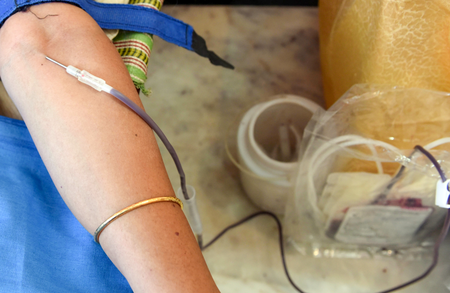
A team of health experts and advocates in New Delhi highlighted the critical need for systemic reforms to safeguard patients reliant on blood transfusions. The Thalassemia Patients Advocacy Group (TPAG) launched a position paper underscoring the necessity for safe, timely, and fair access to blood, labeling it a crucial aspect of survival, dignity, and constitutional duty.
The paper, endorsed by experts including Prof. N.K. Ganguly, Prof. Bejon Kumar Misra, Suneha Paul, P.C. Sen, and Tuhin A. Sinha, emphasized the risks faced by individuals with thalassemia due to gaps in screening protocols, uneven access to advanced diagnostic technologies, and fragmented regulation. These risks include transfusion-transmitted infections like HIV and Hepatitis B and C.
Blood safety was positioned as a foundational element of India’s healthcare system that requires proactive, rather than reactive, attention. The paper integrated patient experiences, scientific evidence, legal perspectives, and public health expertise to propose an action-oriented roadmap aimed at fortifying India’s blood safety ecosystem and protecting the lives of transfusion-dependent patients, especially those with thalassemia.
Drawing insights from discussions with policymakers, clinicians, scientists, legal experts, and patient advocates, the paper shed light on persistent systemic challenges. These challenges include the uneven adoption of Nucleic Acid Testing (NAT) in blood banks, the absence of a comprehensive national blood law, unequal access to safe blood in rural areas, and a lack of transparency and accountability within the transfusion system.
The paper advocated for the mandatory implementation of Nucleic Acid Testing in all blood banks to reduce window-period infections and standardize screening practices nationwide. It also proposed the enactment of a robust Blood Safety Act to define patient rights and institutional obligations, as well as the establishment of a dedicated National Thalassemia Control Programme to integrate prevention, screening, and long-term care.
