


Researchers at the Indian Institute of Technology (IIT) Bombay have devised a more effective technique to retrieve immune cells cultivated in the lab for T-cell-based cancer treatments. In therapies like CAR T-cell, immune cells are extracted from a patient’s blood, modified in large quantities in the lab, and reintroduced into the patient’s bloodstream to combat cancer.
The challenge lies in delicately collecting these cells, grown externally, to ensure they remain viable and functional when reinfused into the patient. Prof. Prakriti Tayalia from the Department of Biosciences and Bioengineering at IIT Bombay highlighted the significance of this process, stating that insufficient healthy cells hinder proper testing and therapy.
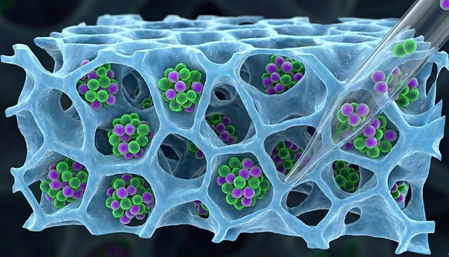
To replicate the body’s natural conditions, Tayalia’s team utilized electrospun scaffolds, resembling thin mats of fine fibers, to cultivate Jurkat T-cells. These cells were grown inside scaffolds made of polycaprolactone, showing promising results as they integrated well within the structure.
The study, detailed in Biomaterials Science, demonstrated that using accutase, a gentler enzyme, for cell retrieval resulted in higher cell survival rates and behavior more akin to healthy T-cells. This approach avoids damaging crucial surface proteins necessary for immune signaling and activation, enhancing the therapeutic potential of the cells.
The findings of this research could significantly aid laboratories in utilizing such scaffolds for preparing cells in treatments like CAR T-cell therapy. Tayalia emphasized the importance of each step in the process, from cell cultivation to retrieval, in ensuring the success of advanced therapies reaching patients.
