


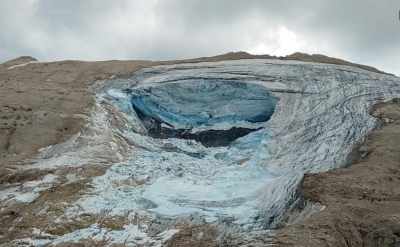
Researchers from the Indian Institute of Technology (IIT) Guwahati have created a predictive framework that has pinpointed 492 potential locations for glacial lake formation in the Eastern Himalayan mountains. Using advanced technology like high-resolution Google Earth images and digital elevation models, the research offers valuable insights for managing hazards and planning water resources in high-altitude regions.
The models utilized in the study have enabled the identification of intricate landscape features and the estimation of uncertainty in predictions, enhancing the accuracy and reliability of forecasts. This framework has highlighted 492 specific spots in the Eastern Himalayas where new glacial lakes could emerge, emphasizing the need for continuous monitoring and precautionary actions in these areas.
The developed framework, as explained by Prof. Ajay Dashora from IIT Guwahati, can aid in establishing early-warning systems for Glacial Lake Outburst Floods (GLOFs), determining safer locations for infrastructure like roads and settlements, and facilitating sustainable water-resource management. It serves as a practical tool to mitigate risks to communities and infrastructure in the Himalayan region.
The research findings, published in Nature’s Scientific Reports journal, emphasize the significance of land shape and structure in predicting glacial lake formation, aspects often disregarded in previous studies. By testing various predictive methods, including Logistic Regression, Artificial Neural Network, and Bayesian Neural Network, the team identified the Bayesian Neural Network as the most accurate, highlighting specific earth features like neighboring lakes, cirques, gentle slopes, and retreating glaciers as key indicators of potential glacial lake formation.
The research team’s future plans involve incorporating moraine development histories, automating data preparation, and integrating field-based validation into the framework to enhance its precision and broaden its applicability for large-scale monitoring of glacial hazards.
