


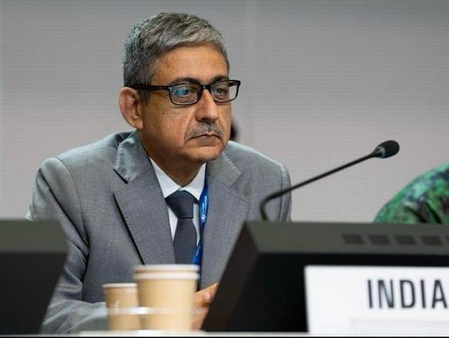
India, during the 49th Session of the Codex Alimentarius Commission in Geneva, embraced seven Codex standards and guidelines developed under its chairmanship and co-chairmanship. This move highlights India’s commitment to science-based international food standards. The Commission also greenlit India’s proposal for a new Codex Standard for Cashew Kernels, marking another significant accomplishment.
The Indian delegation, led by Rajit Punhani, Chief Executive Officer of the Food Safety and Standards Authority of India (FSSAI), actively engaged in the Commission’s discussions alongside technical experts from FSSAI and Spices Board. Notably, the commission endorsed standards for dried coriander seeds and fresh curry leaves, both crafted under India’s leadership, along with five Codex texts developed under India’s co‑chairmanship.
The Standard for Dried Coriander Seeds is set to ease trade in one of the most globally traded spices, while the Standard for Fresh Curry Leaves establishes an international benchmark for this crucial culinary herb. Additionally, the five Codex texts encompass standards for vanilla and large cardamom, defining internationally harmonized quality requirements for these widely traded commodities.
These texts also encompass annexes to guidelines on the safe use and reuse of water in food production and processing, as highlighted in a statement from the Ministry of Health and Family Welfare. The guidelines aim to control campylobacter and salmonella in chicken meat, enhancing measures to reduce foodborne illnesses linked to poultry. Moreover, the provisions concerning joint presentation and multipack formats under the general standard for the labeling of prepackaged foods aim to enhance clarity and consistency in food labeling requirements.
The Ministry further revealed that the commission sanctioned India’s proposal to initiate work on developing a Codex Standard for Cashew Kernels under the Codex Committee on Processed Fruits and Vegetables. This new standard is anticipated to promote fair trade, diminish technical trade barriers, and bolster market access for Indian exports by enhancing competitiveness in the global cashew trade.
