


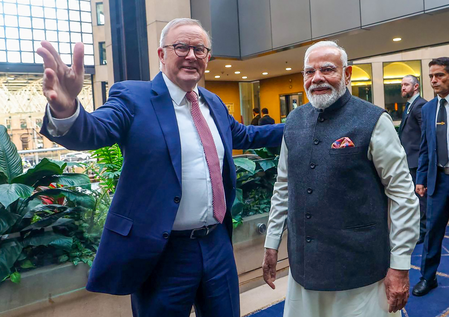
The Administrative Arrangement on the India-Australia uranium deal, recently finalized during Prime Minister Narendra Modi’s visit, grants India access to the world’s largest known uranium reserves. This agreement, after years of delay due to nuclear safeguards concerns, is set to play a crucial role in enhancing nuclear power generation in India.
R.K. Singh, an international nuclear energy expert, highlighted the significance of the Australia-India uranium arrangement for India’s civil nuclear program. He emphasized that this deal establishes a long-term, reliable source of uranium, ensuring fuel security for India’s expanding fleet of safeguarded nuclear power reactors. Singh also noted that a dependable uranium supply will facilitate India’s nuclear power expansion to meet the surging electricity demand while adhering to IAEA safeguards.
During the summit between PM Modi and Australian Prime Minister Anthony Albanese, strategic relations between the two nations in the Indo-Pacific region were reinforced. Foreign Secretary Vikram Misri mentioned that both leaders expressed concerns regarding China’s recent intercontinental ballistic missile test in the Pacific Ocean.
Australia, holding the largest uranium resources globally, accounting for over one-third of the total global reserves, will provide assured access to uranium, bolstering the fuel base for India’s growing nuclear power program. This move aligns with India’s commitment to achieving net-zero emissions by 2070 and enhancing its non-fossil energy capacity.
Nuclear power, as a low-carbon energy source, contributes firm capacity to India’s non-fossil energy mix. It is poised to meet the current demand met by coal and support the energy requirements of industries, data centers, and the digital economy. Australia’s decision to supply uranium underscores confidence in India’s strong non-proliferation track record and responsible nuclear technology utilization.
The Administrative Arrangement further strengthens the India-Australia Comprehensive Strategic Partnership by introducing a robust energy component to their collaboration, spanning trade, defense, critical minerals, technology, and the Indo-Pacific region.
