


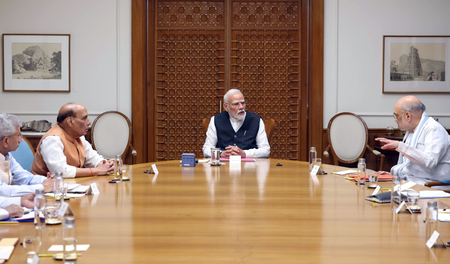
Exactly 12 years ago, Narendra Modi was sworn in as India’s 15th Prime Minister at Rashtrapati Bhavan in New Delhi. This event signified a new era in Indian politics as Modi led the BJP to a 282-seat victory in the Lok Sabha, securing a majority. Prior to this, for three decades, India had coalition governments without a single party crossing the majority mark.
In the years between 1989 and 2014, India experienced coalition governments with no party achieving a clear majority. The 2014 BJP victory broke this trend, allowing for independent governance by a single party. Despite this, Modi’s government respected the “coalition dharma” by leading the NDA alliance, comprising 336 seats.
The swearing-in ceremony of Narendra Modi as Prime Minister saw the attendance of heads of government from all eight SAARC countries, symbolizing a new chapter in India’s foreign policy. The event, held at Rashtrapati Bhavan, was attended by over 4,000 guests from various sectors. President Pranab Mukherjee administered the oath of office and secrecy to Modi.
Narendra Modi’s initial Council of Ministers included 24 Cabinet ministers, 12 ministers of state, and 10 ministers of state with independent charge. His leadership was characterized by the slogan “Sabka Saath, Sabka Vikas” (Together with all, development for all), focusing on performance-based politics. The 2014 victory reflected a public demand for strong leadership, administrative efficiency, and a focus on infrastructure and job creation.
Over the years, the Modi government implemented structural reforms to modernize India’s economy and governance. Initiatives like the Goods and Services Tax (GST) and Pradhan Mantri Jan Dhan Yojana aimed at simplifying tax systems and expanding banking access. These efforts, along with key infrastructure projects, contributed to India’s economic growth and digital transformation.
