


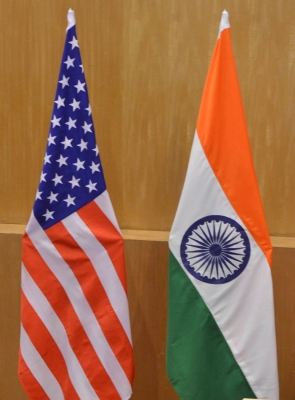
The recently announced India-US trade agreement, a much-anticipated deal, has garnered strong support from Indian-American business leaders. Venture capitalist Asha Jadeja Motwani expressed satisfaction with the outcome, considering it a significant success that was expected within Trump administration circles. She highlighted the positive implications for energy sourcing, emphasizing the potential for India to shift towards US or US allied oil.
Former US Assistant Secretary of Commerce for Trade Development, Raymond Vickery, offered a more cautious perspective, viewing the agreement as a crucial step to halt the declining US-India relations. While acknowledging the tariff reduction from 25 to 18 percent, Vickery raised concerns about the lack of clarity on critical details, especially regarding the elimination of barriers in sensitive sectors like agriculture and dairy.
Rick Rossow, Chair on India and Emerging Asia Economics at the Center for Strategic and International Studies (CSIS), noted the resilience of trade between the two countries despite tariffs. He highlighted the growth in trade over the past year and suggested that the agreement could be a first phase, enhancing market access in India and restoring US imports to normal tariff levels.
Republican leader Niraj Antani praised the trade deal as a positive development for US-India relations, emphasizing the reciprocal tariff reductions and India’s decision to stop Russian oil purchases. Antani described the reduction in tariffs as beneficial to India’s interests and emphasized the mutual benefits of the agreement, aiming to strengthen cooperation between the two democracies.
Indian-American entrepreneur Yogi Chug hailed the agreement as a significant milestone for the diaspora business community, emphasizing its strategic importance in fostering trust amid global competition intensification. The trade negotiations between India and the United States have been ongoing for years, marked by challenges such as tariff disputes and market-access issues, despite the continuous growth in bilateral trade.
