


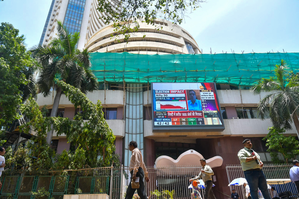
Following a rebound, Indian benchmark indices traded with a negative bias due to geopolitical tensions and foreign outflows. Sensex dropped 85 points, while Nifty eased 22 points. Nifty Midcap 100 rose slightly, but Nifty Smallcap 100 saw gains.
Major gainers on the Nifty included ONGC and SBI. Sectoral indices showed mixed trading, with Nifty Media and PSU bank among the top gainers. Market analysts noted immediate support at 25,650–25,700 and resistance at 25,950–26,000.
Global trade concerns arose from US President Donald Trump’s tariff policies, impacting countries facing penal tariffs. Trump’s announcement of 25% tariffs on nations trading with Iran indicated a continuation of tariff weaponization. Analysts predicted market pressure due to Trump’s actions against Fed chief Jerome Powell.
Indian markets rebounded after US Ambassador to India, Sergio Gor, expressed determination for a trade deal with India. Q3 results are expected to drive stock-specific movements in the near term. Asian markets traded positively despite geopolitical tensions and US Federal Reserve Chair Jerome Powell’s investigation.
Japan’s Nikkei 225 surged over 3% on reports of potential early elections. Asian markets showed mixed performance, with China’s Shanghai and Shenzhen down, while Japan’s Nikkei and Hong Kong’s Hang Seng Index rose. US markets closed mostly higher, with Nasdaq, S&P 500, and Dow posting gains.
Foreign institutional investors sold equities worth Rs 3,638 crore, while domestic institutional investors bought equities worth Rs 3,769 crore on January 12.
