


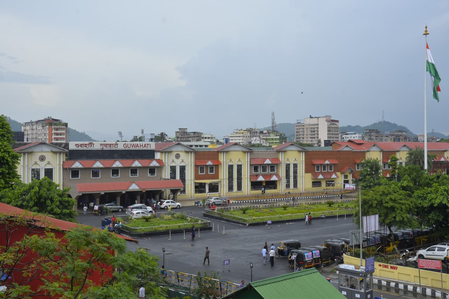
The Indian Railways is set to double the originating capacity of trains in 48 major cities by 2030, aiming to meet the growing passenger demand nationwide. This initiative involves expanding coaching terminals, building new terminals, creating maintenance facilities, and enhancing sectional capacity. The plan is strategically designed to ease congestion at major railway hubs, enhance operational efficiency, and strengthen rail connectivity across regions.
Union Railway Minister Ashwini Vaishnaw recently highlighted the comprehensive planning underway to expand terminal infrastructure and sectional capacity in major cities. The focus is on enhancing train handling capabilities, improving punctuality, and providing greater convenience to passengers, ultimately supporting the long-term growth of the railway network. Guwahati, a crucial hub in the Northeast region and the headquarters of the Northeast Frontier Railway (NFR), plays a pivotal role in the region’s railway network.
Guwahati Railway Station, catering to nearly 49,000 passengers daily and over 200 trains each day, is witnessing rising demands. To address this, the NFR is implementing capacity enhancement projects in and around Guwahati. Projects like the Kamakhya-New Guwahati 3rd Line Project and the Agthori-Kamakhya Double Line Project with the new Saraighat Rail-cum-Road Bridge are significant infrastructure upgrades aimed at improving railway connectivity in the region.
The Mega Coaching Complex at New Guwahati, along with the redevelopment of Guwahati Railway Station into a world-class facility, are part of the initiatives to boost rail operations and passenger services. Additionally, the NFR’s electrification of pit lines at Kamakhya Junction prepares the station for efficient maintenance of upcoming trains. The NFR’s commitment to infrastructure development, modernization, and passenger-centric initiatives reflects its dedication to translating the national vision of Indian Railways into tangible outcomes for Guwahati and the Northeast.
